Exactly What The Common Core Standards Say About Technology
The Common Core Standards, the national academic standards for K-12 schools in the United States, have now been adopted by 47 of the 50 states in the U.S. This makes them the pre-eminent source of what is being taught in the vast majority of public schools in America. Much has been made in the blogosphere and across social media of the changes compared to former academic standards that were dictated at a state level.
Three Working Models to Integrate Technology in Your Teaching
May 6, 2014 Technology is obviously an essential element in our instructional toolkit. Knowing how and when and for what purposes to use this technology is much more important than the technology itself. Technology integration in instruction requires much more than just digital literacy and technical knowledge, it requires foresight, clear intentions, and well planned goals. The purpose is to meet students learning needs and as such technology is only a means to an end and not the end itself.
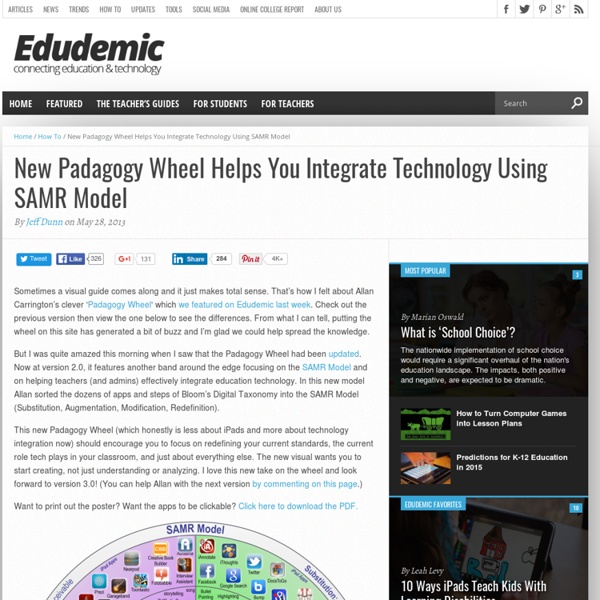
SAMR Model Explained for Teachers
Below is a great video explaining the SAMR model in 120 seconds. SAMR is a framework through which you can assess and evaluate the technology you use in your class. Here is how the video below shared by Candace M explains the SAMR's four levels:
What is ConnectEd?
Ed. note: To highlight the importance of connected classrooms, the White House held a virtual "show and tell" with three schools that are embracing technology and digital learning. Watch the full hangout at wh.gov/show-and-tell. President Barack Obama and Health and Human Services Secretary Kathleen Sebelius, right, talk with students while visiting a classroom at the Yeadon Regional Head Start Center in Yeadon, Pa., Nov. 8, 2011. (Official White House Photo by Pete Souza)
8 trucs pour faire une meilleure présentation en classe
Est-ce que les présentations en classe sont vouées à disparaître ? Je ne le pense pas, et cela même si je suis un promoteur actif de la pédagogie où les élèves sont en action. Dans la cadre d’une conférence, le Dr Ruben Puentedura a expliqué un moment où la présentation est importante. Pour ceux qui ne le savent pas, le Dr Ruben Puentedura est le créateur du modèle d’intégration technologique SAMR.
Assessing Tech Readiness for Common Core: What IT Pros Say
A year from now, districts around the country will make final preparations for the start of the 2014–2015 school year. For most of them, those preparations will include ensuring that their networks are equipped to handle the new online student assessments that align with the Common Core State Standards. Training staff to administer those tests, as well as amassing enough computers for students to complete them, also are high priorities.
SAMR as a Framework for Moving Towards Education 3.0
Tempers flare at 1st Common Core hearing as legislators clash with Flanagan, each other
LANSING — Rep. Tim Kelly had to play traffic cop at times Tuesday as legislators from both sides of the aisle peppered State Superintendent Mike Flanagan and Michigan Department of Education officials with questions about the Common Core State Standards. The fireworks came during a subcommittee hearing on whether or not the legislators should give their seal of approval to continuing implementation of Common Core, one of four such hearings scheduled for the summer. The hearings came about after legislators inserted a provision in the new state budget, set to take effect Oct. 1, that blocks the education department from spending state funds to implement the standards. RELATED: What is Common Core? Flanagan began his testimony before the panel by asking legislators to take action as soon as possible, so teachers working on lesson plans and other preparation for the fall have certainty about curriculum standards.
Common Core Online Testing Methods Seriously FlawedCapitol Hill Daily
It’s no secret that today’s kids are more tech-savvy than ever. Like many kids, my nephew knew how to use an iPhone before he could even walk. Now, at just four years old, he’s handier with an iPad than many adults. However, despite the fact that our society revolves around technology, parents and teachers are worried that their students lack the computer skills necessary to take the new Common Core assessments. As states begin implementing the Common Core State Standards, students around the nation will be required to complete the Partnership for Assessment of Readiness for College and Career (PARCC) standardized test. But the transition is not going smoothly.