
Explain Time Management Using PowerPoint Diagrams. Project deadlines, conference calls with client, review meetings with your team, parent-teachers’ meeting at your kid’s school, grocery shopping…so much to do and only 24 hours?!
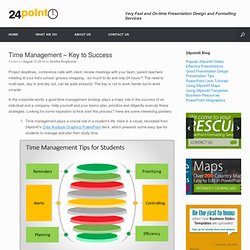
The need to multi-task, day in and day out, can be quite stressful. The key is not to work harder but to work smarter. In the corporate world, a good time management strategy plays a major role in the success of an individual and a company. Help yourself and your teams plan, prioritize and diligently execute these strategies. Looking for some inspiration to kick start this process? Time management plays a crucial role in a student’s life. Source: Another interesting image showing time management tips from a marketing professional.
Source: The first step towards successful time management is to create a to-do list of tasks. Source: Project management is always a race against time. Source: Did you know there were this many satellites in orbit VIDEO. Götz Aly: Poison envy (22/11/2011. The Prussian reforms of 1808 to 1812 granted all citizens freedom of trade, and put an end to serfdom and what until then had been utterly unchecked arbitrariness towards the Jews.

The Jews were still only allowed to become public servants in exceptional cases and certainly never officers in the military, but unlike the Christian majority, they made the most of the new opportunities. They emancipated themselves and at high speed. Germany, with its half-hearted reformism, sluggish economic development (until 1870), and strong legal security provided a fertile ground. Ancient Greek Online library. The 20 worst things people have done to each other - Embedded code.
Science. Heads Up, Hoverboarders: Here Comes Quantum Levitation. Physics 20b: Introduction to Cosmology - Spring 2010 - Download free content from UC Irvine. The 6 Most Mind-Blowing Things Ever Discovered in Space. #3.

A Cold Star. Scientists Find a Population of Butterflies That Appears to Be Splitting Into Two Species. Nov. 5, 2009 AUSTIN, Texas — Breaking up may actually not be hard to do, say scientists who've found a population of tropical butterflies that may be on its way to a split into two distinct species.

Polymorphic mimicry in Heliconius cydno alithea in western Ecuador, where the white form (middle left) mimics the white species Heliconius sapho (top left) and the yellow form (middle right) mimics the yellow species Heliconius eleuchia (bottom right). Image: Marcus Kronforst and Krushnamegh Kunte The cause of this particular break-up? A shift in wing color and mate preference. In a paper published this week in the journal Science, the researchers describe the relationship between diverging color patterns in Heliconius butterflies and the long-term divergence of populations into new and distinct species.
Heliconius butterflies display incredible color pattern variation across Central and South America, with closely related species usually sporting different colors. The 13 Most Important Numbers in the Universe - James D. Stein's Cosmic Numbers. In the 17th century, scientists understood three phases of matter—solids, liquids and gases (the discovery of plasma, the fourth phase of matter, lay centuries in the future).
Back then, solids and liquids were much harder to work with than gases because changes in solids and liquids were difficult to measure with the equipment of the time. So many experimentalists played around with gases to try to deduce fundamental physical laws. What Happened to the Hominids Who May Have Been Smarter Than Us? Even if brain size accounts for just 10 to 20 percent of an IQ test score, it is possible to conjecture what kind of average scores would be made by a group of people with 30 percent larger brains.

We can readily calculate that a population with a mean brain size of 1,750 cc would be expected to have an average IQ of 149. This is a score that would be labeled at the genius level. And if there was normal variability among Boskops, as among the rest of us, then perhaps 15 to 20 percent of them would be expected to score over 180. Bottle Rocket at the Live Demonstration Hour at ASTC 2011. Association of Science-Technology Centers. Solar System - Relative Size. Elysium. Elysium or the Elysian Fields (Ancient Greek: Ἠλύσιον πεδίον, Ēlýsion pedíon) is a conception of the afterlife that developed over time and was maintained by certain Greek religious and philosophical sects and cults.
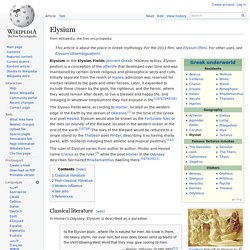
Initially separate from the realm of Hades, admission was reserved for mortals related to the gods and other heroes. Later, it expanded to include those chosen by the gods, the righteous, and the heroic, where they would remain after death, to live a blessed and happy life, and indulging in whatever employment they had enjoyed in life.[1][2][3][4][5][6] The ruler of Elysium varies from author to author: Pindar and Hesiod name Cronus as the ruler,[9] while the poet Homer in the Odyssey describes fair-haired Rhadamanthus dwelling there.[6][7][10][11] Classical literature[edit] Pythagorean cup. Cross section Cross section of a Pythagorean cup.

A Pythagorean cup (also known as a Pythagoras cup, a Greedy Cup or a Tantalus cup) is a form of drinking cup that forces its user to imbibe only in moderation. Credited to Pythagoras of Samos, it allows the user to fill the cup with wine up to a certain level. If he fills the cup only to that level, the imbiber may enjoy a drink in peace.
If he exhibits gluttony, however, the cup spills its entire contents out of the bottom (onto the lap of the immodest drinker).[1] Form and function[edit] A Pythagorean cup looks like a normal drinking cup, except that the bowl has a central column in it – giving it a shape like a Bundt pan in the center of the cup. Hacking Knowledge: 77 Ways to Learn Faster, Deeper, and Better. If someone granted you one wish, what do you imagine you would want out of life that you haven’t gotten yet?
For many people, it would be self-improvement and knowledge. Newcounter knowledge is the backbone of society’s progress. Priming Your Creativity. Life's Biggest Challenges. In my over thirty years in clinical practice, I have run into many challenging problems and issues.

These challenges included severe treatment-resistant depression, debilitating obsessive compulsive disorder, and extreme cases of borderline personality disorder among many others. In the vast majority of cases, most clients eventually manage to get much better. A Quick Course in Creativity. By Paul McNeese This quick course in creativity is designed to give you a platform to stand on as we look at the various ways you can handle home, social and workplace situations, job-search details and career-path decisions. Find Leading Online and Campus Degree Programs.
Language. Fuel cell. Demonstration model of a direct-methanol fuel cell. The actual fuel cell stack is the layered cube shape in the center of the image Scheme of a proton-conducting fuel cell The first fuel cells were invented in 1838. The first commercial use of fuel cells came more than a century later in NASA space programs to generate power for probes, satellites and space capsules. Since then, fuel cells have been used in many other applications.
There are many types of fuel cells, but they all consist of an anode, a cathode and an electrolyte that allows charges to move between the two sides of the fuel cell. The fuel cell market is growing, and Pike Research has estimated that the stationary fuel cell market will reach 50 GW by 2020.[3] The Planetarium.
Philosophy. Axioms. Possibilianism. Not to be confused with Possibilism. Possibilianism is a philosophy which rejects both the diverse claims of traditional theism and the positions of certainty in strong atheism in favor of a middle, exploratory ground.[1][2][3][4][5] The term was first defined by neuroscientist David Eagleman in relation to his book of fiction Sum: Forty Tales from the Afterlives.[6] Asked whether he was an atheist or a religious person on a National Public Radio interview in February 2009, he replied "I call myself a Possibilian: I'm open to...ideas that we don't have any way of testing right now.
"[6] In a subsequent interview with the New York Times, Eagleman expanded on the definition: "Our ignorance of the cosmos is too vast to commit to atheism, and yet we know too much to commit to a particular religion. A third position, agnosticism, is often an uninteresting stance in which a person simply questions whether his traditional religious story (say, a man with a beard on a cloud) is true or not true.
How to Learn Without Memorizing.
Georges Lemaître. All Schools - CollegeDegrees.com. Online. Famous Quotes. Dictionary and Thesaurus - Merriam-Webster Online. US Mail Forwarding, International Shipping. Welcome. The really free schools are online - Features, Gadgets & Tech. But can a quality education be delivered online? Meteor Shower Rained Gold On Ancient Earth. What is Consciousness? 50 Life Secrets and Tips. Nine Things Successful People Do Differently - Heidi Grant Halvorson. Learn more about the science of success with Heidi Grant Halvorson’s HBR Single, based on this blog post.
Lesson Plan for Making a Speaker Laboratory. WHAT DO PHILOSOPHERS BELIEVE?
Two Suns? Twin Stars Could Be Visible From Earth By 2012. Ideas, Strategy & Creatives » Get into Action: 77 Thoughts on Motivation. THE REVOLUTIONARY PLEASURE OF THINKING FOR YOURSELF. Galactanet. 10 simple ways to save yourself from messing up your life. Stop taking so much notice of how you feel.
How you feel is how you feel. Surprises in steel: The mystery behind Detroit entrepreneur's revolutionary Flash Bainite.
David Hume. René Descartes. Yes! 50 Scientifically Proven Ways to Be Persuasive « alex.moskalyuk. Project to map genetic paths of student origins. Science Experiments - 5min.com.
Photography. Antimatter:Mirror of the Universe. HSBC Expat Guide. The Dalai Lama’s 18 Rules For Living.