
WILD FLOWER IDENTIFICATION GUIDE (ID GUIDE) Awesome Science Teacher Resources. Make a leaf skeleton. Remove leaf tissue to see a beautiful "skeleton" of veins!
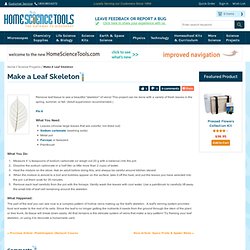
This project can be done with a variety of fresh leaves in the spring, summer, or fall. (Adult supervision recommended.) Hands-on Activities for Teaching Biology to High School or Middle School Students. By Drs.
Ingrid Waldron and Jennifer Doherty, University of Pennsylvania The expression "hands-on, minds-on" summarizes the philosophy we have incorporated in these activities - namely, that students will learn best if they are actively engaged and if their activities are closely linked to understanding important biological concepts. Many of our activities are explicitly aligned with the Next Generation Science Standards, as indicated by (NGSS) in the descriptions below and the links to the right. Additional information is provided in Summary Tables and in the Teacher Preparation Notes for these activities. To accommodate limited budgets, most of our activities can be carried out with minimum equipment and expense for supplies. Additional resources for teaching biology are available at More Minds on Activities for Teaching Biology. Ocean Explorer: Islands in the Streams 2001: Brown-striped brittle stars.
ARKive - Discover the world's most endangered species. Wildscreen's Arkive project was launched in 2003 and grew to become the world's biggest encyclopaedia of life on Earth. With the help of over 7,000 of the world’s best wildlife filmmakers and photographers, conservationists and scientists, Arkive.org featured multi-media fact-files for more than 16,000 endangered species.
Freely accessible to everyone, over half a million people every month, from over 200 countries, used Arkive to learn and discover the wonders of the natural world. Since 2013 Wildscreen was unable to raise sufficient funds from trusts, foundations, corporates and individual donors to support the year-round costs of keeping Arkive online. Therefore, the charity had been using its reserves to keep the project online and was unable to fund any dedicated staff to maintain Arkive, let alone future-proof it, for over half a decade. Biology Project - site map. General Biology Video Lecture Course.
How to Extract DNA from Anything Living. First, you need to find something that contains DNA.
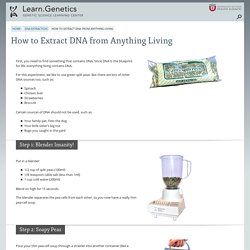
Since DNA is the blueprint for life, everything living contains DNA. For this experiment, we like to use green split peas. But there are lots of other DNA sources too, such as: Spinach Chicken liver Strawberries Broccoli. Cornell University - Institute for Biology Teachers. Adventures in Field Botany / Illustrated-Glossary. Leaf Morphology: Phyllode/ Cladode: modifyed stems that act as leaves.
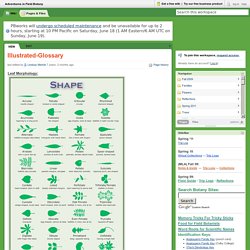
Ensiform: leaves sharp edges, taper into a slender point (fern) Stellate: hairs come up like fingers. Looks like cluster of hair. Peltate: "petiole joins to the center" in leaves. What Animals See! Infographic. Seaquence. Discover Life. 6 Animals with Immunities Humans Would Kill For. AS HUMANS, WE OFTEN SEE OURSELVES AS THE FOREFRONT OF EVOLUTIONARY DEVELOPMENT.
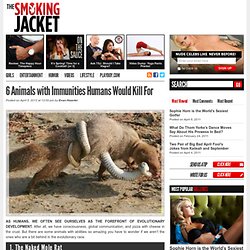
After all, we have consciousness, global communication, and pizza with cheese in the crust. But there are some animals with abilities so amazing you have to wonder if we aren’t the ones who are a bit behind in the evolutionary race. 1. The Naked Mole Rat The naked mole rat is a burrowing creature from East Africa. To study the effects, scientists injected buck naked mole rats with cancer. InnerSuper. A Journey through Climate History. 7.014 Introductory Biology. The Science Behind Foldit. Foldit is a revolutionary new computer game enabling you to contribute to important scientific research.
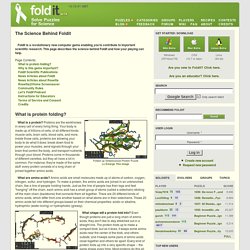
This page describes the science behind Foldit and how your playing can help. What is a protein? Proteins are the workhorses in every cell of every living thing. Your body is made up of trillions of cells, of all different kinds: muscle cells, brain cells, blood cells, and more. Inside those cells, proteins are allowing your body to do what it does: break down food to power your muscles, send signals through your brain that control the body, and transport nutrients through your blood. What are amino acids? What shape will a protein fold into? Why is shape important? What do proteins do? Proteins are present in all living things, even plants, bacteria, and viruses.
Photosystem I is a collection of proteins in plants that captures sunlight for photosynthesis.Luciferase catalyzes the chemical reaction that makes fireflies glow.Hemagglutinin helps the influenza virus invade our cells. 25 Most Beautiful Animals Photography on StumbleUpon. Don't Feed the Plants! Everyone should be familiar with the genus Dionea or "Venus Fly Trap" above, but the vegetative world is home to plenty stranger, and while perhaps not as adrenaline-pumping as Crustaceans or as gruesome as Amphibians, plants provide food, shelter and oxygen for the entire kingdom Animalia, so they certainly deserve the spotlight once in a while, and their weirdness does not disappoint.
Rather unremarkable in appearance from above, these tiny aquatic plants are actually carnivorous, and display one of the most sophisticated mechanisms (carnivorous or otherwise) in the entire known plant kingdom. California Academy of Sciences - Skulls. ClassZone. EteRNA - Played by Human, Scored by Nature. Biology That Makes Us Tick: Free Stanford Course by Robert Sapolsky. Biology.