
Buddhist Centres. Blogs & Forums. Buddhist Teachers. Teachings. Dharma Shopping. Images. Buddhist Publishers. Theravada. Buddhayana. Mahayana. How did Buddhism and Yoga/Martial Arts come to the Shaolin Temple. Đạo Phật Ngày Nay. Om Mani Prayer Wheel Pendant: DharmaCrafts meditation supplies. Buddhism and the God-idea. Do Buddhists believe in a god?
No, we do not. There are several reasons for this. The Buddha, like modern sociologists and psychologists, believed that religious ideas and especially the god idea have their origins in fear. World Prayers - Prayer Archive "prayers from all traditions" File:OM MANI PADME HUM HRI.svg. Cancel Edit Delete Preview revert Text of the note (may include Wiki markup) Could not save your note (edit conflict or other problem).
Please copy the text in the edit box below and insert it manually by editing this page. 5 Minute Introduction. • What is Buddhism?
Buddhism is a religion to about 300 million people around the world. The word comes from 'budhi', 'to awaken'. It has its origins about 2,500 years ago when Siddhartha Gotama, known as the Buddha, was himself awakened (enlightened) at the age of 35. Om Mani Padme Hum: The Meaning of the Mantra in Tibetan Buddhism. Glimpsing a Few More Facets of the Mantra There are many ways to understand the meaning of the mantra.

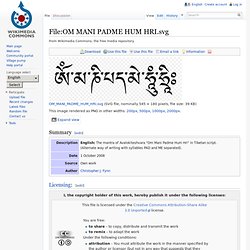
Here are a few of them: The Transformation of Speech [An excerpt from The Dharma, by Kalu Rinpoche, from a chapter on The Four Dharmas of Gampopa. ] "The second aspect of transformation [of confusion into wisdom] concerns our speech. Mere words, which have no ultimate reality, can determine our happiness and suffering. Om mani padme hum. Oṃ maṇi padme hūṃ[1] (Sanskrit: ओं मणिपद्मे हूं, IPA: [õːː məɳipəd̪meː ɦũː]) is the six-syllabled Sanskrit mantra particularly associated with the four-armed Shadakshari form of Avalokiteshvara (Tibetan སྤྱན་རས་གཟིགས་(Chenrezig), Chinese 觀音(Guanyin), Japanese 観音(かんのん, Kannon), the bodhisattva of compassion.

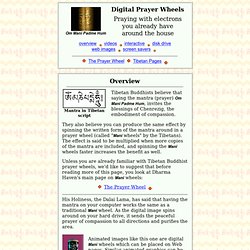
Mani means "jewel" or "bead" and Padma means "the lotus flower", the Buddhist sacred flower. It is commonly carved onto rocks or written on paper which is inserted into prayer wheels. When an individual spins the wheel, it is said that the effect is the same as reciting the mantra as many times as it is duplicated within the wheel. Transliterations[edit] Digital Prayer Wheels. Technical Details Download Mantra For the download, we've changed the file extension from ".wav" to".exe" so that your browser will let you download it.
Srimad Bhagavad-Gita. Buddhist-Christian Studies. Advertising Rates & Policies Published quarterly.
A scholarly journal devoted to Buddhism and Christianity and their historical and contemporary interrelationships, Buddhist-Christian Studies presents thoughtful articles, conference reports, and book reviews. Awakening the Buddha Within. Spirit Quotes Spirit Sayings, Spirit Quotes of Spiritual Teachers. Buddhist Wisdom, Meditation, and Practices for Daily Life. DAILY INSPIRATION on Spiritual Growth. Schools. Secular Buddhism UK. Well Happy Peaceful. We live in a world where we have to hide to make...
Bodhisattva Quotes "At night I dream that you and I are two plants that grew together, roots entwined and that you know...

" follow me → Newer Older <div id="about_container" style="display:block;border-top: 1px #000000 dashed;"><a name="me"></a><p class="avatar"><img alt="Bodhisattva Quotes"src=" /></p><p><script type="text/javascript"> var gaJsHost = (("https:" == document.location.protocol) ? Field Notes Theme. Return of the Buddha: The Qingzhou Discoveries. Cave Temples. In 386 the Northern Wei dynasty was declared by the Tuoba, a nomadic people from the north.
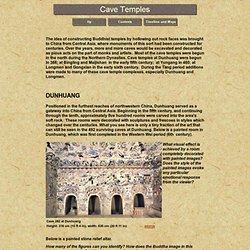
As it consolidated power in north China during the fifth century, this non-Han dynasty found it beneficial to associate themselves with the burgeoning popularity of Buddhism. Despite this, the Northern Wei emperor Taiwu (r. 424-452) was persuaded by Daoist and Confucian officials at court to curb the Buddhist church. This persecution of Buddhism, begun in 446, lasted until his death in 452. Taiwu's grandson, Wencheng (r. 452-465) succeeded him and reinstated Buddhism to its previous, eminent position. The Thirteen Mindfulness Trainings. The Thirteen Mindfulness Trainings form the moral guidelines to develop harmony in any simple community.
One of the essential elements of the Mindfulness Trainings is that they are directly applied in our daily lives. Every moment of our lives gives us the chance to put them into practice. Wildmind Buddhist Meditation - Learn Meditation Online. Buddhism and the Brain. Credit: Flickr user eschipul Over the last few decades many Buddhists and quite a few neuroscientists have examined Buddhism and neuroscience, with both groups reporting overlap.
I’m sorry to say I have been privately dismissive. One hears this sort of thing all the time, from any religion, and I was sure in this case it would break down upon closer scrutiny. When a scientific discovery seems to support any religious teaching, you can expect members of that religion to become strict empiricists, telling themselves and the world that their belief is grounded in reality. They are always less happy to accept scientific data they feel contradicts their preconceived beliefs. But science isn’t supposed to care about preconceived notions.
Journal of Eastern Philosophy & Culture: Papers, Dictionaries, Forum, Books Reviews. Buddhism. Religion founded by the Buddha Buddhism (, ) is an Indian religion based on a series of original teachings attributed to Gautama Buddha. It originated in ancient India as a Sramana tradition sometime between the 6th and 4th centuries BCE, spreading through much of Asia.
It is the world's fourth-largest religion[3] with over 520 million followers, or over 7% of the global population, known as Buddhists.[6] Buddhism encompasses a variety of traditions, beliefs and spiritual practices largely based on the Buddha's teachings (born Siddhārtha Gautama in the 5th or 4th century BCE) and resulting interpreted philosophies. Two major extant branches of Buddhism are generally recognized by scholars: Theravāda (Pali: "The School of the Elders") and Mahāyāna (Sanskrit: "The Great Vehicle").
Theravada has a widespread following in Sri Lanka and Southeast Asia such as Cambodia, Laos, Myanmar and Thailand. Université Bouddhique Européenne. Buddha's World & Buddhism. L'UBF : Fédération des Associations Bouddhistes de France. Buddhist meditation. Buddhist meditation refers to the meditative practices associated with the religion and philosophy of Buddhism. Core meditation techniques have been preserved in ancient Buddhist texts and have proliferated and diversified through teacher-student transmissions. Buddhists pursue meditation as part of the path toward Enlightenment and Nirvana. [a] The closest words for meditation in the classical languages of Buddhism are bhāvanā[b] and jhāna/dhyāna. [c] Buddhist meditation techniques have become increasingly popular in the wider world, with many non-Buddhists taking them up for a variety of reasons.
Key Terms[edit] Meditation in Buddhist traditions[edit] Buddha Mind - Index. Buddhism Archive. 101 Zen Stories. Mindfulness Bell. The Great Bell Chant (The End of Suffering) BEGINNER'S GUIDE ...
Buddhist Geeks - Download free podcast episodes by Personal Life Media on iTunes. Welcome to Audio Dharma. BuddhaNet - Worldwide Buddhist Information and Education Network. Snow Lion Publications. Free buddhist audio : free mp3s and texts on buddhism, meditation and the arts. BuddhaNet - Worldwide Buddhist Information and Education Network. Dharma The Cat Cartoons. “Dharma The Cat – Philosophy With Fur” Features clever, thought-provoking cartoonsthat appeal to all ages, blendingphilosophy and spirituality with humor. DHARMA THE CAT SAYS: "Sometimes when you thinkyou're teaching others, they're teaching you! " “It's havoc, farce and mayhem on the rocky path to nirvana,with a Buddhist cat, a novice monk and a mouse hell-bent on cheese!”
Buddhism. Essentials of Buddhism - core concepts. Buddha Teachings. Following the Buddha's FootstepsInstilling Goodness SchoolCity of Ten Thousand BuddhasTalmage, CA 95481 As a child, Siddhartha the Buddha, was troubled by some of the same thoughts that children today have. They wonder about birth and death. Famous Buddhist Quotes & Sayings. Buddhism Vaults : Dalai Lama's Heart Sutra Talk, May 2001, SF Bay Area, California, Day 1 of 3. by Dave Evans. Day 2Day 3. Table of Contents. Essentials of Buddhism - core concepts. Buddhism - The Four Noble Truths, The Eightfold Path, Karma and Meditation Practice.