
CopyrightFriendly/Creative Commons/Fair Use - New Tools. Four Helpful Web Search Strategy Tutorials. Open Content Program (The Getty) The Getty makes available, without charge, all available digital images to which the Getty holds the rights or that are in the public domain to be used for any purpose. No permission is required.
For additional information please see the related press releases, as well as overviews of each phase of the program on The Getty Iris. Why Open Content? The Getty adopted the Open Content Program because we recognized the need to share images of works of art for free and without restriction, so that all those who create or appreciate art—scholars, artists, art lovers, and entrepreneurs—will have greater access to high-quality digital images for their studies and projects. Art inspires us, and imagination and creativity lead to artistic expressions that expand knowledge and understanding.
Rework, Reuse, Remix (6-8) Judge the Fair Use of Case Studies (20 minutes) KEEP students in their groups.
Copyrightconfusion - Scenarios. Plagiarism. You have something in common with the smartest people in the world.

You see, everyone has ideas. We use our minds to create something original, whether it’s a poem, a drawing, a song, or a scientific paper. Some of the most important ideas are published and make it into books, journals, newspapers and trustworthy websites that become the building blocks for things we all learn. But ideas are also very personal, and we need dependable ways to keep track of the people behind the ideas we use because they deserve credit for their contribution, just as you do if someone uses your idea. Every Stock Photo - A Search Engine for Free Images. Blog » Blog Archive » Copyright: When it’s yours, it’s yours (with apologies to attorneys) How To Combat Student Plagiarism. Plagiarism, defined as the “wrongful appropriation” of another’s words or ideas, is a pervasive problem in schools.
Many teachers and administrators believe that the internet has caused an explosion of academic dishonesty (a recent PEW survey of College Presidents would agree). While, most teachers and administrators are familiar with tools like turnitin that can catch plagiarism after the fact, there are some ways that educators can combat plagiarism before it starts! Fighting Plagiarism. This article will focus on the importance of structuring research projects so they require original thought.
The student will not just find an answer. The student will build an answer. Image Gallery - History Sights and Sounds. This image gallery brings the U.S. census, from 1790 to 2010, alive using photographic images.
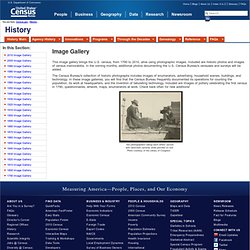
Included are historic photos and images of census memorabilia. In the coming months, additional photos documenting the U.S. Census Bureau's censuses and surveys will be added. The Census Bureau's collection of historic photographs includes images of enumerators, advertising, household scenes, buildings, and technology. Search the Free-Stock-Photosphere. Copyright in a Copy Paste World. Free Plagiarism Checker Online - Plagiarisma.Net.
PlagSpotter - Online Duplicate Content Checker Tool. 15 Copyright Rules Every Student Should Know. That’s Plagiarism?: Teaching Paraphrase Skills to Pre-university Students. 10 Plagiarism Signs you should Be Aware of. Copyright and Copyleft…read all about it!
The world of copyright can be a confusing and complex place…therefore ResourceLink has created a ‘one stop shop’ intended to provide educators and students with a simple to understand overview of Copyright, Creative Commons and other licences that exist, as well as resources to locate materials and information on how to correctly attribute these resources once they have been used.
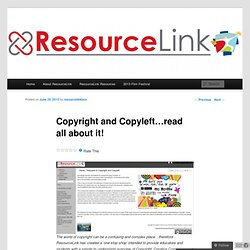
The wiki is called Copyright and Copyleft. Access it here, or by clicking on the image on the left hand side. Fair Use in Education and Research. Fair use offers an extraordinarily important opportunity for educators, researchers, and others to make reasonable and limited uses of copyrighted materials.
Clipping, cutting, pasting, uploading, posting, and many other activities that are common at the university may be copyright infringements or may be within fair use. When do you need to think about fair use? Some example situations: Uploading materials to CourseWorks or another server.Clipping and copying materials into innovative teaching tools.Posting materials for distance learning.Developing databases of copyrighted works for research.Sharing articles and other materials with colleagues.Developing digital libraries.Placing copies on library reserves. This section includes a variety of resources to help you determine if fair use applies to the ways in which you want to use copyrighted materials. Teaching Copyright. Teacherlibrarianwiki / Copyright Friendly Image Sources. Copyright-Friendly Images (Mostly!)
For Use in Multimedia Projects and Web Pages In the spirit of the open source movement, new copyright-friendly (and some copyleft) archives are emerging, removing many of the legal and ethical thorns relating to image use in student production. In addition, a number of government image archives provide their archives with limited restrictions. Check out this cool video for an explanation of new, alternate forms of licensing: Creative Commons Video Most of the images in the collections below include images with a variety of less restrictive licensing.
US Government Graphics and Photos Wikipedia Free Images Yotophoto Common Content Creative Commons. Copyrightfriendly - home. Haul Truck Free Stock Photo. Copyright Free Images. Copyright - Playing with Media. Legal disclaimer on Copyright / Intellectual Property Issues: The author of these guidelines, Wesley Fryer, is not a lawyer and the information included on this website and book project should not be interpreted as official, legal advice.
Copyright laws vary by country. For legal advice about intellectual property issues in the jurisdiction where you live pertaining to specific copyright situations, consult a bar-certified lawyer in your area. Www.isteconference.org/2012/uploads/KEY_70704503/SandyHayesHandoutISTE2012.pdf. Copyright & Copyleft - Home - Welcome to Copyright and Copyleft.
Results : Plagiarism Spectrum. Copyrightchart. Copyright and Fair Use Guidelines for Teachers Teachers in the classroom make the decisions closest to the field of instruction and it is teachers that have been the greatest rights---rights that even their districts do not have.
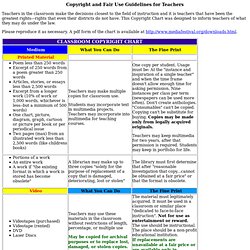
This Copyright Chart was designed to inform teachers of what they may do under the law. Please reproduce it as necessary.