
Constats. Concentration atmosphérique de CO2: mois avril record avec plus de 403 ppm. A l’Observatoire Mauna Loa d’Hawaï, le printemps est la saison des records en matière de concentration atmosphérique de CO2.
Ainsi, avec 403,26 ppm, le mois d’Avril 2015 a battu le précédent record de moyenne mensuelle qui avait été établi en mai 2014 (401,78 ppm). Ce nouveau record doit cependant être lui-même battu en mai. Le CO2 aérien français écrase la COP21 ! À un jour près, on aurait pu croire à un poisson, trop gros pour être vrai !
Mais voilà, c’était… le 2 avril ! Résumons ce poisson avec une question : « comment, en France, émettre 30 fois plus de CO2 dans le secteur des transports alors que l’objectif est de diviser le total des émissions du pays par 4 avant 2050 ? » Deux entreprises, vieilles habituées des tutelles publiques, sont les acteurs majeurs de cette improbable farce. Climate Change Trends: Carbon Emissions Giants. Expert: Limit on carbon emissions likely after 2020. La concentration des gaz à effet de serre dans l'atmosphère atteint des niveaux record. Les principaux gaz à effet de serre à l'origine du réchauffement climatique ont franchi de nouveaux records de concentration dans l'atmosphère en 2010, a dénoncé lundi 21 novembre l'Organisation météorologique mondiale (OMM).
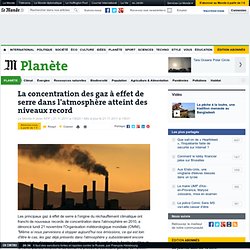
"Même si nous parvenions à stopper aujourd'hui nos émissions, ce qui est loin d'être le cas, les gaz déjà présents dans l'atmosphère y subsisteraient encore pendant des dizaines d'années et continueraient de perturber le fragile équilibre de la Terre, planète vivante, et du climat", a précisé le secrétaire général de l'OMM. Parce qu'ils captent une partie du rayonnement solaire, les gaz à effet de serre favorisent le réchauffement de la planète. L'OMM relève également qu'après "une période de stabilisation temporaire relative (1999-2006), la concentration de méthane dans l'atmosphère est repartie à la hausse, et les scientifiques s'efforcent d'en découvrir les causes".
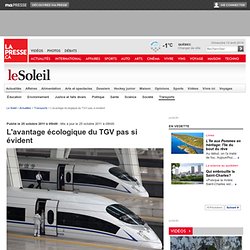
Trajectoires 2020 - 2050 vers une économie sobre en carbone : rapport du Comité présidé par Christian de Perthuis. L’augmentation des émissions de carbone des pays du G20 est plus rapide que la croissance économique, selon PwC. Augmentation record des émissions mondiales de CO2 en 2010. Transports : laffichage des émissions de CO2 devient obligatoire. L'avantage écologique du TGV pas si évident. Coordonnateur scientifique à la Chaire de recherche en technologie de l'énergie et efficacité énergétique de l'École de technologie supérieure, Yvan Dutil base ses calculs sur des informations contenues dans l'étude du consortium EcoTrain, diffusée la semaine dernière et qui concluait qu'une ligne Québec-Windsor serait «économiquement viable».
La Terre « boule de neige » : une hypothèse à revoir. Aviation : la Commission européenne publie les règles d'attribution des quotas de CO2 gratuits. Lundi 26 septembre 2011, la Commission européenne a adopté une décision définissant les règles applicables en matière d'allocation de quotas à titre gratuit aux compagnies aériennes.
Le texte adopté précise les valeurs des référentiels qui seront utilisés pour allouer à titre gratuit des quotas d'émission de gaz à effet de serre à plus de 900 compagnies aériennes. Avec cette décision, les compagnies peuvent calculer précisément le nombre de quotas gratuits dont elles disposeront chaque année jusqu'en 2020. "Aux prix courants du marché, ces quotas gratuits représentent plus de 20 milliards d'euros sur la prochaine décennie", annonce la Commission. Concrètement, les compagnies recevront 0,6422 quota par millier de tonnes-kilomètres pendant la période 2013-2020, soit une baisse de 5,52 % par rapport aux quotas alloués pour l'année 2012 (0,6797 quota gratuit). How Can This Island Nation Go 100% Carbon Neutral by 2020? Written by Brian Merchant, a Treehugger blogger Yesterday, the island nation of Maldives announced that it had mandated that 60% of its energy be produced by solar power as part of its bid to go carbon neutral by 2020.

If successful, the Maldives would be the first country to do so. Dr. Mohammed Waheed, the Vice President of Maldives, was in New York to discuss his nation’s plans. I caught up with him after a Climate Week talk. Seuil de pollution dépassé : 2 millions de Franciliens touchés - 15/09/2011. Bringing Forest Carbon Projects to the Market. News UNEP Energy organising a side event at the World Urban Forum in Medellin, Colombia read more news >> In Focus Getting to know the Climate Technology Centre and Network. learn more >>
Aphekom.org. To fill these gaps, the Aphekom project has provided new information and tools that enable decision makers to set more effective European, national and local policies; health professionals to better advise vulnerable individuals; and all individuals to better protect their health.

Over nearly 3 years, the project has combined the efforts of 60 scientists working in 25 cities in 12 countries across to provide this new information and tools. Below you can read about the project’s background; learn about its main findings; and read about the final meeting held in March 2011. Average annual NO2 levels in Paris 2009. Mauvaise qualité de l’air : la France pénalisée. La France, bonnet d’âne en matière de respect des réglementations de la qualité de l’air, est condamnée pour dépassements des valeurs limites de particules fines (les valeurs limites concernent la concentration annuelle (40 μg/m³) et la concentration journalière (50 μg/m³).
Kyoto Protocol Bodies. Informations sur le nucléaire. Vidéos publiées par Mehdi Omar : 21 février 2011 00:12 (1) Podcast des cours de Jean-Marc Jancovici aux Mines. European Carbon Fund. Bourse du carbone. Un article de Wikipédia, l'encyclopédie libre.
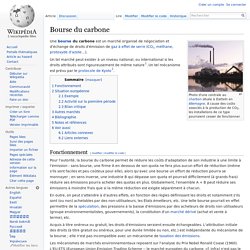
Photo d'une centrale au charbon située à Datteln en Allemagne. À cause des coûts associés à la production de CO2, les installations de ce type pourraient cesser de fonctionner. ADEME Bilan Carbone - Présentation Bilan Carbone - Lien vers la version 3 Bilan Carbone - Changement climatique : l'urgence d'en état des lieux Bilan Carbone - Lien vers la rubrique Changement climatique. Carbone 4, premier cabinet d'audit et de conseil en stratégie Carbone - Conférence.
Action Carbone : Opérateur de compensation carbone, à but non lucratif, pour lutter ensemble contre le changement climatique. Novethic: L'ADEME lance le Bilan carbone.