
A Project-Based Learning Spectrum: 25 Questions To Guide Your PBL Planning. A Project-Based Learning Spectrum: 25 Questions To Guide Your PBL Planning by Terry Heick I’ve been talking with a friend recently about project-based learning, which is leading to a TeachThought Project-Based Learning framework hopefully sometime next week.
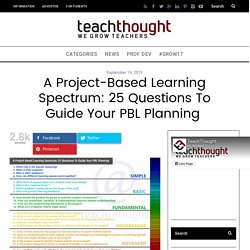
(Or whenever I finally get this TeachThought podcast off the ground–maybe Tuesday? Ish?) In the meantime–and in pursuit–I’ve been thinking of the kinds of questions I consider when planning a project–or planning a unit when students plan a project on their own. I’ve more or less organized them into a kind of spectrum, from the simplest questions to consider, to the most complex. What Project-Based Learning Is — and What It Isn’t. Screenshot/High Tech High The term “project-based learning” gets tossed around a lot in discussions about how to connect students to what they’re learning.
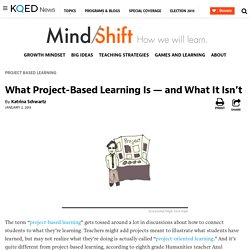
Teachers might add projects meant to illustrate what students have learned, but may not realize what they’re doing is actually called “project-oriented learning.” Aprendizaje basado en proyectos: del profesor pionero a los centros innovadores. Las llamadas metodologías activas están cada vez más presentes en el aprendizaje de muchos alumnos.
Trabajar por proyectos: explicación de aula planeta ~ iPad Mobile Learning en Tajamar. Project Based Learning Checklists. Project Based Learning with iPads. Bringing learning to life – Bringing Life to learning!
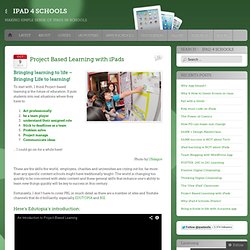
To start with, I think Project-based learning is the future of education. It puts students into real situations where they have to: Act professionallybe a team playerunderstand their assigned roleStick to deadlines as a teamProblem solveProject manageCommunicate ideas … I could go on for a while here! Photo by USdagov These are the skills the world, employers, charities and universities are crying out for, far more than any specific content schools might have traditionally taught. Fortunately, I don’t have to cover PBL in much detail as there are a number of sites and Youtube channels that do it brilliantly, especially EDUTOPIA and BIE. Here’s Edutopia’s introduction: Just one Important distinction! Trabajo por proyectos y la metodología ABP. Diego Fernández comparte la presentación El trabajo por proyecto y la metodología ABP en la que nos muestran porque deberíamos trabajar las metodogías activas en el aula.
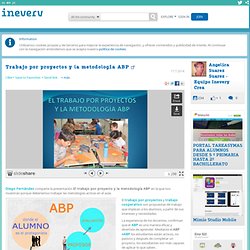
El trabajo por proyectos y trabajo cooperativo son propuestas de trabajo que implican a los alumnos, a partir de sus intereses y necesidades. La experiencia de los docentes, confirman que el ABP es una manera eficaz y divertida de aprender. Mediante el ABP #ABP los estudiantes están activos, no pasivos y después de completar un proyecto, los estudiantes son más capaces de aplicar lo que saben. Juandoming : Escritorio en Symbaloo sobre ... Edutopia : PBL doesn't mean leaving ... Aprendizaje por proyectos. El Aprendizaje por Proyectos es una de las metodologías líderes para fomentar el cambio y la mejora educativa.
En el trabajo por proyectos hacemos del alumno protagonista de su propio aprendizaje, permitiéndole enfrentarse a desafíos, resolver problemas y trabajar con sus compañeros en un entorno autónomo, pero organizado y con un profesorado que asesora y evalúa durante todo el proyecto. Ideas para emprender trabajos por proyectos. No sabemos la cabida que el "aprendizaje basado en proyectos" (problemas, para las siglas PBL en inglés) tendrá en las futuras reformas educativas.
Pero sí sabemos que es una práctica internacionalmente reconocida, instaurada en los países con mejores resultados educativos y que se facilita muchísimo con la aparición de las TIC, aunque no es algo exclusivo de ellas en ningún caso. La idea podría ser construir el proceso formativo en torno a un objetivo final de cierta relevancia, como la resolución de un gran problema o la construcción de determinado producto final, analógico o digital.
MeganHales10 : Great #pbl resource via @edutopia ... Object moved. El Aprendizaje Basado en Proyectos es un método de enseñanza-aprendizaje centrado en el estudiante en el que éste adquiere conocimientos, habilidades y actitudes a través de situaciones de la vida real.
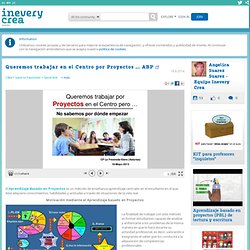
Motivación mediante el Aprendizaje basado en Proyectos La finalidad de trabajar con este método es formar estudiantes capaces de analizar y enfrentarse a los problemas de la misma manera en que lo hará durante su actividad profesional, es decir, valorando e integrando el saber que los conducirá a la adquisición de competencias profesionales. La característica más innovadora del ABP es el uso de problemas como punto de partida para la adquisición de conocimientos nuevos y la concepción del estudiante como protagonista de la gestión de su aprendizaje. Santiagoraul: Comparando el Project Based ... Designing a High School for Collaborative, Project-based Learning.
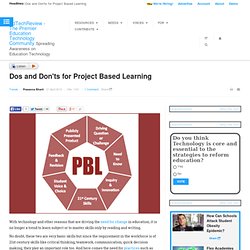
Giving Students Meaningful Work:Seven Essentials for Project-Based Learning. Dos and Don'ts for Project Based Learning. About ETR Community EdTechReview (ETR) is a community of and for everyone involved in education technology to connect and collaborate both online and offline to discover, learn, utilize and share about the best ways technology can improve learning, teaching, and leading in the 21st century.
EdTechReview spreads awareness on education technology and its role in 21st century education through best research and practices of using technology in education, and by facilitating events, training, professional development, and consultation in its adoption and implementation. METODOLOGIAS ACTIVAS.pdf. Aprendizaje por proyectos y TIC - Aplicaciones para la gestión de proyectos. Aprendizaje por proyectos y TIC - Aplicaciones para la gestión de proyectos. Desde el libro de texto al trabajo por proyectos. Fases del trabajo por proyectos en el aula » Pedagogía Blanca.
Trabajar por proyectos es muy atractivo y, desde luego, puede aplicarse a las aulas y al aprendizaje que hagan los niños en su casa, pero no es sencillo.
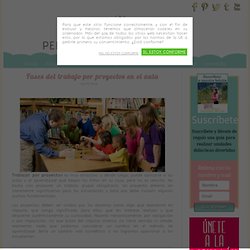
No basta con proponer un trabajo grupal obligatorio. Un proyecto debería ser claramente significativo para los estudiantes y para eso debe cumplir algunos puntos fundamentales. Los proyectos deben ser vividos por los alumnos como algo que realmente les importe, que tenga significado para ellos, que les interese realizar y que despierte auténticamente su curiosidad. Hacerlo mecanicamente, por obligación o por imposición, sin que brote del impulso interno, no tiene sentido ni añade, realmente, nada que podamos considerar un cambio en el método de aprendizaje.
Sería un cambio solo cosmético si no logramos apasionar a los estudiantes. Además, el trabajo por proyectos debería tener un propósito educativo, sea la adquisición de un conocimiento concreto, sea el desarrollo de herramientas de cooperación o instrumentales. Dos and Don'ts for Project Based Learning. Ocho claves del aprendizaje por proyectos.
¿En qué consiste trabajar por proyectos? ¿Qué tiene que hacer un profesor para diseñar un recurso educativo o una secuencia didáctica basada en la metodología PBL? Internet Catalogue. Ocho claves del aprendizaje por proyectos. Project-Based Learning vs. Problem-Based Learning vs. X-BL. At the Buck Institute for Education (BIE), we've been keeping a list of the many types of "_____- based learning" we've run across over the years: Case-based learning Challenge-based learning Community-based learning Design-based learning Game-based learning Inquiry-based learning Land-based learning Passion-based learning Place-based learning Problem-based learning Proficiency-based learning Service-based learning Studio-based learning Team-based learning Work-based learning . . . and our new fave . . .
Proyectosparaaprender - home. Creativity__Innovation_Rubric traducido.doc. Project Based Learning: Explained. (SPANISH) How to Reinvent Project Based Learning to Be More Meaningful. By Thom Markham This is a crucial time for education. Every system in every country is in the process of figuring out how to reboot education to teach skills, application, and attitude in addition to recall and understanding. Helping students be able to grapple with increased problem solving and inquiry, be better critical and creative thinkers, show greater independence and engagement, and exhibit skills as presenters and collaborators is the challenge of the moment.
That’s why so many educators are using the project based learning (PBL) model. All The Project-Based Learning Terms You Should Know. Project-based learning is far and away one of the most popular strategies teachers are discussing right now. Whether it’s at conferences, on social media, or in the school hallways, it’s easy to see that this trend is not slowing down. The effectiveness of having students collaborate around projects, get their hands a bit dirty, and explore concepts with their classmates is just too good to be true. So that means it’s probably time everyone should start getting on the same page in terms of project-based learning terms. The following public Google Doc from BIE breaks it all down for you.
11 Steps Of Effective Project-Based Learning In A Blended Classroom - In part 1 of this 6-part series, Thomas Stanley looked at an overview of blended learning, specifically the critical interactions of a blended learning model. In part 2, he looked specifically at student-to-student interaction, and the reality of synchronous and asynchronous access. In part 3, he looked at student-to-teacher interactions, and moving from instruction to becoming the “guide on the side,” and in part 4 he explored the idea of student-to-community interactions. Below in part 5, Stanley examines Student-to-material interactions as part of the blended learning model, specifically the process of project-based learning in a blended classroom. Project-Based Learning: Why and How? EducationWorld is pleased to present this article by Aimee Hosler, an OnlineSchools.com contributor and mother of two who writes about education and workplace news and trends. She holds a B.S. in journalism from California Polytechnic State University - San Luis Obispo.
"Learn by doing. " This is the type of experience that great teachers strive to facilitate for students. Many educators have heard about, or maybe even witnessed, how project-based learning (PBL) can engage a broader range of learners and promote workplace skills. PBL is an instructional strategy in which students work cooperatively over time to create a product, presentation or performance. 10 Practical Ideas For Better Project-Based Learning In Your Classroom. By Jennifer Rita Nichols, TeachThought Intern Teachers are incorporating more and more projects into their curriculum, allowing for much greater levels of collaboration and responsibility for students at all levels.
Project- based learning is a popular trend, and even teachers who don’t necessarily follow that approach still see the benefit to using projects to advance their students’ learning. Projects can be wonderful teaching tools. Qué dicen los estudios sobre el Aprendizaje Basado en Proyectos. Descargar en .pdf Los últimos años el Aprendizaje Basado en Proyectos (a partir de ahora ABP) ha ido ganando popularidad en nuestro país por su gran impacto sobre el aprendizaje de los alumnos. Parece que existe un amplio consenso sobre la utilidad de esta metodología, pero al mismo tiempo aún es un tema que carece de madurez científica existiendo aún numerosas definiciones del método.
Trabajo por proyectos - Segorbe. Over 25 Links Uncovering Project Based Learning Resources On The Web. Welcome to this first in a series of PBL Mania Posts. For the next few weeks I am celebrating Project Based Learning by hosting a webinar at Edtech Leaders Online, and by presenting a PBL session at the NICE Conference in Chicago. In this post I will introduce you to some awesome places on the web containing some of the very best PBL resources. Before reading, please take a moment to subscribe to this 21centuryedtech Blog by email or RSS and also give me a follow on Twitter at mjgormans. You will not want to miss this series or future posts involving STEM, Flipping the Classroom, Technology Integration, Common Core, and 21st Century Skills, So Sign Up Now! As always… thanks and have a great week. - Mike Gorman (21centuryedtech) Welcome to the land of PBL knowledge. 6 Learning Methods Every 21st Century Teacher should Know.
After writing about the 14 techy concepts every teacher should know about, Educational Technology and Mobile Learning is providing you with a list of learning methods together with their definitions. Knowing about these methods and employing them in your classroom will definitely make a difference in your teaching practics. Check them out below and share with us what you think of them. APRENDIZAJE BASADO EN PROYECTOS - 27.pdf. Evaluación en el PBL - ABP. Project-Based Learning Idea: Students Create Their Own Viral Video.
I am continuously inspired by the increasing number of shared video content which let’s face it, in this digital age, we can’t really avoid. The sharing and re-sharing of videos via email and through Facebook and Twitter have undoubtedly given rise to the phenomenon of these ‘viral’ videos. It goes without saying that shared video content is more popular than ever before, with more than 48 hours worth of video being uploaded to YouTube every single minute. Given that YouTube is the most popular video sharing website on the web, and only six years old, there is huge potential for virtually any video content to go viral. What Is A Viral Video? A viral video is quite simply a video that becomes popular through internet sharing. For businesses it has become a widely used marketing tool; viral marketing dates back to the mid-1990s when marketers wanted to create slogans or taglines that would be spread through word-of-mouth.
The 8 Elements Project-Based Learning Must Have. If you’re contemplating using Project-Based Learning or are already trying out the latest craze to hit the modern classroom, you should know about this checklist. It details if you’re actually doing it correctly. For example, does your project focus on significant content, develop 21st century skills, and engage students in in-depth inquirty (just to name a few)?
If not, you might want to reconsider your PBL approach. Aprendizaje basado en proyectos en 10 pasos. El aprendizaje basado en proyectos es una de las nuevas tendencias educativas más eficaces. Su poder está en la capacidad de enganchar al alumno en torno a un tema que le motiva y que satisface su interés por explorar nuevos conocimientos. A pesar de que los proyectos deben cumplir los contenidos mínimos marcados en los currículos oficiales, tenemos la libertad para elegir los temas con los que los alumnos aprenderán lo que exige la ley. A veces el tema podrá ser elegido por el profesor, otras veces por los alumnos y otras veces de manera compartida, pero siempre debe partir de las necesidades e intereses del grupo. Aunque este post no pretende ser una guía para programar proyectos, a continuación se exponen 10 pasos que desde mi punto de vista pueden ayudar a empezar:
PBL Made Easy With Blended Learning. What is Project Based Learning? 15 Tools For Better Project-Based Learning. The Difference Between Projects And Project-Based Learning. What is PBL? Aprendizaje basado en proyectos explicado por Common Craft. Do You Really Know What Project-Based Learning Is? - Teaching Now. What Project-Based Learning Is — and Isn’t. What’s the Best Way to Practice Project Based Learning?
Problem-based Learning » Prof. Philip Hallinger. Trabajando a través de Proyectos. Red de formación e intercambio de proyectos Proyéctate. YouTube. 11 Essential Tools For Better Project-Based Learning - Getting Smart by Guest Author - blended learning, EdTech, PBL. 11 Essential Tools For Better Project-Based Learning. For Authentic Learning, Start With Real Problems. Cuando Sur y Norte se unen: Las matemáticas del viaje, un ejemplo de trabajo por proyectos (PBL) en colaboración aplicado al área de las matemáticas. Aprendizaje por proyectos y TIC. E-learning, conocimiento en red: MONOGRÁFICO: Aprendizaje por proyectos y TIC . César Vallejo #pblesp. Making Projects Click.
Twenty Tips for Managing Project-Based Learning. P.B.L. en el IES El Palo by José María Ruiz Palomo on Prezi. Practical PBL: Design an Instructional Unit in Seven Phases. Practical PBL: Design an Instructional Unit in Seven Phases. Aprendizaje Esencial con Herramientas Digitales, Internet y Web 2.0. Aprendizaje basado en proyectos.
Project-Based Learning Immersion. PBL Teaching and Learning Template. PBL Teaching and Learning Template. Aprendizaje por proyectos en secundaria: PBL y PjBL. PBL. Project-Based Learning.