
- StumbleUpon. Exhibition - StumbleUpon. Timeline of History - 20th Century at a Glance. Plog — World, National Photos, Photography and Reportage — The Denver Post - StumbleUpon. Posted Feb 23, 2011 Share This Gallery inShare281 Between 1887 and 1892, John C.H.
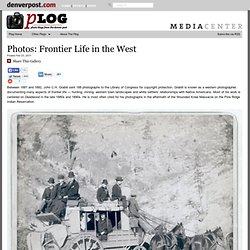
Grabill sent 188 photographs to the Library of Congress for copyright protection. Grabill is known as a western photographer, documenting many aspects of frontier life — hunting, mining, western town landscapes and white settlers’ relationships with Native Americans. Most of his work is centered on Deadwood in the late 1880s and 1890s. Title: "The Deadwood Coach" Side view of a stagecoach; formally dressed men sitting in and on top of coach. 1889.
Title: Villa of Brule A Lakota tipi camp near Pine Ridge, in background; horses at White Clay Creek watering hole, in the foreground. 1891. Title: Ox teams at Sturgis, D.T. Great Quotations of World War II. Charters of Freedom - The Declaration of Independence, The Constitution, The Bill of Rights. Myth: In April of 1775, Paul Revere rode through the streets from Boston to Lexington yelling "The British Are Coming" - Interesting US History - StumbleUpon. Myth: In April of 1775, Paul Revere rode through the streets from Boston to Lexington yelling "The British Are Coming".

Fact: First of all, it's not likely Paul Revere ever yelled out the words "The British Are Coming" because the areas he rode through often had British army patrols and besides most of the colonials of the time considered themselves British and were loyal to the crown. The purpose of the ride was to warn John Hancock and Samuel Adams who were in Lexington at the time. - StumbleUpon. PBS - StumbleUpon. Mental_floss Blog & 8 Secessionist Movements in American History - StumbleUpon. We all know about the Confederate states leaving the Union.

But that was far from the only secessionist movement in American history. Here are some rebellious regions you won't find in too many history books. 1. The Papers of George Washington. The First American West: The Ohio River Valley, 1750-1820 (American Memory, Library of Congress) Search by Keyword | Browse by Subject | Name | Title | Theme The mission of the Library of Congress is to make its resources available and useful to Congress and the American people and to sustain and preserve a universal collection of knowledge and creativity for future generations.

The goal of the Library's National Digital Library Program is to offer broad public access to a wide range of historical and cultural documents as a contribution to education and lifelong learning. Digital collections from other institutions complement and enhance the Library's own resources. Theodore Roosevelt: Icon of the American Century. The American History and Genealogy Project, AHGP. The History Place. Printable Exhibition. Mental_floss Blog & 4 More Forgotten Founding Fathers. This Saturday is July 4, a day when Americans of all shapes and sizes will come together to commemorate the founding of their country, and the noble pursuit of life, liberty, and overcooked hamburgers.
Here's a quick quiz question "“ how many people signed the Declaration of Independence? We're betting that few of you, not including the people who compulsively Googled that question, knew the answer is 56. Fifty-six?! Yes, there were far more Founding Fathers than most people learn about in civics class. Last year , we told you about five of these men "“ Carter Braxton, Button Gwinnett, Robert Treat Paine, Edward Rutledge and William Whipple. 1. Yes, it's true: not all of the signers of the Declaration of Independence were in favor of independence. At age 15, Read began studying the law, and he was admitted to the Philadelphia Bar in 1753, when he was only 19 years old. 2. Any numismatists (people who study money) reading this might recognize Caesar Rodney's name. 3. 4.
The Papers of Thomas Jefferson. 8 Famous Folks You Might Not Know Were Veterans. This Veterans Day, explore eight well-known figures from around the world whose military backgrounds might come as a surprise, from a famous living monarch to a washed-up gangster.

How many of these unsung vets did you already know about? 1. Socrates Historians struggle with the details of Socrates’ biography since this founding father of Western philosophy didn’t leave a paper trail—or even a papyrus one. But based on accounts by his students and contemporaries, we can assume that the famous Greek went through several career changes throughout his abbreviated life. 2. The reigning British monarch can speak French, hobnob with world leaders and execute a mean royal wave. 3. National Museum of American History. Former President John Tyler’s (1790-1862) grandchildren still alive. President John Tyler Former President John Tyler, born 221 years ago, still has two living grandchildren.

The one-term president isn't a well-known historical figure; he's probably best remembered for helping to push through the annexation of Texas in 1845, shortly before leaving office. So, how is it possible that a former president who died 150 years ago would still have direct descendents alive today? As it turns out, the Tyler men were known for fathering children late in life.
And that math is pretty outstanding when added up: US History Timeline: War of Independence. Before 1600 | 1600 - 1700 | 1700 - 1800 | 1800 - 1900 | 1900 - 2000 | American Revolution Timeline | Cold War Timeline 1774 - September 5 to October 26, the First Continental Congress meets in Philadelphia with 56 delegates, representing every colony, except Georgia.

Attendants include Patrick Henry, George Washington, Sam Adams and John Hancock. On September 17, the Congress declares its opposition to the Coercive Acts, saying they are "not to be obeyed," and also promotes the formation of local militia units. Federalist Papers: Primary Documents of American History (Virtual Programs & Services, Library of Congress)
The Last Man Standing. This past Sunday marked the end of an era in US history. Frank W. Buckles celebrated his 110th birthday on February first. He died peacefully at his home on February 27th. Buckles was one of 4,734,992 Americans who served in World War I. With his death, there are no more surviving US veterans of that war. Buckles was rejected by the Marine Corps and the Navy in 1917 for being too small (or more likely, suspiciously young-looking). There are two other documented living World War I veterans, who both served the United Kingdom. Claude Stanley Choules will turn 110 this week. MISSION STATEMENT. American Memory from the Library of Congress - Home Page. Welcome to LostLabor.com. HarpWeek: Explore History. Annenberg Media - A Biography of America - StumbleUpon.
The Vietnam War. Digital History - StumbleUpon. Mr. Lincolns T-Mails. National Archives and Records Administration. Home Page. Discovering Lewis &Clark : Home. Federalist Papers. Welcome to our Federalist Papers e-text.

Founding Fathers. The 1920s - Roaring Twenties - The Nineteen Twenties in History - StumbleUpon. Salem Witch Trials Documentary Archive. Armor for Field and Tournament.