
Joy of Plants apps, QR codes & Plant Finder. Strawberry Varieties. By Mr.
Strawberry Introduction to the Strawberry Varieties Page If you have decided to plant strawberries and need help sorting through the myriad of strawberry varieties to pick the right one for you, you’ve come to the right spot! Ever since the Garden Strawberry began to dominate the commercial strawberry industry (see the history section on the Strawberry Plant page for more details), a concerted effort to breed a better strawberry has occurred.
Organizations in North America, Europe, and Australia have led the charge. Herbs, Begonias, Starter Plants & Perennials From Peace Tree Farm. Superior plants and genetics, state-of-the-art greenhouses and environmentally-friendly sustainable techniques enable us to provide superb quality plants to fine independent garden centers, botanical gardens and museums, and all enthusiastic gardeners.

Peace Tree Farm is a Certified Organic greenhouse company located in the countryside of Bucks County, Pennsylvania. Peace Tree Farm encompases an acre of greenhouses on a historic 25-acre farm. It was named 'Peace Tree Farm' inspired by the Native American word "tohickon", which means "peace tree". Plant and Variety Database. SFSeedLibrary. Capsicum genus annuum chinense baccatum frutescens pubescens plus wild capsicum species. Capsicum terminology is very confusing with Pepper, chilli, chile, chili, aji, paprika and capsicum all used interchangeably to describe the plants and pods of the genus Capsicum.

We have chosen to use 'chile' as this is the most common terminology used in the UK. It is believed Chiles were first cultivated by the people of Central and South America in around 7000BC and there are now a bewildering range of over 3000 known varieties ranging from the mildest bell pepper to the fiery hot habanero. The botantical 'genus' to which all chiles belong is Capsicum (CAP-see-coom), from the greek kapto meaning 'to bite'. Chile Facts. Thomas Etty Esq. - Heritage Vegetable & Flower Seeds. Veg_seed_timeline.pdf (application/pdf Object) Homepage - American Botanical Council. Update: Login to ABC Website For a limited time, you can access all of ABC's content without a password, so no login is required.
The search button has been restored on all pages. Euromed Adopts Milk Thistle through ABC's Adopt-an-Herb Program. Reseda alba L. - Resedaceae - Reseda bianca. Pianta erbacea biennale o perenne alta 20 - 80 cm.
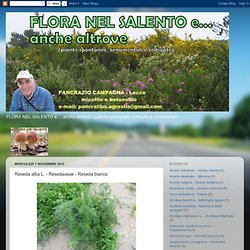
Il fusto è eretto e ramoso. Home Page. Herbs - Wholesale Suppliers and Exporters of Herbs from India. Lost Crops of the Incas: Little-Known Plants of the Andes with Promise for Worldwide Cultivation. Perennial Results: Plant View - Hakonechloa macra 'Aureola' An intriguing grass for the shade which is perfect for the formal Japanese garden.

Variegated but nearly all yellow, the leaf blades have narrow green stripes, mostly near the margins. Perhaps its most fascinating attribute is the cascading habit in which most of the leaves arch in the same direction, appearing much like a golden waterfall. Plant this grass where it will cascade down slopes, drape over rocks, crawl over the edges of walls, at the front of the garden, or even in containers. Though this grass does spread by stolons, it is a slow grower and will not rapidly overtake its neighbors. When grown in part shade, the yellow tones in the leaves will be most pronounced.
Hakonechloa is grown mainly for its beautiful foliage, though it does produce seed heads. Origin: Not Native to North America. Native Plants of the Carolinas & Georgia. Welcome to NameThatPlant.net!
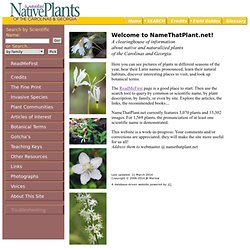
A clearinghouse of information about native and naturalized plants of the Carolinas and Georgia. Here you can see pictures of plants in different seasons of the year, hear their Latin names pronounced, learn their natural habitats, discover interesting places to visit, and look up botanical terms. The ReadMeFirst page is a good place to start. Schisandra: Ultimate Superberry. Yes, Schisandra is a berry, but don’t think of it as another superfruit like goji or acai.
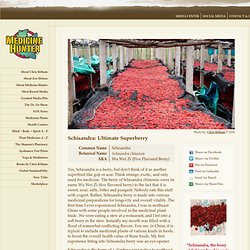
Think strange, exotic, and only used for medicine. The berry of Schisandra chinensis owes its name Wu Wei Zi (five flavored berry) to the fact that it is sweet, sour, salty, bitter and pungent. Nobody eats this stuff with yogurt. Rather, Schisandra berry is made into various medicinal preparations for longevity and overall vitality. The first time I ever experienced Schisandra, I was in northeast China with some people involved in the medicinal plant trade. Schisandra is the berry of a climbing vine native to northeast China and parts of Russia. Last summer I visited the main area of Schisandra berry cultivation, in China’s northeast Liaoning province. Plant Information. Tatiana's TOMATObase - Heritage Tomatoes - Tatiana's TOMATOBase. Wild Plants of Malta - Main Page (by Stephen Mifsud) PROTA. THE POISON GARDEN website. Herbs - Wholesale Suppliers and Exporters of Herbs from India. Plant Hardiness Zone Map. The International Plant Names Index - home page.
Herbs, Medicinal Plants, Finding and using wild herbs. Invasive Species: Information, Images, Videos, Distribution Maps. UM-Dearborn College of Arts, Sciences, and Letters. Plant Nutrient Deficiency Database (NutDef) Dynamic Accummulator Weeds. Untitled. Species Fungorum Home Page. The fungal website. UW Herbarium at the Burke - Burke Museum. The University of Washington Herbarium (also known as WTU) is an international resource for research into the diversity, distribution and ecology of Pacific Northwest vascular plants, non-vascular plants, fungi, lichen, and algae.
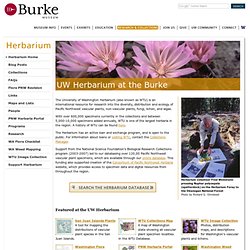
With over 600,000 specimens currently in the collections and between 5,000-10,000 specimens added annually, WTU is one of the largest herbaria in the region. A history of WTU can be found here. The Herbarium has an active loan and exchange program, and is open to the public. For information about loans or visiting WTU, contact the Collections Manager. Support from the National Science Foundation's Biological Research Collections program (2003-2007) led to our databasing over 120,00 Pacific Northwest vascular plant specimens, which are available through our online database. Search Herbarium Database Herbarium volunteer Fred Weinmann pressing Nuphar polysepala (spatterdock) on the Herbarium Foray to the Okanogan National Forest Photo by Richard G. Herbs To Herbs. Rainy Side Gardeners - Pacific Northwest Gardening - Rainyside.com. Plant lust - seriously simple search for plants. Plant Catalog. All About Russian and Siberian Kale - napus kale. Seed Weight: - 215 seeds/gm or 6,000 seeds/ounce.
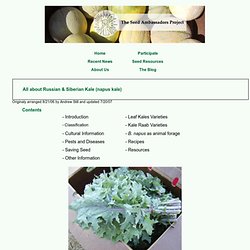
(Wild Garden) - 300 seeds/gm or 8,400 seeds/ounce. (Territorial) - 355 seeds/gm or 10,000 seeds/ounce. (Jevons) Germination Temperature: Optimal 55-75°F Days to emergence: 3-8 Days Minimum or 5-15 Days maximum Legal germination standard: 75% minimum Soil and Fertility: All kales are fairly heavy feeders, however they tolerate low fertility better than other brassicas (like cabbage and cauliflower). Seeding Depth: 1/4-1/2" Spacing: Biointensive - 15 in. equidistant, 84 plants/100 sq. ft. in raised beds. Water Requirements: Moderate. Light Requirements: Full Sun/Partial Shade (light woodland), Full Sun is optimal. Temperature Requirements: Cold temperatures below (-4°C) may either kill or injure seedlings.
Chinese Medicinal Herb Farm - Home. Slugs and Salal - Gardening Pacific Northwest. Perennial Resource. Home. Untitled Document. Home — The Plant List. Hort.net. Crops of Honorable Mention. Legume Family [ Back to top of this page ] eFloras.org Home. Herbs In Alphabetical Order. Herbs have caught the imagination of mankind ever since its advent on the earth. Lady Bird Johnson Wildflower Center - The University of Texas at Austin. Plants « Edible Plant Project. Plant Information Online. OnlinePlantGuide.com > Plant Information and Pictures. Herbal Information, Gardening and Hydroponic Supplies. Plants For A Future : 7000 Edible, Medicinal & Useful Plants.