
Space
Get flash to fully experience Pearltrees
Learn More at Space.com. From Satellites to Stars, NASA informat
Nibiru has been linked to NASA, and is also sometimes referred to or confused with Planet X, another supposed world for which there is no evidence.NASA - Space Science - Home
Astronomy Resources at STScI
The Hubble Legacy Archive (HLA) announces the availability of Data Release 5 as of March 8, 2011. New in this release are a new, interactive footprint interface (pictured); multi-wavelength source lists; high-level WFC3 science products from the Early-Release Science and the Multi-Cycle Treasury program CANDELS; and the ability to obtain source information directly from the Interactive Display overlay. DR5 also completes the processing of the WFPC2 data, all of which are now public.HubbleSite -- Out of the ordinary...out of this world.
The Webb Space Telescope, Hubble's successor, will see in infrared, the light emitted by the farthest objects we can detect. Learn about Webb, its technology, and the science it will reveal.Space Today Online -- Solar System Planet Earth -- Ancient Astro
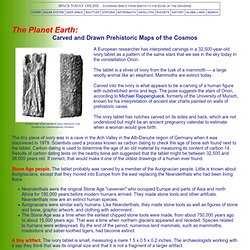
A European researcher has interpreted carvings in a 32,500-year-old ivory tablet as a pattern of the same stars that we see in the sky today in the constellation Orion. The tablet is a sliver of ivory from the tusk of a mammoth — a large woolly animal like an elephant. Mammoths are extinct today.COSMOS magazine | The science of everything
"How did a suicidal robot end up here?" It had taken over 20 years of painstaking preparation and research to plan his suicide. He had to learn everything there was to know about the science of sentience. read more It was just how the world worked: you get to time travel, but do you end up chatting with Cleopatra? No, you end up back at the same coffee shop where four years of deadlines slithered through your fingers. read moreDo planets circle our closest stellar neighbors, the system loved by science fiction: Alpha Centauri? We don’t know. But, Debra Fischer, Julien Spronck, and their colleagues at Yale University, in part with Planetary Society support, are trying to find out.

