
Janucá. Janucá (hebreo: חֲנֻכָּה y sin puntuación diacrítica חנוכה), llamada también la «Fiesta de las Luces» o «Lucernarias», es una festividad judaica.
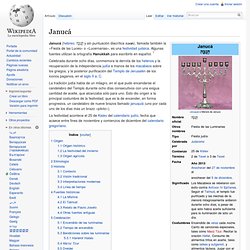
Algunas fuentes utilizan la ortografía Hanukkah para escribirlo en español. [1] Celebrada durante ocho días, conmemora la derrota de los helenos y la recuperación de la independencia judía a manos de los macabeos sobre los griegos, y la posterior purificación del Templo de Jerusalén de los iconos paganos, en el siglo II a. C. La tradición judía habla de un milagro, en el que pudo encenderse el candelabro del Templo durante ocho días consecutivos con una exigua cantidad de aceite, que alcanzaba sólo para uno. Esto dio origen a la principal costumbre de la festividad, que es la de encender, en forma progresiva, un candelabro de nueve brazos llamado januquiá (uno por cada uno de los días más un brazo «piloto»).
Origen[editar] Origen histórico[editar] En los libros I Macabeos y II Macabeos se puede leer sobre la institución de la Janucá. 198 a. #2 / 17 Judaism & Jewish Life.
Jewish mother. Stereotypes of Jews are caricatured and generalized representations of Jews, often of a racist nature.
The Jewish diaspora in Europe and the Western hemisphere have been stereotyped for over 2,000 years as scapegoats for a multitude of societal problems.[1] Antisemitism continued throughout the centuries and reached a climax in the Third Reich during World War II. Jews are still stereotyped as greedy, nit-picky, stingy misers and are often depicted in caricatures, comics, and propaganda posters counting money or collecting diamonds. Early films such as Cohen's Advertising Scheme (1904, silent) stereotyped Jews as "scheming merchants".[2] Common objects, phrases and traditions used to emphasize or ridicule Jewishness include bagels,[citation needed] playing violin, klezmer, undergoing circumcision, haggling and uttering phrases like mazal tov, shalom, and oy vey. Physical features[edit] Nashim. Tohorot. Tohorot (Hebrew: טָהֳרוֹת literally "Purities") is the sixth and last order of the Mishnah (also of the Tosefta and Talmud). This order deals with the clean/unclean distinction and family purity.
This is the longest of the orders in the Mishnah. There are 12 tractates:[1] Keilim: ("Vessels"); deals with a large array of various utensils and how they fare in terms of purity. 30 chapters, the longest in the Mishnah.Oholot: ("Tents"); deals with the uncleanness from a corpse and its peculiar property of "overshadowing" objects in the same tent-like structure as it. Women in Judaism. The role of women in Judaism is determined by the Hebrew Bible, the Oral Law (the corpus of rabbinic literature), by custom, and by non-religious cultural factors.
Although the Hebrew Bible and rabbinic literature mention various female role models, religious law treats women differently in various circumstances. Gender has a bearing on familial lines: in traditional Judaism, "Jewishness is passed down through the mother", although the father's name is used to describe sons and daughters in the Torah, e.g., "Dinah, daughter of Jacob".[1] Biblical times[edit] According to Jewish tradition, a covenant was formed between the Israelites and the God of Abraham at Mount Sinai. The Torah relates that both Israelite men and Israelite women were present at Sinai, however, the covenant was worded in such a way that it bound men to act upon its requirements and to ensure that the members of their household (wives, children, and slaves) met these requirements as well.
Talmudic times[edit] Guide to the Jewish Wedding. A traditional Jewish wedding is full of meaningful rituals, symbolizing the beauty of the relationship of husband and wife, as well as their obligations to each other and to the Jewish people.

The following guide explains the beauty and joy of these the Jewish wedding traditions. The Wedding Day The dawning wedding day heralds the happiest and holiest day of one's life. This day is considered a personal Yom Kippur for the chatan (Hebrew for groom) and kallah (bride), for on this day all their past mistakes are forgiven as they merge into a new, complete soul. Marriage. The Torah provides very little guidance with regard to the procedures of a marriage.
The method of finding a spouse, the form of the wedding ceremony, and the nature of the marital relationship are all explained in the Talmud. Bashert: Soul Mates According to the Talmud, Rav Yehuda taught that 40 days before a male child is conceived, a voice from heaven announces whose daughter he is going to marry, literally a match made in heaven! In Yiddish, this perfect match is called "bashert," a word meaning fate or destiny.
The word "bashert" can be used to refer to any kind of fortuitous good match, such as finding the perfect job or the perfect house, but it is usually used to refer to one's soul mate. Finding your bashert doesn't mean that your marriage will be trouble-free. Although the first marriage is bashert, it is still possible to have a good and happy marriage with a second spouse. How do you know if you have found your bashert? Being Jewish Web Site.