
The Net Generation, 1974-83. The Net Generation -- for whom social networking via the Internet is a birthright -- are probably too young to characterize adequately.
They were in their teens and 20s in the Nineties (1994-2003; not to be confused with the '90s); and they are in their 20s and 30s now, in the Oughts (2004-2013; not to be confused with the '00s). Not to be confused with the so-called Generation Y or Millennials (pop demography terms that refer to Americans born between the mid-1980s and mid-1990s), Netters aren't the parent-loving, resume-padding, squeaky-clean paragons of virtue we've heard their parents praise to the skies. Like OGXers, who were lumped in with Boomers but never felt part of that generation, Netters are a lost generation; older Netters have been lumped in with PCers (who, to make matters worse, were mistakenly called Xers), and younger Netters have been lumped in with Millennials.
This trend stops here! Please credit Brainiac/Joshua Glenn whenever you use this guide. Angelina Jolie. "10 Ways Generation Y Will Change the Workplace" par R. There's no doubt that Generation Y will fundamentally change corporate America. It's already started. Managing Gen Y is the hot topic among consultants, Human Resource executives and talent management professionals. For a Gen Yer like me, this is great news.
We have a voice, and we have the ear of the decision makers. Not bad for a group of lazy, entitled, twentysomethings. Meetings are important, sometimes. The work day is eight hours. Back in the day, nearly everyone had a secretary. Retirement is dead. Gen Y is obsessed with career development. Ten years ago, human resources got no respect. {*style:<b> 7. For some reason, companies assume that when you pay your dues and you know the business, you can be a manager. Sure, Gen Xers can laugh about it now, but Gen Yers respect our parents, and our parents are interested in every part of our lives, even when we're 30. 9. Semi-annual or annual performance reviews do not work. ShareThis. "Why Gen Y Is Going to Change the Web" sur RWW (March. Gen Y is taking over.
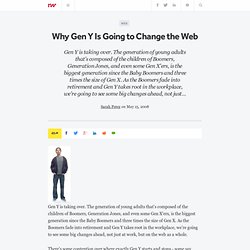
The generation of young adults that's composed of the children of Boomers, Generation Jones, and even some Gen X'ers, is the biggest generation since the Baby Boomers and three times the size of Gen X. As the Boomers fade into retirement and Gen Y takes root in the workplace, we're going to see some big changes ahead, not just at work, but on the web as a whole. There's some contention over where exactly Gen Y starts and stops - some say those born 1983-1997, others think 1982-1997. In this week's Entertainment Weekly, Gen Y is defined as "current 13 to 31 year-olds" and BusinessWeek says they can be as young as five. Regardless, we know who they are - they're the young kids of today, the most digitally active generation yet, having been born plugged in.
How They're Different They're Plugged In: The term "digital native" applies to most Gen Y'ers. Work Isn't Their Whole World: Sure, they're going to go to work, but it had better be fun. Gen Y & Technology Mobile Web?