
RSSOwl - Powerful RSS / RDF / Atom News Feed Reader with Google Reader Synchronization. NotifyConky Desktop by ~BigRZA on deviantART. Free software downloads. AMD FX-8150, Gigabyte Radeon HD 7870, Cooler Master Storm Stryker (White) Free software downloads. BASH Programming - Introduction HOW-TO. Next Previous Contents.
UncomplicatedFirewall. Introduction The Linux kernel in Ubuntu provides a packet filtering system called netfilter, and the traditional interface for manipulating netfilter are the iptables suite of commands. iptables provide a complete firewall solution that is both highly configurable and highly flexible.
Free Graphics software downloads. Barcode4J. Free Graphics software downloads. Gnaural: A Binaural-Beat Audio Generator. Main Page. Try This Great Looking Conky Lua Configuration For Ubuntu, Fedora Or Linux Mint. Despot77 posted a great looking Conky Lua configuration at Gnome-Look that displays some beautiful rings for the cpu, clock, ram, swap, disk, net and also comes with an easy way to display the weather that doesn't involve you register to any website, work with API keys and so on.
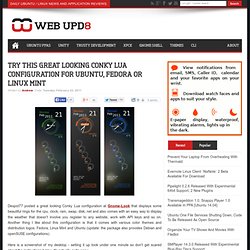
Another thing I like about this configuration is that it comes with various color themes and distribution logos: Fedora, Linux Mint and Ubuntu (update: the package also provides Debian and openSUSE configurations). Gmail, Weather, Beauty on your Ubuntu Desktop. For help, feedback, comments, and other discussions for this tutorial, please visit the official forum.
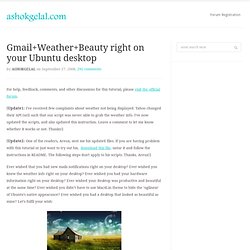
[Update1: I've received few complaints about weather not being displayed. Yahoo changed their API (url) such that our script was never able to grab the weather info. I've now updated the scripts, and also updated this instruction. Leave a comment to let me know whether it works or not. Thanks!] Bacula. Conky - Planet by ~Fenouille84 on deviantART. ScreenCloud Lets You Take, Share Ubuntu Screenshots Quickly. A new screenshotting tool has been added to the Ubuntu Software Center.
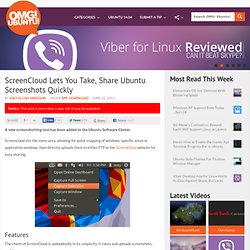
Screencloud sits the menu area, allowing for quick snapping of windows, specific areas or application windows, then directly uploads them to either FTP or the ScreenCloud website for easy sharing. Features The charm of ScreenCloud is undoubtedly in its simplicity. It takes and uploads screenshots, nothing more. But for advanced options you’ll want to head on into the preferences. Set timer delayEnable ‘Capture window borders’Enable/Disable NotificationsSet app to run on start upAdjust account/upload/filename/shortcut settings Uploading. Beginners' Guide. This document will guide you through the process of installing Arch Linux using the Arch Install Scripts.
Before installing, you are advised to skim over the FAQ. The community-maintained ArchWiki is the primary resource that should be consulted if issues arise. Gravit - A Gravity Simulator. Download - IntelliJ Open-Source Project - Confluence. WDT - Web Developer Tools GNOME. WDT - Web Developer Tools is a suite of useful tools for web developers Patch for UNITY available, statusicon replaced with appindicator Download the archive, extract it and move the webdeveloper.py file to /usr/share/wdt and replace the current one.
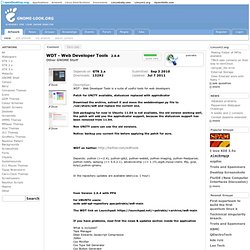
Deb packaging for now in Ubuntu 11.04 is not available, the old version working well, the patch will add you the appindicator support, because the statusicon support has been removed from 11.04. Non UNITY users can use the old versions. Tvpvrd. Download. Enrollix. What is Enrollix?
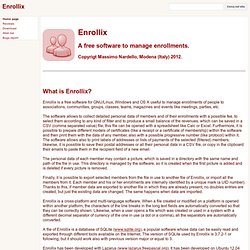
Enrollix is a free software for GNU/Linux, Windows and OS X useful to manage enrollments of people to associations, communities, groups, classes, teams, magazines and events like meetings, parties, etc. Home Project for Open @ Adobe / Home / Projects. Index of /repository/lucid. Ubuntu Apps : Owais Lone. Synergy. SoundConverter - GNOME Sound Conversion. LiveCDCustomization. You may wish to customise the Ubuntu Desktop LiveCd to: make your own Linux / Ubuntu distribution show off a particular application localise to a certain language remove software packages add software packages update software packages change system defaults (theme, icons, desktop background, panels, browser homepage, etc) The easiest way to create a custom LiveCD is to use Ubuntu Customization Kit.
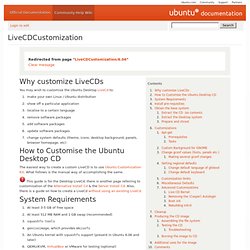
What follows is the manual way of accomplishing the same. This guide is for the Desktop LiveCd; there is another page referring to customisation of the Alternative Install Cd & the Server Install Cd. How to backup Hard Disk/ Partition/ CD-ROM on Linux using dd command - Chankey Pathak's blog. 7 Tasks You Shouldn’t Use a GUI For. Sometimes the GUI is just too slow.
Learn how to resize images, add drop shadows, splice mp3s, clone hard drives and more with the command line. Here are a few tasks that you might want to consider using the command line for. 1. Resizing images Unless you are doing some sort of cropping there is no reason to load up Photoshop or the Gimp. Convert -resize 300 image.jpg image-small.jpg If you finding yourself doing lots of image resizing during the day, this command could potentially save you a LOT of time. Ubuntu customizer. DerivativeDistroProcess. Summary This document discusses issues necessary for consideration when creating an Ubuntu derivative distribution.
DistributionDefaultsAndBranding. Here, we document the standard changes we have to make across the distribution to set up the right technical and aesthetic defaults, and all the places where branding may be required. Base base-files. DerivativeDistroHowto. This page is unofficial guide how to create Ubuntu derivative distribution according to Ubuntu policies and common sense, so that cooperation between derivative distro and Ubuntu is maintained and both can benefit from it.
It is a collection of links to discussions, tools and useful pages, but note that even statements from Ubuntu employees are not legally binding and the final rules are set by legal documents . However, by obeying rules stated here you present good will and cooperation with the community. Ubuntu (and its main derivatives) are great distributions, but they do not fit all possible needs and use cases.
By creating derivative distributions it is possible to spread Linux into more environments and Ubuntu itself can be improved by feedback from derivatives. It is also worth noting that Ubuntu itself is derivative of Debian distribution. Living the Linux Tycoon: My Adventures as a Real Life Distro Developer. Living the Linux Tycoon: My adventures as a Real-Life Distro Developer.
DistroWatch.com: Put the fun back into computing. Use Linux, BSD. UncomplicatedFirewall. Introduction The Linux kernel in Ubuntu provides a packet filtering system called netfilter, and the traditional interface for manipulating netfilter are the iptables suite of commands. iptables provide a complete firewall solution that is both highly configurable and highly flexible. Docky and xcompmgr. How To Customize The Ubuntu Boot Splash Screen & Logo [Linux] You probably already know how to customize the Ubuntu desktop. Trademark policy.