
Composting: A timetable. Everyone knows that composting your fruit and vegetable scraps and other biological material is much better than sending those scraps to the city dump, where they would turn into methane gas.
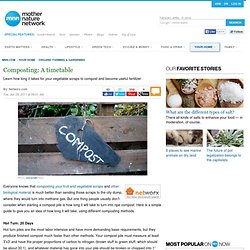
But one thing people usually don't consider when starting a compost pile is how long it will take to turn into ripe compost. Here is a simple guide to give you an idea of how long it will take, using different composting methods. Hot Turn: 20 Days Hot turn piles are the most labor intensive and have more demanding basic requirements, but they produce finished compost much faster than other methods. Your compost pile must measure at least 3'x3' and have the proper proportions of carbon to nitrogen (brown stuff to green stuff, which should be about 30:1), and whatever material has gone into your pile should be broken or chopped into 1” pieces. Slow No Turn: 3-12 Months Worm Bin: 1-3 Months Black Soldier Fly: 3 Weeks Black soldier fly larvae are gaining popularity.
How to Build a Tumbling Composter: 11 steps (with pictures) Edit Article Edited by Tom Stricker, James Quirk, Tom Viren, Sondra C and 28 others One of the keys to composting is aeration.
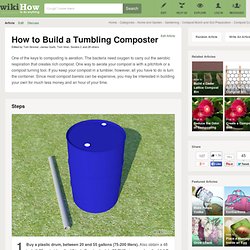
The bacteria need oxygen to carry out the aerobic respiration that creates rich compost. One way to aerate your compost is with a pitchfork or a compost turning tool. If you keep your compost in a tumbler, however, all you have to do is turn the container. Ad Steps 1Buy a plastic drum, between 20 and 55 gallons (75-200 liters). 11Check the contents occasionally, and when they are broken down by the bacteria in the drum, remove them to use for soil amending, mulch, and other purposes around your lawn and garden. Tips Warnings Filling your composter with green (fresh cut) lawn trimmings or other material may cause it to generate too much heat, in which case it may begin to smolder, if the container is not rotated occasionally.You may need to add supports for the barrel if you're using a plastic drum, otherwise the barrel may rip off of the axle. Know When to Plant What: Find Your Average First Fall Frost Date. To determine your optimum dates for sowing fall crops, add three weeks to the days to maturity ratings listed below or shown on your seed packs to compensate for days that are getting shorter.
Then count back from your average first fall frost date to find the date you should sow each crop. (To find your average first fall frost date, search by state in the tables provided by the National Climatic Data Center.) Cool-season plants will continue to grow a little after nights turn chilly, but they will make most of their new growth early on, while the weather is still warm. Many of the best crops of fall — including salad greens and various cabbage cousins — will refuse to germinate in soil warmer than 85 degrees, so the seeds are best started indoors (on a 90-degree day, surface soil temperatures may actually be 110 degrees or more). The procedure for growing seedlings is the same as in spring (see Seed Starting Basics), but care for transplanted seedlings requires some extra hardware.