I Ching. The I Ching, also known as the Classic of Changes, Book of Changes, Zhouyi and Yijing, is one of the oldest of the Chinese classic texts.[1] The book contains a divination system comparable to Western geomancy or the West African Ifá system; in Western cultures and modern East Asia, it is still widely used for this purpose.
Traditionally, the I Ching and its hexagrams were thought to pre-date recorded history,[2] and based on traditional Chinese accounts, its origins trace back to the 3rd and 2nd millennia BCE.[3] Modern scholarship suggests that the earliest layers of the text may date from the end of the 2nd millennium BCE, but place doubts on the mythological aspects in the traditional accounts.[4] Some consider the I Ching the oldest extant book of divination, dating from 1,000 BCE and before.[5] The oldest manuscript that has been found, albeit incomplete, dates back to the Warring States period (475–221 BCE).[6] History[edit] Traditional view[edit] Modernist view[edit] Structure[edit]
The I Ching Basics: What Is It and How Do I Use It? I Ching is an ancient, sophisticated fortune-telling tool used by the Chinese to predict the pattern of events which will govern and shape our destiny.
Terence McKenna studied the I Ching and developed his interpretations in the form of Timewave or Novelty theory. But what exactly is the I Ching and how does one use it? This has been succinctly explained in this guest post by Erik Oakenshield, who specializes in Art Nouveau Tarot reading, or Western Zodiac horoscope and Druid practice. I Ching, the Book of Changes - Yi Jing. This famous system of 64 hexagrams plus their commentaries and transformations is at the root of Chinese thought.

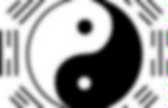
Tr. The T’ai Chi Symbol. Which Way Up should the T’ai Chi go ?

By Mark Shackelford, author of Software for Feng Shui This is the famous T’ai Chi symbol, representing many of the basic ideas of Taoist philosophy, some of which are outlined below. However, one question that often arises is "Which way should one draw the T’ai Chi? ". Qian - heaven. Kun - earth. Xun - wind, wood. Li - fire. Fire Manifestation, the element of Li.

"God (Di) meets in the sign of Li" "Li manifests itself in the eye" Fire is intelligence that enlightens everything, leaving nothing in shadow. Many cultures have held the belief that fire destroys sorcery or black magic. (hex.21) 'Seeing' also means discerning and separating. "Water and fire do not combat each other (Lynn: do not fail to complement each other/ drive each other on)" The second son, water, gives the shapes to creation, the second daughter, fire, makes them visible (hex.30).
"Li means dependence" Fire needs fuel. Fire appears both as a creative force (hex.35) and as a destructive one. Kan - water. Zhen - shock, thunder. Gen - mountain. Dui - marsh, lake. LiSe. Yi Jing, Oracle of the Sun (Yi Jing, I Ching or Zhou Yi) LiSe HOME/choose hex.

Yijing Dao - Calling crane in the shade. A website dedicated to reviews of books on the Yijing or I Ching, the ancient Chinese oracle known as the Book of Changes, but also containing a complete 'Introduction to Yijing' for beginners, an accurate transcription of the 1935 Harvard-Yenching Zhouyi, animations of hexagram sequences, articles, and scans of Chinese diagrams.
Yijing Research. I Ching symbols. I Ching: Book of Changes / Wilhelm & Baynes Translation. I Ching / Ten Wings / Shuo Kua / Chapter II - Organic Design. New Book: ‘The I Ching: A Biography’ New Book: ‘The I Ching: A Biography’ THE I CHING: A BIOGRAPHY By Richard J.

Smith Excerpted on The Huffington Post April 9, 2012 Original Link Purchase “The I Ching: A Biography” What makes a classic? One might add that precisely because of these characteristics, a classic has great staying power across both space and time. According to Chinese tradition, the Yijing was based on the natural observations of the ancient sages; the cosmic order or Dao that it expressed had no Creator or Supreme Ordainer, much less a host of good and malevolent deities to exert influence in various ways. The “absolute gulf between God and his creatures” in the West had no counterpart in the Chinese tradition.
For those who think of themselves as secular, rational, and scientific, the Yijing seems to be a work of “awesome obscurity,” full of unfamiliar symbols and cryptic sayings, and reflecting a worldview sometimes described as “mystical” or “prelogical.” I Ching: Richard Wilhelm Translation. The I Ching, Legge tr. Index. Sacred Texts Sacred-texts home Confucianism Taoism Prophecy and DivinationBuy CD-ROM Buy books about I-Ching.

I Ching. Free I Ching eBook: Unveiling the mystery of I Ching, also called the Book of Changes, (Yijing or Yi Jing), translated and elaborated by Tuck Chang. The Image of the Cosmos in the Yijing. Harmen's Dagboek. In this article no in-depth explanation of Chinese characters, hardly references, just an interesting story.
There is a fascinating link with hexagram 29 and a passage from the Mozi 墨子. The name of this hexagram, kan 坎, means 'pit, hole in the ground, trap'. But used doubled (kan-kan 坎坎) it is an onomatopoeia for the sound of drumming, as in the poem Fa Tan 伐檀 in The Book of Odes: 坎坎伐檀兮Kan-kan go his blows on the sandal trees... Often when a character is doubled it is a representation of a sound. 來之坎坎The kan-kan of coming/approaching... Something which produces a kan-kan sound is approaching. I Ching Meditations. I Ching Connexion. Divination. Yijing Hexagram Names and Core Meanings. Introduction The Yi tells us that a good Cauldron needs a good handle, that a good Well needs a long enough rope and a bucket that doesn't leak. In both cases, these symbols are most useful when they are accessible, when they can be grasped, when you can get a grip, and when you can retrieve what you need from the ground or the fire.
The Gua Ming or Hexagram Name is the first and most obvious way to get a grip on the coherent sets of ideas that each of the Hexagrams represents. It is therefore to our advantage to clear up some of the great confusion that has grown up around them. Dreamcatchers Community. Ever wondered where people like Roger Hamilton got Wealth Dynamics, Myers & Briggs got their profiling or Steve Brown got Red, Green, Blue, Yellow.
It all came from the work of Carl Jung (Freud’s offsider) who worked with Richard Wilhelm in the 1920′s on the I-Ching. Jung was introduced to it, after he lost faith in Freud’s theories, by Wilhelm who had lived in China for many years and had studied the book with the secret societies that existed there. Some background for I-Ching newbies. The book was commissioned by Emperor Fu Hsi in around 3,000BC. It is not known who or how many people authored it, Confucius edited it in his lifetime some 2500years later. Physiognomic system of I Ching. Learn I Ching interpretation. Feng Shui - Yi Jing. The main elements of the Yi Jing are its hexagrams.
These 64 figures, made up only of solid and broken lines, are the foundation of this book which has come to us through more than two millennia, but nowhere in the book is there an explanation of what these hexagrams really represent. It is as if the Chisese of the Han Dynasty did not need a user's manual to use the book, that the mere words used to describe the situation presented in the hexagram were sufficient.
This must be the case, because their diviners knew this system perfectly, and did not need to explain the obvious. Unfortunately, time has gone by, and we do not have this knowledge, this information that they transmitted orally and never put down in black and white. We need to examine this problem if we truly want to understand the Yi Jing. I ching caRDS art. Yijing cards. Just a version... « Yi Blog. Yijing Dao - Glossary of Chinese Yijing terms. This is a glossary of Yijing technical terms that appear on this site, in alphabetical order of pinyin syllables, so xiantian comes before xiangshu.
If you need a Chinese font, you can download one. bachungua 八純卦 'Eight pure hexagrams' – The eight hexagrams where upper and lower trigrams are the same (1, 2, 29, 30, 51, 52, 57, 58). Each heads a 'palace' of Jing Fang's Eight Palaces arrangement, so such hexagrams are also known as 'palace hexagrams' (GONGGUA). bagong 八宮 'Eight Palaces' – The Eight Palaces arrangement of Jing Fang. Sometimes called 'Eight Houses', though this is less accurate. bagua 八卦 'Eight trigrams'