
6 Famous Symbols That Don’t Mean What You Think. The entire point of using a symbol is that it conveys meaning and saves space — you see one picture of a stick figure in a dress and you no longer need the phrase “This is the place where female humans can discharge waste.”

But what is fascinating is that sometimes the meaning of a symbol will get lost to history, but we’ll just keep right on using it anyway. But would we do that if we knew … Apart from the cross, the most ubiquitous symbol of Christianity is the ichthys, known to us as the Jesus Fish, and today it appears predominantly in its natural habitat — car bumpers. The ichthys actually dates right back to ancient times, when Christianity was still an obscure sect, and considering that fish and fishing were frequently used as symbols in the Bible, you could argue that it’s a more appropriate symbol for the teachings of Christ than the device used to torture and kill him. #5.
Well, there’s some pretty convincing evidence that it was never supposed to be a heart in the first place … Santa's real workshop: the town in China that makes the world's Christmas decorations. There’s red on the ceiling and red on the floor, red dripping from the window sills and red globules splattered across the walls.

It looks like the artist Anish Kapoor has been let loose with his wax cannon again. But this, in fact, is what the making of Christmas looks like; this is the very heart of the real Santa’s workshop – thousands of miles from the North Pole, in the Chinese city of Yiwu. Our yuletide myth-making might like to imagine that Christmas is made by rosy-cheeked elves hammering away in a snow-bound log cabin somewhere in the Arctic Circle. But it’s not. The likelihood is that most of those baubles, tinsel and flashing LED lights you’ve draped liberally around your house came from Yiwu, 300km south of Shanghai – where there’s not a (real) pine tree nor (natural) snowflake in sight. “Maybe it’s like [Chinese] New Year for foreigners,” says 19-year-old Wei, a worker who came to Yiwu from rural Guizhou province this year, speaking to Chinese news agency Sina.
10 ulicznych artystek, które są lepsze niż Banksy. Nie zrozumcie nas źle, lubimy twórczość Banksy’ego.
W zeszłym roku śledziliśmy każdy jego ruch, gdy okazało się, że przekształcił cały Nowy Jork w jedną wielką wystawę pod gołym niebem. Istnieje wiele powodów, za które powinnyśmy uwielbiać tego anonimowego króla sztuki ulicznej, począwszy od jego krucjat społecznych po innowacyjne wykorzystanie Internetu jako przestrzeni dla jego dzieł. Po prostu daleko mu do tytułu jedynego ulicznego artysty wykorzystującego te narzędzia, nawet jeśli robi to na wielką skalę. Artist Creates Cat And Mice Armor Based On Different Historical Eras. Canadian artist Jeff de Boer creates impressive metal armor for cats and mice based on different historical eras.
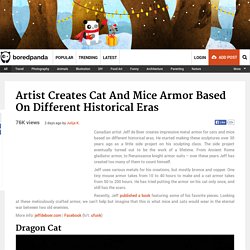
He started making these sculptures over 30 years ago as a little side project on his sculpting class. The side project eventually turned out to be the work of a lifetime. From Ancient Rome gladiator armor, to Renaissance knight armor suits – over these years Jeff has created too many of them to count himself. Jeff uses various metals for his creations, but mostly bronce and copper. One tiny mouse armor takes from 10 to 40 hours to make and a cat armor takes from 50 to 200 hours.
Recently, Jeff published a book featuring some of his favorite pieces. More info: jeffdeboer.com | Facebook (h/t: ufunk) Dragon Cat Bat Cat Samurai Siamese Crusader army Tournament Cat 15th Century Maximilian Rat Rose Tournament Mice Persian Cat Gladiator Cat Helmet White Knight Cat Elven Princess Persian Cat and Crusader Mouse Edo Period Samurat General. Cat Battle Armor Is Battle Armor For Your Cat (PHOTOS)
Człowiek z czarną reklamówką. ''Na śniadanie, do pracy, na znicze'' - siatka Boss to przedmiot kultowy. Czesław, ogrodnik, lat 57: Reklamówka musi być mocna, żebym mógł ją zwinąć i schować do torby, żeby uszy się nie urwały, jak dużo napakuję.
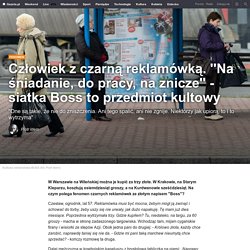
Tę mam już dwa miesiące. Poprzednia wytrzymała trzy. Gdzie kupiłem? Tu, niedaleko, na targu, za 60 groszy - macha w stronę zadaszonego targowiska. Wchodząc tam, mijam cygańskie firany i wisiorki ze stepów Azji. Dalej mężczyzna w kowbojskim kapeluszu z brystolową tabliczką na piersi: „Naprawy instalacji gazowych, elektrycznych i inne roboty domowe” . - Ja w sprawie bossów. Ten napis oznacza jakość (fot. Napis jako jakość Znalazłem numer. Kolejny numer telefonu. - Tak, dostałem od pana mail.
Wychodzi na to, że reklamówka po wyprodukowaniu w Chinach, zanim trafi do Czesława ogrodnika, przechodzi przez ręce dystrybutora, dwóch hurtowników i sprzedawcy. Reklamówka BOSS w akcji (fot. Po tygodniu dzwonię z innego telefonu jako właściciel ciucholandu spod Krakowa.