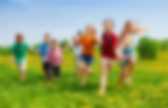
Environmental Education in Early Childhood - Victoria - Home Page. What is the Outdoor Classroom by Eric Nelson. Eric Nelson's book, Cultivating Outdoor Classrooms, clarifies the vision of the outdoor classroom, and explains simply and clearly how it addresses the needs of today's children. He kindly agreed to share some extracts with Connect readers. I hope these selections encourage you to get and read this excellent book. The Outdoor Classroom: Fulfilling a Vision for Childhood The Outdoor Classroom's vision is simple: children benefit from spending more time outdoors, especially in natural places. Its goal is equally simple: to increase the quantity, quality, and benefit of outdoor experience for children.
Here is an overview of the key features of the Outdoor Classroom: • The Outdoors is a Primary Environment for Children The outdoors is an important learning environment. . • Freedom for Children to Play on Their Own A fundamental principle of the Outdoor Classroom is children's right to initiate their own activities. . • Engaged Children and Engaged Teachers Engagement is key to learning.
Outdoor Learning in the Early Years. Life is enhanced by the great outdoors Learning can take place anywhere, indoors and outdoors, and in all weathers. In recent years an increasing number of educational settings have given children the opportunity to learn outdoors. The idea of young children learning outdoors seems natural.
Young children are naturally curious and therefore should be encouraged to learn through exploring the world. In many countries, such as Sweden, outdoor learning is common practice. Children as young as two spend their days in a forest environment where they can be close to nature. Outdoor learning provides a hands-on learning experience that is not often possible indoors. In the UK, a number of forest schools based on the policy of Swedish outdoor education have been established. The coastline is also popular environment for outdoor learning. The countryside offers children the opportunity to visit a farm and learn about various animals up-close. An ideal location for outdoor learning Like this: Outdoor Kindergarten Programs - The Life-long Learner.
“Using the real world is the way learning has happened for 99.9% of human existence. Only in the last hundred years have we put it into a little box called a classroom”. Nixon, 1997:34 Introduction As Tim Gill explains, initiatives embracing Forest Schools and outdoor kindergartens have increased considerably over the last few years (Gill, 2009). This enquiry will explore the pedagogical beliefs behind outdoor programs and why they have emerged in Melbourne, Australia, looking at outdoor play and its “importance as a pedagogical space for children’s play, learning and development” (Moser & Martinsen, 2010). My inquiry will be in the form of a literature review, exploring the history of outdoor education in relation to Kindergarten programs, and the current emergence of specific outdoor programs around Melbourne, Australia. Methodology and Terminology Before exploring the literature it is necessary to define and explain the terminology.
History of Outdoor programs Benefits of Outdoor Learning.