
BackYardHive Beekeeping Shop. NEW!
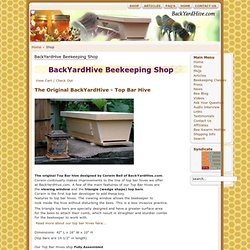
If you choose to build your own hive based on our Top Bar Hive Plans (listed above) we suggest that you purchase these pre-made top bars. A set of top bars are offered as a package with the Hive Plans (please see above). But if you choose to purchase additional sets of top bars to build more than one hive, please see the options below for top bar sets. You also can purchase single top bars below as well. Our Top Bars are a "triangle" top bar, which allow the bees more surface area to attach their comb and as a result they draw straighter, more stable combs. Packages of top bars can be purchased with the Top Bar Hive Plans (see listed above).Or you can order the top bars only in sets or singles. Bar Dimensions: 1 3/8" width Prices: Original BackYardHive Top Bars (14 1/2" bars) Single Bar: $3.50 Within US | International One Set of 24 Top Bars: $78.95 Within US | International Golden Mean Top Bars (17 3/4" bars): Single Bar: $4.00 Within US | International More Details about using Spacers.
Growing Celery Indoors: Never Buy Celery Again. Remember when we tested and shared how to grow onions indefinitely last week?
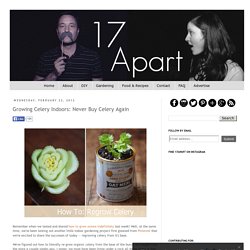
Well, at the same time, we've been testing out another little indoor gardening project first gleaned from Pinterest that we're excited to share the successes of today — regrowing celery from it's base. We've figured out how to literally re-grow organic celery from the base of the bunch we bought from the store a couple weeks ago. I swear, we must have been living under a rock all these years or just not be that resourceful when it comes to food, but we're having more fun learning all these new little tips and tricks as we dive deeper into trying to grow more of our own food. This project is almost as simple as the onion growing project — simply chop the celery stalks from the base of the celery you bought from the store and use as you normally would.
In our case, we had a particular homemade bean dip that needed sampling! Update 2: Here's how we are looking at almost 3-4 weeks of growth: Discover More: Planting A Pineapple. Did y’all know that you can take this and turn it into… This?

And that this will eventually produce… This? Yes, I’m talking about turning your average, ordinary grocery store pineapple into a tropical showpiece within your home. A plant that is not only impressive but will WOW! Planting a Pineapple 1. 2. 3. In 24 months (sounds better than two years) it will look like this. You will have an actual, large, utterly delicious pineapple in 24-36 months. RHS Plant Selector.