
Content marketing. §History[edit] 10g Backin package (1902) Advertising has long used content to disseminate information about a brand, and build a brand's reputation.
In 1891, August Oetker sold small packages of his Backin baking powder to households with recipes printed on the back. In 1911 he started publishing his very successful cookbook. It went through major updates over past 100 years and is one of the most successful cookbooks, globally reaching 19 million printed copies. In 1895, John Deere launched the magazine The Furrow, providing information to farmers on how to become more profitable. Michelin developed the Michelin Guide in 1900, offering drivers information on auto maintenance, accommodations, and other travel tips. 35,000 copies were distributed for free in this first edition.[5] Jell-O salesmen went door-to-door, distributing their cookbook for free in 1904. The phrase "content marketing" was used as early as 1996,[7] when John F.
§See also[edit] §References[edit] Marketing content. Search engine advertising (SEA) to promote application. In Internet Marketing, Search Advertising is a method of placing online advertisements on Web pages that show results from search engine queries.
Through the same search-engine advertising services, ads can also be placed on Web pages with other published.[1] Search advertisements are targeted to match key search terms (called keywords) entered on search engines. This targeting ability has contributed to the attractiveness of search advertising for advertisers. Consumers will often use a search engine to identify and compare purchasing options immediately before making a purchasing decision. The opportunity to present consumers with advertisements tailored to their immediate buying interests encourages consumers to click on search ads instead of unpaid search results, which are often less relevant. Origins[edit] It's believed that Yahoo! Keywords[edit] Web page. The Page you've requested was not found.
It may have been deleted, or the address (URL) is incorrect. If you followed a link from a page on www.exxonmobilchemical.com or www.exxonmobilchemical.com.cn, we may have recently moved, renamed or deleted the page or file. • Please contact us so we can correct our mistake If you followed a link from another Web site, search engine or printed piece: The resource you used may be out of date. • Please contact us so we can work with the other party to fix the problem If you typed in a URL: Please check to make sure yu have the correct spelling. Gradeslate visualizer. Newsbite to pull attention to application value proposition on web page. Feature article creation. Technology content.
Develop technical article for media publication. Create web page. Promote to techical target audience through e-mailing. Formularies selection tool. Model formulations provide an illustration of the properties that can be achieved with Exxon™ butyl rubbers.
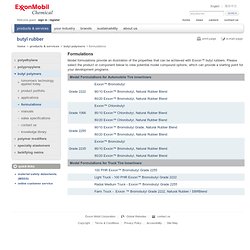
Please select the product or component below to view potential model compound options, which can provide a starting point for your development programs. LinkedIn discussion. Referral marketing. Referral marketing is a method of promoting products or services to new customers through referrals, usually word of mouth. Such referrals often happen spontaneously but businesses can influence this through appropriate strategies. Overview[edit] Referral marketing is a process to increase word of mouth marketing by encouraging customers and contacts to talk as much as possible about a brand or product.
Online referral marketing, using digital marketing as a platform, is the internet based approach to traditional referral marketing. By tracking customer behavior online through the use of web browser cookies and similar technology, online referral marketing can potentially provide a higher degree of accountability than offline models. Offline referral marketers sometimes use trackable business cards. Benefits of referral programs[edit] Case story.