
Edible Garden Sprouts from Plastic Waste in Ethiopia. © Heinrich Böll StiftungKebreab Demeke's sculpture/garden in Harla, Ethiopia.
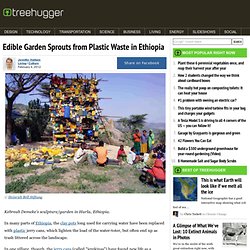
In many parts of Ethiopia, the clay pots long used for carrying water have been replaced with plastic jerry cans, which lighten the load of the water-toter, but often end up as trash littered across the landscape. In one village, though, the jerry cans (called "jerekinas") have found new life as a colorful, functional sculpture that grows food at a local school.
Container GardeningArtist Kebreab Demeke made his "Climate +/-" sculpture in collaboration with residents of the village of Harla. The five-meter-high cube of latticed sticks is covered primarily in old, unused jerry cans collected from local families, with a few traditional clay pots interspersed among them. Edible plants native to Harla or suited for the area's climate grow in the containers, tended by the school's environmental club. . © Heinrich Böll StiftungThe 'Climate +/-' sculpture under construction. Seed Savers Exchange. SSE Membership. We rely on our membership to support our organization and to help sustain the diversity of heirlooms in our seed bank.
However, membership is not required in order to purchase from this on-line catalog. Any gardener can order from this catalog. Want over 12,000 MORE varieties? Then become a member of Seed Savers ExchangeWe were founded in 1975, but many people still do not know that Seed Savers Exchange, Inc., is a non-profit membership organization dedicated to conserving and promoting heirloom vegetables, fruits, flowers and herbs. SSE members receive a 10 percent discount on all purchases from the Seed Savers Exchange color catalog and from the Lillian Goldman Visitors Center here at Heritage Farm near Decorah, Iowa.
In addition to our commercial seed catalog, members also receive four issues of our publications that total many hundreds of pages each year. How To Participate in the Seed Exchange: Created by SSE's Education Coordinator Grant Olson. Vegetable Garden Planner — Design Your Best Garden Ever. Vegetable Garden Planner. Top Ten Most Nutritious Vegetables and How to Grow Them in Your Garden. A perfectly ripe, juicy tomato, still warm from the sun.
Sweet carrots, pulled from the garden minutes (or even seconds!) Before they're eaten. Growing your own vegetables is one of those activities that balances practicality and indulgence. In addition to the convenience of having the fixings for a salad or light supper right outside your door (or on your windowsill), when you grow your own vegetables, you're getting the most nutritional bang for your buck as well. Vegetables start losing nutrients as soon as they're harvested, and quality diminishes as sugars are turned into starches.
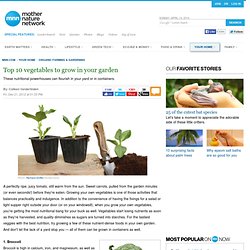
Broccoli is high in calcium, iron, and magnesium, as well as vitamins A, B6, and C. How to grow broccoliGrow broccoli in containers: One broccoli plant per pot, pots should be 12 to 16 inches deep.What to watch out for: Cabbage worm. 2. There is nothing like peas grown right in your own garden — the tender sweetness of a snap pea just plucked from the vine is unlike anything you can buy in at a store. 5 Ways to Get Free Seeds for Your Garden. © Colleen Vanderlinden Starting from seed is the most inexpensive way to grow plants for your garden.
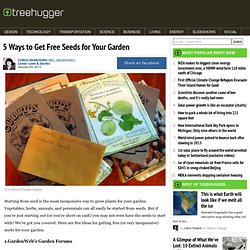
Vegetables, herbs, annuals, and perennials can all easily be started from seeds. But if you're just starting out (or you're short on cash) you may not even have the seeds to start with! We've got you covered. Here are five ideas for getting free (or very inexpensive) seeds for your garden. 1.GardenWeb's Garden Forums When I first started out, I received MANY of the perennial and veggie seeds for my garden from the seed exchange forums over on GardenWeb. 2.