
Just 100 companies responsible for 71% of global emissions, study says. Just 100 companies have been the source of more than 70% of the world’s greenhouse gas emissions since 1988, according to a new report.
The Carbon Majors Report (pdf) “pinpoints how a relatively small set of fossil fuel producers may hold the key to systemic change on carbon emissions,” says Pedro Faria, technical director at environmental non-profit CDP, which published the report in collaboration with the Climate Accountability Institute. Traditionally, large scale greenhouse gas emissions data is collected at a national level but this report focuses on fossil fuel producers. This interactive map shows why renewables and natural gas are taking over the US. E-Commerce: Convenience Built on a Mountain of Cardboard. Photo.

These Maps Show Why We Keep Electing Climate Change Deniers. Sen.
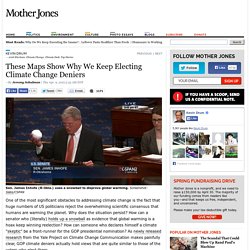
James Inhofe (R-Okla.) uses a snowball to disprove global warming.Screenshot: Slate/CSPAN. NASA made an adorable video explaining climate change. l think a lot of people will FINALLY get it. Here's your Hot Planet 101, courtesy of NASA.
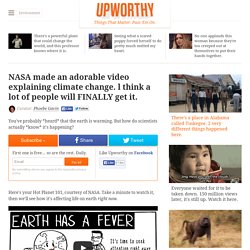
Watch 60 Years Of Climate Change In 15 Seconds. Perspective, they say, is everything.
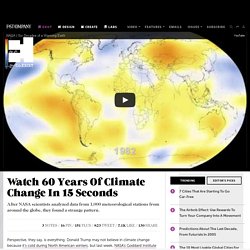
Donald Trump may not believe in climate change because it's cold during North American winters, but last week, NASA's Goddard Institute for Space Studies (GISS) released a compelling report to the contrary, based on a 60-year temperature analysis from 1,000 meteorological stations from around the globe.
Rebecca Solnit: The Age of Capitalism is over. Governor Andrew Cuomo Bans Fracking in New York Citing Health Concerns. An analysis of the findings in Governor Andrew Cuomo's 184-page review of hydraulic fracturing CREDO.fracking/Flickr The battle over untapped natural gas in New York State appears to have reached its end.
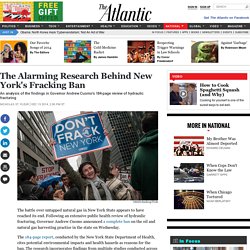
Following an extensive public health review of hydraulic fracturing, Governor Andrew Cuomo announced a complete ban on the oil and natural gas harvesting practice in the state on Wednesday. The 184-page report, conducted by the New York State Department of Health, cites potential environmental impacts and health hazards as reasons for the ban. The research incorporates findings from multiple studies conducted across the country and highlights the following seven concerns: Respiratory health: The report cites the dangers of methane emissions from natural gas drilling in Texas and Pennsylvania, which have been linked to asthma and other breathing issues.
In 2008, New York State suspended its fracking activities pending further research into the health, environmental, and economic effects. U.S. EPA: We need tougher ozone standards - Nov. 26, 2014. WASHINGTON (CNNMoney) Successful public health protection depends on the latest science.
Think of it this way: If your doctor wasn't using the latest medical science, you'd be worried you weren't getting the best care. That's why the Clean Air Act requires EPA to update air quality standards every five years, to ensure standards "protect public health with an adequate margin of safety" based on the latest scientific evidence. So today, following science and the law, I am proposing to update national ozone pollution standards to clean up our air, improve access to crucial air quality information, and protect those most at-risk -- our children, our elderly, and people already suffering from lung diseases like asthma.
This proposal would lower the current standard of 75 parts per billion (the concentration of ozone pollution in the air we breathe) to a standard in the range of 65-70 parts per billion, while taking public comment on a level as low as 60. What ‘Free Trade’ Has Done to Central America. Share Garment workers in Costa Rica.
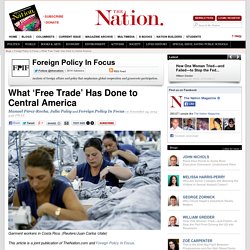
(Reuters/Juan Carlos Ulate) This article is a joint publication of TheNation.com and Foreign Policy In Focus. 5 Charts About Climate Change That Should Have You Very, Very Worried - Christopher Mims and Stephanie Gruner Buckley. Two new reports highlight the alarming consequences of staying our current course.
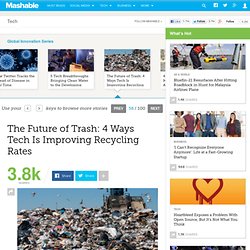
Two major organizations released climate change reports this month warning of doom and gloom if we stick to our current course and fail to take more aggressive measures. Breathingearth - CO2, birth & death rates by country, simulated real-time. The Crying Indian Commercial. What the Frack is in That Water? The Future of Trash: 4 Ways Tech Is Improving Recycling Rates. The Global Innovation Series is supported by BMW i, a new concept dedicated to providing mobility solutions for the urban environment.
It delivers more than purpose-built electric vehicles — it delivers smart mobility services. Is It Weird Enough Yet? Insiders Sound an Alarm Amid a Natural Gas Rush. Insiders Sound an Alarm Amid a Natural Gas Rush. Google's SolarCity Fund: $280 Million Invested In Solar Energy For Private Homes. NEW YORK — Google is making its largest investment yet in clean energy in an effort to help private homeowners put solar panels on their rooftops.
The $280 million deal with installer SolarCity is the largest of its kind. SolarCity can use the funds to pay for a solar system that it can offer to residents for no money down. In exchange, customers agree to pay a set price for the power produced by the panels. Google earns a return on its investment by charging SolarCity interest to use its money and reaping the benefits of federal and local renewable energy tax credits. The Earth Is Full. “The only answer can be denial,” argues Paul Gilding, the veteran Australian environmentalist-entrepreneur, who described this moment in a new book called “The Great Disruption: Why the Climate Crisis Will Bring On the End of Shopping and the Birth of a New World.” “When you are surrounded by something so big that requires you to change everything about the way you think and see the world, then denial is the natural response.
But the longer we wait, the bigger the response required.” Gilding cites the work of the Global Footprint Network, an alliance of scientists, which calculates how many “planet Earths” we need to sustain our current growth rates. G.F.N. measures how much land and water area we need to produce the resources we consume and absorb our waste, using prevailing technology. On the whole, says G.F.N., we are currently growing at a rate that is using up the Earth’s resources far faster than they can be sustainably replenished, so we are eating into the future.