
Fresh Tilled Soil UI/UX Design Portfolio. Huffingtonpost. Feel like a fraud? William Somerville has always been a good student.
In high school and college, he looked forward to taking tests and writing papers — objective measures of success gave him a chance to prove himself. But as a PhD student in clinical psychology at The New School in New York City, he began to doubt his abilities. Now he wasn't just studying to make the grade, but actually leading therapy sessions with patients in a hospital psychiatric unit. "I felt, what gives me the right to be here?
" he says. In those moments, he says, he didn't just feel he was lacking certain skills. In retrospect, Somerville realized that he was experiencing typical feelings of the impostor phenomenon. Though the impostor phenomenon isn't an official diagnosis listed in the DSM, psychologists and others acknowledge that it is a very real and specific form of intellectual self-doubt. Jobs - Coatings World. • Shamrock Technologies, Inc. • Houchi Chemical Co., Ltd • AZ Electronic Materials Co., Ltd.
Job Search, Career and Employment Advice - About.com. College is worth it if you have these six experiences. Here's Google's Secret to Hiring the Best People. “You never get a second chance to make a first impression” was the tagline for a Head & Shoulders shampoo ad campaign in the 1980s. It unfortunately encapsulates how most interviews work. There have been volumes written about how “the first five minutes” of an interview are what really matter, describing how interviewers make initial assessments and spend the rest of the interview working to confirm those assessments. If they like you, they look for reasons to like you more. If they don’t like your handshake or the awkward introduction, then the interview is essentially over because they spend the rest of the meeting looking for reasons to reject you. 12 Questions Worth Asking In Your Next Job Interview. Setting the Record Straight on Job Interviews - HBR. You scored a job interview, and now it’s time to get ready.
Before you start prepping, you have to consider whose advice to take. Should you believe your colleague when she says that you have to wear a suit even though you’re interviewing at a tech start-up? Or do you trust your friend who says, “Just be yourself”? There’s so much conflicting advice out there, it can be hard to decide on the best approach for you. So we asked readers (and our own editors) what advice they hear most often and then talked with two experts to get their perspectives on whether the conventional wisdom holds up in practice and against research. How to Write a Cover Letter, According to Great Artists - Michael Silverberg.
For starters, boast about your fortress-destroying skills.
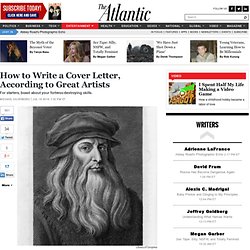
Library of Congress Selling yourself often feels like a grotesque act. So job applicants’ cover letters seem unlikely to contain much great prose. Instead, we tend to fill the page with false notes and empty phrases. Image uploaded by @AmropTM. 'I Dare You to Watch This Entire 3-Minute Video' - Robinson Meyer. I'm a Scientist With Learning Disabilities and That's Okay! About a month ago, I was playing with my 3-year-old niece, drawing pictures with Crayola Crayons.
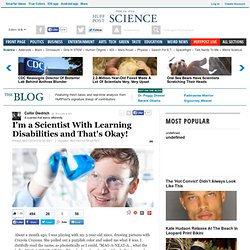
She pulled out a purplish color and asked me what it was. I dutifully read the name, as phonetically as I could, "MAG-A-NEAT-A... what the hell is MAG-A-NEAT-A? " We all laughed, and my brother (the dad) intervened: "It's MA-GEN-TA. " I told my niece I probably am not the best person to read her these names. Also that I should learn to use better language around 3-year-olds. Los próximos multimillonarios en cifras - BBC Mundo - Noticias. 20 THINGS TO START DOING IN YOUR RELATIONSHIPS - Buddhist Things. Family isn’t always blood.
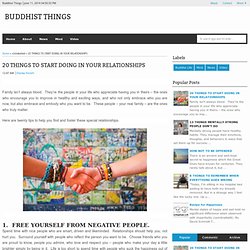
They’re the people in your life who appreciate having you in theirs – the ones who encourage you to improve in healthy and exciting ways, and who not only embrace who you are now, but also embrace and embody who you want to be. These people – your real family – are the ones who truly matter. Here are twenty tips to help you find and foster these special relationships.
Spend time with nice people who are smart, driven and likeminded. Relationships should help you, not hurt you. Time & Attention Presentation: "Who Moved My Brain?" Who Moved My Brain? Revaluing Time & Attention (slideshare.net) Thanks to my pals, Dara and Shawn, I've been preparing for a return visit with the folks at GoDaddy to deliver a couple talks on Inbox Zero and Time and Attention. As I've been going over my slides for the Time & Attention talk, I realized I hadn't shared how the material has evolved since it premiered at Macworld in January. Which is to say, "Kind of a lot. " 100 Best Career Resources for Grads and PhDs: Online Ph.D. Program. Los pecados de la élite empresarial / 100 Empresas. Productivity Hacks From Startup Execs. Pico Iyer: Where is home? The Emotional Intelligence Skills Employers Want Now. 11 Reasons Graduates Lose Out on Jobs [SLIDES] This was the most popular post of 2013.
![11 Reasons Graduates Lose Out on Jobs [SLIDES]](http://cdn.pearltrees.com/s/pic/th/reasons-graduates-lose-slides-60252277)
See the rest of the top 15 here. Rethinking the Hiring Process. Redes - Claves para enfrentarse al mundo hoy, Redes. Presentado por: Eduard Punset Dirigido por: Eduard Punset El economista Eduard Punset presenta este espacio de divulgación científica.
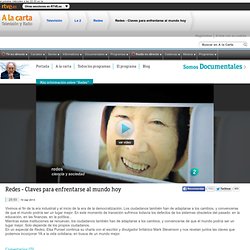
El contenido del programa abarca la medicina, la química, las Tecnologías de la Información y la Comunicación y todas aquellas disciplinas que puedan englobarse bajo el paradigma de la ciencia. Según el propio Eduard Punset "REDES nació en Madrid, y durante la primera temporada contábamos en el plató con la presencia de famosos artistas o empresarios acompañados de científicos.
Aportaba dinamismo, pero nos dimos cuenta de que debíamos profundizar en el conocimiento científico si queríamos que los propios científicos se dieran cuenta de que sus investigaciones también importaban en la vida cotidiana de la gente, y que la gente descubriera hasta qué punto la utilización del método científico en lugar del dogmatismo iba a transformar sus vidas. El blog de Eduard Punset: Los 25 mejores países del mundo en ciencia. Untitled Prezi. Richard Branson on Intrapreneurs. I am incredibly lucky to be able to live in the British Virgin Islands, one of the most beautiful spots on the planet.
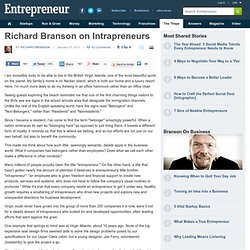
My family's home is on Necker Island, which is both our home and a luxury resort. Here, I'm much more likely to do my thinking in an office hammock rather than an office chair. Seeing guests exploring the beach reminded me that one of the first charming things visitors to the BVIs see are signs in the airport arrivals area that designate the immigration channels. Innovalab. Welcome to the Virtual Crash Course in Design Thinking. Welcome to the d.school’s Virtual Crash Course resource page!
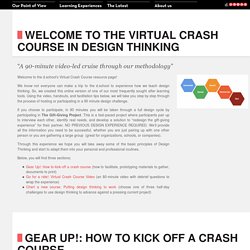
We know not everyone can make a trip to the d.school to experience how we teach design thinking. So, we created this online version of one of our most frequently sought after learning tools. Using the video, handouts, and facilitation tips below, we will take you step by step through the process of hosting or participating in a 90 minute design challenge. Is the Crowd a Feasible Design Partner? This is part of a series of posts examining the idea time and imagining our collective future. Tell us your wish for the future here and we'll bury it in a time capsule. Collaboration is a $1 billion industry and is projected to grow to $3.5 billion by 2016, according to an ABI Research study.
In its wake, there’s much talk about share culture, much excitement about a rising maker culture, and much hope that design thinking and peer production are panacea to a world in crisis. Yet still we are a long way from knowing how to harness larger teams effectively. Of the many things that may work, I’d like to suggest four attributes that we should dare more in collaborative design. U.lab - u.lab { is an emerging interdisciplinary framework for innovation projects. Behavioral Psychology Blog — Sparring Mind. Curriculum for Future Minds by Sunni Brown by Amber Lewis on Prezi. Interview Savvy: How to Showcase Your Experience.
9 Keys to Business & Career Success. I'm fortunate enough to know a number of remarkably successful people. Regardless of industry or profession, they all share the same perspectives and beliefs. Engage For Success. How to be a Successful Scientist - Part 2. Advice for Listing Research Details on Your Resume. Lauren Celano This post is based on content that has already appeared on the Propel Careers website and BioCareers.com. It is reproduced here with the author’s kind permission. When you apply to a job, the details listed on your resume provide your future employer with information about the type of job you are looking for. Everything matters—the key words you include, the way you phrase your accomplishments and experiences, how you order your bullet points, etc. These details build your brand. Science Careers, from the Journal Science - Biotech, Pharmaceutical, Faculty, Postdoc jobs on Science Careers.
Bayer Foundations - Bayer Scholarships. Access : The changing length of PhDs : Nature. Scientists as Competitive-Intelligence Analysts. MyIDP: So You Think You Have Skills. This is the second article in a series designed to help you create an Individual Development Plan (IDP) using myIDP, a new Web-based career-planning tool created to help graduate students and postdocs in the sciences define and pursue their career goals. To learn more about myIDP and begin the career-planning process, please visit When Keren started her Ph.D. program nearly 5 years ago, the prospect of completing her thesis and setting a date for her defense seemed far off. Introduction: Communications Tech in the Lab. Getting on the fast-track to full-time employment : Naturejobs.
Www.mindjet.com/pdf/us/Ebook-the-way-we-work.pdf?mkt_tok=3RkMMJWWfF9wsRogv6TBZKXonjHpfsXx7%2BgsXqOxlMI%2F0ER3fOvrPUfGjI4ISsdkI%2FqLAzICFpZo2FFVE%2B6RdoVU. Janet Echelman: Taking imagination seriously. Web.ua.es/es/unidad-igualdad/documentos/decalogo-cas.pdf. How To Make The Most Out Of LinkedIn. A Taxonomy of Ideas? Management Secrets: Core Beliefs of Great Bosses. How You Make Judgments: The Elephant and its Rider. 6 Things Rich People Need to Stop Saying. All of a sudden, it's like you can't make huge amounts of money without people getting all pissed off about it. And it's only going to get worse -- with the election coming up and the weather getting warmer, this whole "Occupy" movement is probably going to come back strong.
The 1 percent will feel even more besieged than before.