
Solutions for Student Success, LLC. USA Cares. Sesame Rooms - Sesame Workshop. Mozilla Firefox. Emotions . Dealing With Anger . Discussion Questions. Emotions . Dealing With Anger . Word Search. Emotions . Dealing With Death . Discussion Questions. In the Mix - "School Violence: Answers From The Inside" SCHVIOclip3_PBS220.rm?altplay=SCHVIOclip3_PBS220. In the Mix - Lesson Plan: "Managing Anger" "Managing Anger" Estimated Time of Completion: Two 45-minute class periods;or one 45-minute class period plus one 30-minute training workshop I.
SummaryII. ObjectivesIII. Materials NeededIV. InTheMixPBS's Channel. When Sophie Gets Angry... I created this tree for a lesson about anger.

I read 1st graders for the book When Sophie Gets Angry - Really, Really Angry... by Molly Bang . We talked about things that make us angry, such as when somebody pushes in line, when someone takes my crayons, when someone will not play with me, etc. While reading the book we talked about "okay" and "not okay" behaviors that Sophie was doing. Understanding the Basic Needs of Children. Raising Kids Who Give, Share & Care. AccomandMods. Non-discrimination in schools: 504 Plan - Celiac Disease Program and Support Group - Clinical Services - Children's Hospital Boston. Resource Information: UC Davis MIND Institute. Administration on Developmental Disabilities The Administration on Developmental Disabilities (ADD) is the U.S.
Government organization responsible for implementation of the Developmental Disabilities Assistance and Bill of Rights Act of 2000, known as the DD Act. ADD, its staff and programs, are part of the Administration for Children and Families, of the U.S. Department of Health and Human Services. American Academy of Child & Adolescent Psychiatry The American Academy of Child & Adolescent Psychiatry was established in 1953. Solomon_2005_suminst_hi. Cognitive and Behavioral Treatment of Impulsivity in Children: A Meta-Analytic Review of the Outcome Literature. NASP Resources for Educators. Military_Deployment_and_Family_Reintegration. 4 Military Families - Military Support for Parents. Compliment Day.
Books for Your Journey - Inspiration. The Center for Effective Discipline. June 2011 Study of corporal punishment policies in Catholic schools: In an on-going effort to chart prevalence of corporal punishment of children in the U.S., the Center for Effective Discipline (CED) collects and reviews corporal punishment regulations and policies of schools, child care, foster care, and residential care of children.
The Center for Effective Discipline has completed a survey of corporal punishment policies of Catholic dioceses in the continental U.S. and Hawaii . Results indicate that corporal punishment is not used or is prohibited by specific bans in all U.S. Diocesan Catholic Schools. Child Maltreatment 2006: Table 3-6 Maltreatment Types of Victims, 2006. Arthur . Parents & Teachers . Social & Emotional Development. The Learning Network - The Learning Network Blog.
Psych Web by Russ Dewey. Fact sheets - Fact sheets. ASWB Masters Practice Questions. Pleasant%20Events. National Child Traumatic Stress Network - Child Trauma Home. Oup. Download Therapy Worksheets. Social Work Test Prep. Social Work Test Prep. Advanced Writing and Conversation with Lego Building Blocks for ESL EFL Classes - Free Lesson Plan. This activity takes Lego building pieces as the point of departure to encourage student conversation and improve precision writing skills.
Thanks to John Middlesworth for contributing this lesson plan! If you have any lesson plan favourites that you would like to contribute to the site for other teachers to use please visit this submission page. Obsessive Compulsive Disorder, Obsessive Compulsive Disorder Treatment, Obsessive Compulsive Disorder Chicago, OCD, Compulsive Disorder Relief. Amazon. Trichotillomania Learning Center. Note: by including information about resources we are not endorsing or recommending a particular treatment provider, self-help contact or resource.
They have simply let us know that they are familiar with or suffer from trichotillomania. Appropriate treatment and advice should always be obtained directly from a qualified and experienced doctor and/or mental health professional. In addition, TLC does not endorse any external sites on the links page or monitor or approve content on these sites.
When considering a treatment you should consult your doctor to determine what is safe for you. Welcome to the Trichotillomania Learning Center. Prescription Assistance Program. NeedyMeds. Obsessive Compulsive Disorder, Obsessive Compulsive Disorder Treatment, Obsessive Compulsive Disorder Chicago, OCD, Compulsive Disorder Relief. Culinary Celebration! • May 3, 2014 • 6:00pm • Come Celebrate With Us! In the lobby of the historic Belden Stratford, we will be hosting a fabulous evening of fun, food and live music. Our cocktail hour, graciously donated by Mon Ami Gabi, will feature sparkling wines and appetizers. Experience cuisines across the contents with cooking demonstrations led by Chef Charlie Baggs and his team. Live music by caberet singer Anne Burnell will be playing throughout the evening. ...
Read More » OCD Live Forum: April 17, 2014 • 7:00pm • Francis Parker School Topic: Generalized Anxiety in people with OCD, ADHD, and other anxiety disorders. Obsessive Compulsive Disorder, Obsessive Compulsive Disorder Treatment, Obsessive Compulsive Disorder Chicago, OCD, Compulsive Disorder Relief. Obsessive Compulsive Disorder, Obsessive Compulsive Disorder Treatment, Obsessive Compulsive Disorder Chicago, OCD, Compulsive Disorder Relief. Obsessive Compulsive Disorder, Obsessive Compulsive Disorder Treatment, Obsessive Compulsive Disorder Chicago, OCD, Compulsive Disorder Relief. Culinary Celebration!
• May 3, 2014 • 6:00pm • Come Celebrate With Us! In the lobby of the historic Belden Stratford, we will be hosting a fabulous evening of fun, food and live music. Our cocktail hour, graciously donated by Mon Ami Gabi, will feature sparkling wines and appetizers. Obsessive Compulsive Disorder, Obsessive Compulsive Disorder Treatment, Obsessive Compulsive Disorder Chicago, OCD, Compulsive Disorder Relief. School Psychology. Adolescence ADOL - Adolescence Directory Online. Everything you always wanted to know about the teenage years.
Nicely done. How to password protect & encrypt a USB flash drive for Macs. Posted by Ant on December 17th, 2009 | 41 Comments We all carry around USB flash drives in our pockets or on our keychains.
What if it got lost or stolen and somebody suddenly had access to all of your personal files? Password protect your flash drive to avoid taking that chance. Behavior management and positive discipline plans and strategies for elementary school classsroom teachers in grades K-6 for setting limits and preventing unwanted behaviors through routines and rules resources. LIFE - Your World in Pictures. Infants - Child & Family WebGuide. Diary of a School Social Worker. Vision: Now Is the Time for Creative, Courageous, Nonviolent Action. March 7, 2011 | Like this article?
Join our email list: Stay up to date with the latest headlines via email. Below is a group letter from Becky Tarbotton (Director, Rainforest Action Network), Phil Radford (Director, Greenpeace USA), and Bill McKibben (Founder, 350.org). Inspired by recent events, the climate movement is reaching a pivotal turning point. Dear friends, Last week, a jury in Utah found Tim DeChristopher guilty for standing up to the oil and gas companies in an effort to protect our health and our climate.
TACSEI. 12 Brain Rules. Buy Brain Rules The Brain Rules, illustrated Explore each rule through illustrations, charts and video.
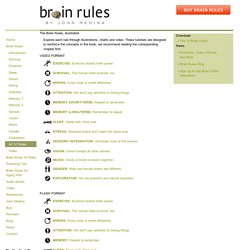
These tutorials are designed to reinforce the concepts in the book; we recommend reading the corresponding chapter first. EXERCISE: Exercise boosts brain power. SURVIVAL: The human brain evolved, too. WIRING: Every brain is wired differently. ATTENTION: We don't pay attention to boring things. MEMORY (SHORT-TERM): Repeat to remember. MEMORY (LONG-TERM): Remember to repeat. ASIF Adolescent Self Injury Foundation. A Message from ASIF Founder Joan Goodman- LCSW-C,BCD After thirty three years in private psychotherapy practice, specializing in the treatment of adolescents, I have grown to view my clinical practice as a microcosm of the adolescent world. The behavior of adolescent self-injury is one such condition that appeared in my office in the spring of 1996.
I was first referred a few teenagers who hurt themselves. Centering Corporation - Your Grief Resource Center. National Alliance for Grieving Children. Hello Grief - Grief Counseling - Bereavement Support - Grieving Counselors - Online Support Groups. National Center for School Crisis and Bereavement Contact Information. LOSS AND THE SCHOOL COMMUNITY. Download the PDF here. Guide includes information on: School Crisis Team Interventions: what to do right awayNotification: get the word outSupport Services at School: crisis and grief counselingImpact on Learning: academic support and changes in learning Communication and Outreach: media attention and student protectionSpecial Circumstances: cause of death and liabilities Visit www.cincinnatichildrens.org/school-crisis for more information.Source: National Center for School Crisis and Bereavement Excerpts from The Grieving Student, A Teacher's Guide, by David Schonfeld and Marcia Quakenbush Goals of Support Preparing a school crisis plan, responding to a death, and school community goals.Making Sure All Students Are InformedHow to share the news with students, reactions to except, and how to provide support.
Notify parents, students, and staff of a recent loss with this helpful template.Download Sample Letter here. Tip Sheets for Parents and Caregivers. The Five Protective Factors. National Child Abuse Prevention Month. Principles of Prevention (POP): Continuing Education and Certificate of Completion. Continuing Education and Certificate of Completion. Principles of Prevention (POP) is available online 7 days a week, 24 hours a day. You can take the course whenever it is convenient.
How the course works: Plan on 90 uninterrupted minutes to complete the 5 training modules included in POP plus registration and the required course evaluation. Once you have completed the course you will be directed to the CDC website for both the registration and the evaluation. You can pause the course at any time, but please DO NOT LOG OFF OR CLOSE YOUR BROWSER. You will need to work from a computer with Internet access and, if possible, volume controls. ( The training takes advantage of narration and video.)
Welcome to Principles of Prevention (POP) Take Out Your No.2 Pencils: Taking the Stress Out of Standardized Tests. American students may be the most tested kids in the world, taking more than 100 million standardized tests every year, according to Teachers College at Columbia University in New York City. Table of Contents - Magazine. What Makes Us Happy? Table of Contents - Magazine. Case No. 218. Brene Brown: The power of vulnerability. The New Map Of The Brain. Trying to map the brain has always been cartography for fools. Science & Nature - Human Body and Mind - Spot The Fake Smile.
Puzzles, Riddles and Tricks. Using EEGs to diagnose autism spectrum disorders in infants: Machine-learning system finds differences in brain connectivity. A computational physicist and a cognitive neuroscientist at Children's Hospital Boston have come up with the beginnings of a noninvasive test to evaluate an infant's autism risk. It combines the standard electroencephalogram (EEG), which records electrical activity in the brain, with machine-learning algorithms. Praising Kids Is Not Enough. The research literature is pretty clear that the most important factor that makes kids " resilient " - particularly kids who are "at-risk" - is a close, connected relationship with a stable adult. How a little phone call can make a big difference.