Digital Celebrations in February 2013. February will be celebrating both Digital Learning Day and Safer Internet Day.

Both deserve to be observed and mentioned in classrooms, for it is by raising awareness to learners, by bringing out questions, issues and sensitive topics such as cyberbullying, that students become more confident to raise their voices and become informed digital citizens. Today, it is not only about being a digital citizen - it is about being an informed citizen. Both digital learning and digital safety are, in my mind, closely related to digital literacies - a component which should be embedded in any curriculum today, for learners today are the professionals of tomorrow. Terry Heick points out 4 main principles in regard to digital literacy: Comprehension, Interdependence, Social Factors, and Curation. Jgcc_alwaysconnected.pdf (application/pdf Object) Ictmap_english.pdf (application/pdf Object) What your Students Must Know about Cell Phone Use in The classroom.
Cell phone etiquette is something we should explain to our students especially in this first month of their school year.There is now a growing cell phone culture among our kids and nobody ever can expect where it is leading them .

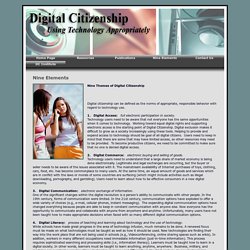
But as teachers and educators, it becomes ethically compulsory for us to teach them how to use these communication devices responsibly and how to respect their peers while using them. I just came across this great poster in The Innovative Educator Blog which can help you educate your students about cell phone etiquette. It contains some great tips on how students should be using their phones. Try to print it out and post it on your classroom wall for everyone to read. If you want more educational posters to use in your classroom then check it out this link. Nine Elements. Nine Themes of Digital Citizenship Digital citizenship can be defined as the norms of appropriate, responsible behavior with regard to technology use. 1.