
Challenging The Way You Live! - StumbleUpon. Has Science Explained Life After Death?" In 1991, Atlanta, Ga. resident Pam Reynolds had a near-death experience (NDE).
Reynolds underwent surgery for a brain aneurysm, and the procedure required doctors to drain all the blood from her brain. Reynolds was kept literally brain-dead by the surgical team for a full 45 minutes. Despite being clinically dead, when Reynolds was resuscitated, she described some amazing things. She recounted experiences she had while dead -- like interacting with deceased relatives. Even more amazing is that Reynolds was able to describe aspects of the surgical procedure, down to the bone saw that was used to remove part of her skull [source: Parker]. Logical Paradoxes.
Thou shalt not commit logical fallacies. Smullyan's Paradox. Allegory of the Cave. Plato realizes that the general run of humankind can think, and speak, etc., without (so far as they acknowledge) any awareness of his realm of Forms.
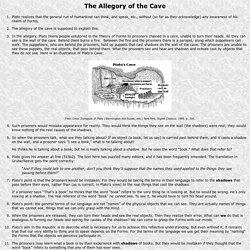
The allegory of the cave is supposed to explain this. In the allegory, Plato likens people untutored in the Theory of Forms to prisoners chained in a cave, unable to turn their heads. All they can see is the wall of the cave. Behind them burns a fire. Between the fire and the prisoners there is a parapet, along which puppeteers can walk. Death. How to Hack Your Brain. Philosophy since the Enlightenment, by Roger Jones.