
Forth sector. The future of sustainable development. One of the most significant outcomes from the 2012 Rio+20 Summit was the agreement to develop the Sustainable Development Goals, a new set of goals to succeed the Millennium Development Goals in 2015.
UN Secretary-General Ban Ki-moon was given the mandate to initiate the appropriate work to support this process. He announced a high level panel on the post 2015-agenda, led by Indonesia, Liberia, the UK and Sweden. The UN Secretary-General also announced the launch of a Sustainable Development Solutions Network. The network, which will be led by Jeffrey Sachs of the Earth Institute at Columbia University, consists of research centres, universities and technical institutions to "help find solutions to some of the world's most pressing environmental, social and economic problems. " Stockholm Resilience Centre will play a central part of this network. Red de Reciclaje de Costa Rica - Afiliados - Redcicla.org. YOU are part of biodiversity. The sustainable business community, for green jobs and green business solutions. Worldfavor. Building Your Company’s Vision. The Idea in Brief Hewlett-Packard. 3M.
Sony. Companies with exceptionally durable visions that are “built to last.” What distinguishes their visions from most others, those empty muddles that get revised with every passing business fad, but never prompt anything more than a yawn? Enduring companies have clear plans for how they will advance into an uncertain future. The Idea in Practice A company’s practices and strategies should change continually; its core ideology should not. A core ideology has two parts: 1. 2. An envisioned future, the second component of an effective vision, has two elements: 1. 2. Example: In the 1950s, Sony’s goal was to “become the company most known for changing the worldwide poor-quality image of Japanese products.”
Unreasonable Institute – International Accelerator and Investor in High-Impact Entrepreneurs. Sustainability Solutions Group. Sustainability Services. Many of us feel that the time is ripe to "make Sweden's office coffee rooms sustainable once and for all".
In order to investigate interest and possibilities, we will hold a first 'problem in the middle' type workshop in Stockholm on the 26th of March, and are working to ensure key representatives from all relevant sectors will come and bring their knowledge, experience, ideas and energy, so that together we can make this change for the better. Of course sustainability performance improvements in the coffee room are not core business, but helping Sweden take this further step towards responsible consumption is good for brand Sweden and hence good for us all.
Two Questions to Close the Greatness Gap « The Bold Academy. “Musicians must make music, artists must paint, poets must write if they are to be ultimately at peace with themselves.
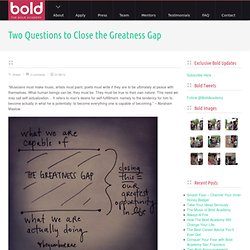
What human beings can be, they must be. They must be true to their own nature. This need we may call self-actualization… It refers to man’s desire for self-fulfillment, namely to the tendency for him to become actually in what he is potentially: to become everything one is capable of becoming.” – Abraham Maslow Throughout life, we will constantly be confronted with unfavorable encounters, negative energy, and necessary evils. Index. Blog – Green Renaissance. Made in Tohoku 2 April 2014 Nature Turns into Disaster.
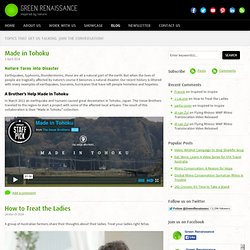
Felted wool acorns. Connect the Dots. A Blueprint For A Circular Economy: Reusing And Refurbishing For Prosperity. Important question: How can we maintain global prosperity when natural resources are increasingly scarce, the planet is in increasing disrepair, and 3 billion people are expected to join the "middle class" by 2030?
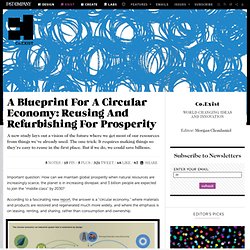
According to a fascinating new report, the answer is a "circular economy," where materials and products are restored and regenerated much more widely, and where the emphasis is on leasing, renting, and sharing, rather than consumption and ownership. Carbon map infographic: a new way to see the Earth move. How can you map the world to show global data in an immediately clear way?
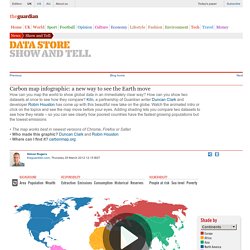
How can you show two datasets at once to see how they compare? Kiln, a partnership of Guardian writer Duncan Clark and developer Robin Houston has come up with this beautiful new take on the globe. Watch the animated intro or click on the topics and see the map move before your eyes. Action for Happiness. YEAR BOOK 2012. The UNEP Year Book 2012 looks in detail at a number of environmental challenges. It reports that scientists and policy-makers have made important progress in addressing some of the world’s most urgent environmental issues through new research and investments.
The 2012 Year Book reviews some the most important events and developments during the previous year, provides a selection of key environmental indicators, and closely examines two emerging issues: the benefits of soil carbon, and the decommissioning of nuclear power plants. Published annually, the Year Book is intended to strengthen the science-policy interface. www.unep.org/yearbook/2012/ Year in Review 2011 saw a number of environmental extremes, including record extreme weather and climate events and increasing degradation of marine ecosystems. The benefits of soil carbon The carbon in soils provides multiple benefits, especially in enhancing food production and regulating our climate. Slow Money: Investment strategies appropriate to the realities of the 21st century - Slow Money.
Unlocking India's Green Potential. Go Green , Grow Clean. India's No.1 Green Website.