
DRUGS. Marijuana use - Smoking Etiquette. Dymethyltryptamine. Quels sont les symptômes de sevrage alcoolique ? Never Do Cocaine with Woody Allen Quand fumer était le comble du chic! Alain Bashung ~ Je fume pour oublier que tu bois. And Essential Oil Mood Blends.
Aromatherapy is based on the principle that natural fragrances, or essential oils, from certain plants or flowers can affect our moods, and consequently how we think or feel at any given time.

In fact, practitioners of Aromatherapy base their entire belief system on the ideology that essential oils, or aromatherapy oils, have medicinal benefits including antidepressant and antibacterial properties, and plenty in between! Certain essential oils can trigger physical or emotional effects on their own. Health. Herbal Remedies and Cures. Medicinal Herbs. Aspartame Dangers and Side Effects. Drugs. Are You Cannabis Deficient? If the idea of having a marijuana deficiency sounds laughable to you, a growing body of science points at exactly such a possibility.
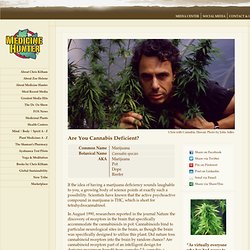
Scientists have known that the active psychoactive compound in marijuana is THC, which is short for tetrahydrocannabinol. In August 1990, researchers reported in the journal Nature the discovery of receptors in the brain that specifically accommodate the cannabinoids in pot. Cannabinoids bind to particular neurological sites in the brain, as though the brain was specifically designed to utilize this plant. Herbal Remedies and Cures. ¿Empieza a agrietarse el muro legal contra la marihuana? Hallucinogens. Psychoactive Fungi. Weed. Why Marijuana is Illegal (Ridiculous) Marijuana is not illegal because it is unhealthy (it’s not) or because it has negative effects on the mind (it doesn’t).
There is no logical or sound reason why marijuana cannabis is illegal in the United States. Drugs 101. Drugs can be fun and amazing but they can also totally ruin your life, make you penniless, change your personality for the worse, send you to prison and kill you.
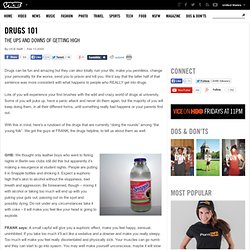
We’d say that the latter half of that sentence was more consistent with what happens to people who REALLY get into drugs. Lots of you will experience your first brushes with the wild and crazy world of drugs at university. Some of you will puke up, have a panic attack and never do them again, but the majority of you will keep doing them, in all their different forms, until something really bad happens or your parents find out. With this in mind, here’s a rundown of the drugs that are currently “doing the rounds” among “the young folk”. Legalize cannabis. 5 Pro-Marijuana Arguments That Aren't Helping. I have a lot of friends and family who smoke pot, and the majority of them are pretty vocal about wanting it legalized.
Let me make perfectly clear right off the bat that I'm not coming at this as an "anti-pot" guy because I personally don't give a shit if they legalize it, and it doesn't bother me that people smoke. I've done my share of illegal substances. But goddamn are pot advocates some of the most annoying fucking people on the planet. Cannabisandcapitalism.jpg (Image JPEG, 960x960 pixels) Most Effective and Creative Anti-Smoking Ad Campaigns. Drugs. Two new scientific studies reveal hallucinogens are good for your mental health.
Philadelphia Saves Millions by Decriminalizing Marijuana - News. Medical Cannabis Cup, 11/14/10. Cannabis and tobacco smoke are not equally carcinogenic. Cannabis and tobacco smoke are not equally carcino... [Harm Reduct J. 2005] - PubMed result. Future Rx: Marijuana without the forgetfulness. Marijuana's negative effects on memory are well known.
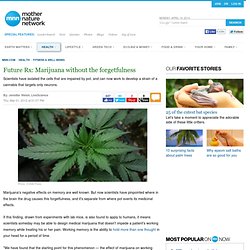
But now scientists have pinpointed where in the brain the drug causes this forgetfulness, and it's separate from where pot exerts its medicinal effects. Maintaining Memories with Marijuana. Can smoking marijuana prevent the memory loss associated with normal aging or Alzheimer's disease ?
This is a question that I have been investigating for the past few years. The concept of medical marijuana is not a new one. A Chinese pharmacy book, written about 2737 BCE, was probably the first to mention its use as a medicine for the treatment of gout, rheumatism, malaria, constipation, and (ironically) absent-mindedness. Alcohol Does Not Kill Brain Cells. Myth: Alcohol kills brain cells.
Now, to qualify that title, pure alcohol will absolutely kill brain cells and many other types of cells, which is why it is used as a disinfectant. However, recent research has shown that the quantity of alcohol you could possibly take in, without killing yourself, does not introduce enough alcohol into your bloodstream to kill brain cells. This was proven by a study by Grethe Jensen and co. (1993), who meticulously counted neurons in matched samples of non-alcoholics and alcoholics. Making a Killing: The Untold Story of Psychotropic Drugging. Which fruits and vegetables are naturally the most detoxifying? (NaturalNews) Detoxing in our incredibly polluted environment is not an occasional endeavor.

In order to maintain a healthy immune system with a slightly alkaline pH, we need to consider constant slow detoxing to counter the "slow kill" from the myriad toxins pervading every element of our environment. Extreme detox measures, such as liver cleansing coffee enemas, any type of heavy metal chelation, or periods of fasting can be performed briefly every few months, or as needed for treating a debilitating disease. However, an appropriately consistent slow detox could be part of our daily diet. Consuming only whole organic foods is basic. Whole foods are foods that are not processed, such as bulk produce, grains, and legumes. Ten Most Common Poisonous Plants. Robin Lloyd | May 17, 2007 04:43pm ET.
Drugs World. Home. Druglib.com - Drug Information, Research, Clinical Trials, News. Marijuana use - Smoking Etiquette. Hemp / Cannabis. Why is Marijuana Illegal? Many people assume that marijuana was made illegal through some kind of process involving scientific, medical, and government hearings; that it was to protect the citizens from what was determined to be a dangerous drug.
The actual story shows a much different picture. La malbouffe, une drogue aussi addictive que l'héroïne ? Deux chercheurs américains viennent de démontrer que les mécanismes du cerveau mis en jeu lors de la consommation répétée d'une nourriture beaucoup trop riche pourraient être biologiquement identiques à ceux retrouvés chez les personnes consommatrices de drogues dures. C'est en tout cas ce que révèlent leurs expériences menées sur des rats. Les conclusions de Paul Johnson et de Paul Kenny, chercheurs au Scripps research institute of Jupiter (Floride), pourraient majorer l'inquiétude des services sanitaires des pays développés. En proposant de la nourriture hyper calorique (bacon, saucisses, biscuits etc.) à volonté à des rats, en plus de leurs graines habituelles, les deux hommes se sont en effet aperçus que les rongeurs avaient développé en quelques jours une forme d'addiction à la malbouffe de même nature que celle des rats consommateurs de cocaïne ou d'héroïne !
Une fois les rats devenus accros à la malbouffe, les chercheurs leur ont proposé à nouveau un régime normal. What cannabis actually does to your brain. Chances are they would've ended up brainless morons with or without the pot. The Great Big Narcotics Cookbook. Marijuana use - Smoking Etiquette.
Drugs. Legalize cannabis. Study: No lung danger from casual pot smoking. Add one more data point to the decades-old debate over marijuana legalization: A new study concludes that casual pot smoking - up to one joint per day - does not affect the functioning of your lungs. The study, published in the Jan. 11 edition of Journal of the American Medical Association, also offered up a nugget that likely will surprise many: Evidence points to slight increases in lung airflow rates and increases in lung volume from occasional marijuana use. Air flow is the amount of air someone can blow out of their lungs one second after taking the deepest breath possible. The volume measure is the total amount of air blown out once someone has taken the deepest breath possible. Association Between Marijuana Exposure and Pulmonary Function Over 20 Years The study of 5115 men and women took place over two decades between March 26, 1985 and August 19, 2006 in 4 American cities: Birmingham, Chicago, Oakland, Calif., and Minneapolis.