
Natural Pools or Swimming Ponds. Natural Pools or Natural Swimming Ponds (NSPs) Let nature clean the water...
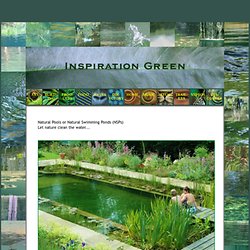
Chemical-free water garden and swimming pool. The plant portion, or regeneration zone, is separated from the swimming area by the wall seen a few inches below the water’s surface. www.naturalswimmingpools.com The pools have skimmers and pumps that circulate the water through the regeneration zone and back into the swimming area. The aquatic plants filter out contaminants and use nutrients from the water as food which helps prevent algae.
Then rocks, such as granite river rock or haydite, to which friendly bacteria attach, act as biological filters. There are many options as to design. A gradual slope contains the plants, gravel and loamy sand, a wall keeps them separate from the swimming area. Vacuum but twice a year and tend to the plants as needed. The regeneration zone can be along the perimeter of a natural pool or a pond unto itself but connected to the swimming area. www.gartenart.co.uk. DIY Succulent Pallet Table. Max with the new Succulent Table.

Can you believe that our latest DIY project was once just a couple of junky pallets and some scrappy table legs? Crazy…if I didn’t have photos, I wouldn’t believe it myself. Not too long ago, we whipped out a coffee table sized succulent table out of an old shipping crate. Now we scaled it up. The pallets. First bit of advice, deconstructing pallets are a big pain unless you have the right tools…and our hammer and wall scrapper wasn’t quite doing the trick. Couple good planks. Love the scares of time left on these chunks of pallet wood. Attaching the legs. After pulling apart two pallets, we used the 2 x 4 sized boards to make a rectangular frame to attached the appropriated table legs. Dry run for fittings. Like TV magic (and 2 days later), the table was more or less put together. Megan with some semps.
After a weekend of slivers and sweat, we finally got to plant this baby. Getting messy. Packing them in. Yeah, we didn’t hold back on jamming them. 5 Secrets to a ‘No-work’ Garden. It took over 20 years of gardening to realize that I didn’t have to work so hard to achieve a fruitful harvest.

As the limitless energy of my youth gradually gave way to the physical realities of mid-life, the slow accretion of experience eventually led to an awareness that less work can result in greater crop yields. Inspired in part by Masanobu Fukuoka’s book, One Straw Revolution, my family experimented with gardening methods which could increase yields with less effort. Fukuoka spent over three decades perfecting his so-called “do-nothing” technique: commonsense, sustainable practices that all but eliminate the use of pesticides, fertilizer, tillage, and perhaps most significantly, wasteful effort. Here are the strategies we used which enabled us to greatly increase our garden yield, while requiring less time and less work. 1. With ‘no-till’ gardening, weeding is largely eliminated. 2. Gardeners are always on the lookout for free sources of clean organic mulch to add to their garden.