
Lecture 2 - Introduction to Instruments and Musical Genres. Global Problems of Population Growth. Professor Robert Wyman, Professor of Molecular, Cellular, and Developmental Biology Description This survey course introduces students to the important and basic material on human fertility, population growth, the demographic transition and population policy.

Topics include: the human and environmental dimensions of population pressure, demographic history, economic and cultural causes of demographic change, environmental carrying capacity and sustainability. Political, religious and ethical issues surrounding fertility are also addressed. Texts Bible, New International Version. Birdsall, Nancy and Steven Sinding. Boserup, Ester. Bumiller, Elizabeth. Campbell, Neil A., Jane B. Carlson, Elof. Cohen, Joel E. Dash, Leon. De Waal, Frans. De Waal, Frans. Faundes, Anibal and Jose Barzelatto. Forsyth, Adrian. Gilbert, Scott. Gillis, John R., Louise A. Foundations of Modern Social Theory. Professor Iván Szelényi, William Graham Sumner Professor of Sociology (Emeritus) Description This course provides an overview of major works of social thought from the beginning of the modern era through the 1920s.
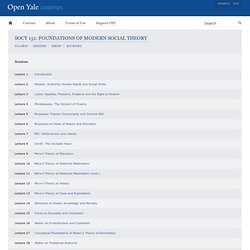
Attention is paid to social and intellectual contexts, conceptual frameworks and methods, and contributions to contemporary social analysis. Introduction to Ancient Greek History. Syllabus Professor Donald Kagan, Sterling Professor of Classics and History Description This is an introductory course in Greek history tracing the development of Greek civilization as manifested in political, intellectual, and creative achievements from the Bronze Age to the end of the classical period.
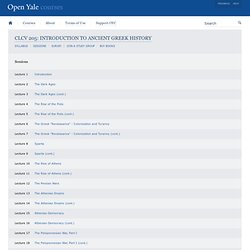
Students read original sources in translation as well as the works of modern scholars. Texts Pomeroy, Burstein, Donlan and Roberts. Kagan, Donald. Herodotus, The Histories. Plutarch, The Rise and Fall of the Athens. Thucydides, The Peloponnesian War. Requirements Students will have an opportunity to choose one of two programs for completing their work in the course: Plan A Students electing Plan A will take an in-class midterm and final examination. Plan B Students electing Plan B will take an in-class midterm and final examination and will enroll in discussion sections which meet once a week for fifty minutes. Grading Join a Study Group View study group. Italian Language and Literature. The course is an introduction to Dante and his cultural milieu through a critical reading of the Divine Comedy and selected minor works (Vita nuova, Convivio, De vulgari eloquentia, Epistle to Cangrande).

An analysis of Dante's autobiography, the Vita nuova, establishes the poetic and political circumstances of the Comedy's composition. Readings of Inferno, Purgatory and Paradise seek to situate Dante's work within the intellectual and social context of the late Middle Ages, with special attention paid to political, philosophical and theological concerns. Topics in the Divine Comedy explored over the course of the semester include the relationship between ethics and aesthetics; love and knowledge; and exile and history.
Online Video Lectures and Course Materials — Open Yale Courses.