

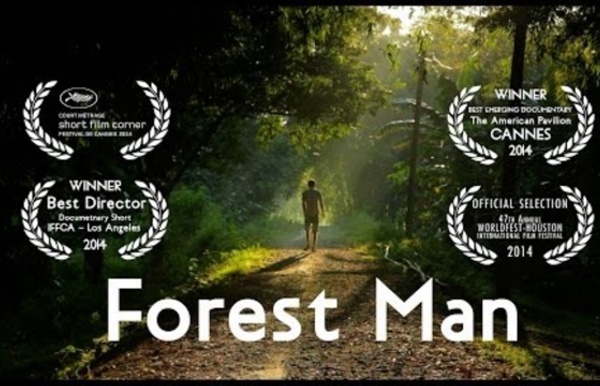
A incrível história do indiano que plantou sozinho uma floresta de 550 hectares e virou mini-doc | Somos Verdes Em 2009, o fotógrafo e jornalista indiano Jitu Kalita quase foi atacado por um homem, enquanto andava por uma floresta na Majuli Island, no nordeste da Índia, perto da fronteira com o Butão. O homem se desculpou depois de perceber que Jitu era apenas um fotógrafo explorando a região. O homem da floresta era Jadav Payeng, sujeito simples que vivia numa cabana, e que começou a plantar árvores na região aos 16 anos de idade, desde 1979. Atualmente, ele já plantou 550 hectares com suas próprias mãos. Payeng começou a interessar-se em ser um ambientalista ao descobrir os problemas de erosão do solo na Índia. Foto via mentalbox.com.br A Majuli Island está situada no rio Brahmaputra, que se enche violentamente na temporada de monções e cobre a ilha por alguns meses lavando a região. A ideia de Payeng é combater este processo plantando árvores para literalmente segurar a terra. Foto via The Plaid Zebra Esta história é tão bela que rendeu um documentário. Veja também:
Solutions locales pour un désordre global de Coline Serreau DocumentaireDate de sortie : 07 avril 2010> Toutes les sorties de la semaineRéalisé par : Coline SerreauDurée : 1h53minPays de production : FranceAnnée de production : 2009 Titre original : Solutions locales pour désordre globalDistributeur : Memento Films Distribution Notes et critiques Bande-annonce Synopsis Le dérèglement écologique mondial est une conséquence directe de notre système de production et de consommation. Bandes-annonces et photos de Solutions Locales Pour Un Désordre Global Critiques Presse de Solutions Locales Pour Un Désordre Global Réalisateurs et acteurs de Solutions Locales Pour Un Désordre Global
Toolito Bio Ok! Nous utilisons des cookies pour améliorer l'expérience utilisateur et en aucun cas pour collecter vos données personnelles à des fins publicitaires. En continuant votre navigation vous acceptez ces conditions. En savoir plus Cookie Consent plugin for the EU cookie law En quoi consiste la Journée de la Terre du 22 avril ? Réchauffement Climatique Des rites funéraires hors du commun et alternatifs Santé Mondiale Solar Impulse 2: retour dans les airs après 9 mois cloué au sol ! Énergie solaire Bio Culture Un supermarché de Berlin propose de cueillir ses légumes dans une serre verticale Mélanie Escach - 21 avril Biodiversité Les 10 espèces de grenouilles les plus vénimeuses au monde Produits Pharmaceutiques Le « viagra féminin » piégé dans une tempête commerciale aux USA Jean-Benoît Monneron - 20 avril 93% de la Grande Barrière de corail a blanchi Florian Colas - 20 avril À San Francisco, les bâtiments neufs devront avoir des panneaux solaires sur leur toit Pollution de l'air Mélanie Escach - 20 avril
Pesquisas comprovam a importância da vegetação na produção de água | Secretaria do Meio Ambiente Pesquisas comprovam a importância da vegetação na produção de água Ilustração da pesquisa realizada por Maurício Ranzini Trabalhos desenvolvidos pelo Instituto Florestal (IF) comprovam, de forma inequívoca, que a presença de cobertura florestal em bacias hidrográficas promove a regularização do regime de rios e a melhora na qualidade da água. Daí a importância do Programa Nascentes, desenvolvido pelo Governo do Estado de São Paulo, que tem o objetivo de promover a restauração de 20 mil hectares de matas ciliares. Os pesquisadores científicos da Seção de Engenharia Florestal, do IF, Valdir de Cicco, Francisco Arcova e Maurício Ranzini, embasaram suas teses de doutorado em pesquisas sobre a relação entre a floresta e a água, elucidando dúvidas e provando com números as suas proposições. “Em florestas tropicais, a interceptação varia de 4,5% a 24% da precipitação, embora tenham sido registrados valores superiores a 30%”, explica. Matérias Relacionadas
(2) Demain Le Film 20 animaux bien plus gros que leur taille habituelle Les photos que vous allez découvrir ci-dessous sont garanties sans retouches. Et pourtant, vous allez avoir besoin de les observer longuement tant les animaux qui sont présentés sur ces images sont gigantesques. La nature offre parfois des spécimens hors du commun, avec des mensurations bien plus importantes que la moyenne. Un crocodile immense, une méduse de 200 kilos, un serpent de 12 mètres… toutes ces bêtes battent des records de taille et de poids. Et vous allez être bien content de les découvrir de derrière votre écran d’ordinateur ! Ver de terre d’Australie : mesure de 40 centimètres à 4 mètres de long Salamandre géante de Chine : 1 mètre de long Papillon Atlas : 30 centimètres de diamètre Etoile de mer Macroptychaster : 60 centimètres de diamètre Escargot géant d’Afrique : 20 centimètres de long Raie géante d’eau douce : 600 kilos Conraua goliath (grenouille) : 3 kilos Anaconda : 12 mètres de long Rupert, le Maine Coon : 14 kilos Araignée Goliath : 30 cm d’envergure Source photos : Diply
Bat Guano: A Possible New Source for Paleoclimate Reconstructions Over the ages, armies have fought wars over guano, a stinky, cockroach-infested treasure that’s rich in nitrogen and phosphate. Although still valued for its fertilization qualities, this natural resource—once used to make gunpowder—may offer a new application as a window into climate change. Scientists investigate past climates by studying substances that accumulate slowly over time. Trees, stalactites and stalagmites, peat, ice, lake sediments, ocean sediments, and corals all grow or accumulate in ways that reflect the environment surrounding them. Specifically, the isotopes within their structures fingerprint the conditions prevalent at the time of formation, be they wet, dry, cold, or warm. But paleoclimate records aren’t limited to tree rings and the like. There are “a number of caves with large such deposits in areas where no other climate proxies are readily available,” said Bogdan Onac, a paleoclimatologist at the University of South Florida in Tampa. A Secret in Nitrogen?
“The Man Who Stopped the Desert”: What Yacouba Did Next 14inShare Share By Devon Ericksen In the documentary film, “The Man Who Stopped the Desert,” a farmer named Yacouba Sawadogo struggles to maintain his livelihood in the increasingly harsh land of northern Burkina Faso. Yacouba Sawadogo has worked for more than 30 years to reverse desertification in the Sahel. In 1980, Yacouba decided to fight the desert’s spread by reviving an ancient farming technique called zai, which led to forest growth and increased soil quality. In the follow-up film, UNCCD Executive Secretary Luc Gnacadja discusses the powerful impact of Yacouba’s simple methods. One direct benefit of the documentary has been the donations Yacouba has received in support of his reforestation efforts. Yacouba’s reforestation work not only helps farmers restore the local biodiversity by improving the soil, but it helps them prepare for an uncertain future. Since the film, however, life has not been easy for Yacouba. To read our original post on Yacouba Sawadogo, click here.
Restoring Forests: An Opportunity for Africa New research shows that Africa offers some of the greatest opportunities globally for restoring forests. This post originally appeared on Mongabay. Tropical forest news last week was dominated by Indonesia and Brazil. Forest clearing has surged over the past year in parts of the Amazon, the Brazilian Government reported. Investors are gathering this week in the Kenyan capital, Nairobi, to learn more. With about half of the world’s original forest cover lost or degraded, interest is growing in planting trees to absorb carbon and to help communities better prepare for climate change. A new analysis, carried out by the World Resources Institute (WRI) and South Dakota State University, in partnership with the International Union for Conservation of Nature (IUCN) and the Global Partnership on Forest Landscape Restoration, found that about 450 million hectares of degraded land in Africa offer opportunities for forest restoration. Restoration comes in various forms.