
Example of a Project Risk Matrix. Example of a Probability Impact Matrix A probability-impact matrix is used to highlight the status of risks at a glance.
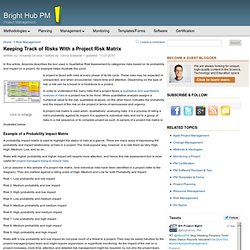
There are many ways of expressing the probability and impact relationship of risks in a project. The most popular way, however, is to rate them as Very High, High, Medium, Low, and so on. Risks with higher probability and higher impact will require more attention, and hence this risk assessment tool is most useful for project managers trying to reduce risks. Let us assume in this sample of a project risk matrix, nine individual risks have been identified in a project (refer to the diagram). Risk 1: Low probability and low impact Risk 2: Medium probability and low impact Risk 3: High probability and low impact.
Contingency Planning - Developing a Good Plan B - Leadership training from MindTools. Developing a Good 'Plan B' Have a solid Plan B ready. © iStockphoto/WendellFranks Fires, floods, tornadoes – these are things that we often connect with contingency planning. But what if your main supplier suddenly goes bankrupt? Or, your entire sales force gets food poisoning at the annual sales conference? Or, your payroll clerk calls in sick on payroll day? These things can all cause confusion and disorder if you haven't prepared for them properly. As you can see, contingency planning is not just about major disasters. Risk Assessment The need for contingency planning emerges from a thorough analysis of the risks that your organization faces.
Use these principles in your risk assessment process: Address all business-critical operations – A good plan identifies all critical business functions, and it outlines ways to minimize losses. Contingency Planning Challenges You should be aware of two common obstacles as you begin your contingency planning process: Developing the Plan Maintaining the Plan. Risk Analysis Techniques - Problem-Solving Training from MindTools. Evaluating and Managing Risks Find out how to do a risk analysis, with James Manktelow and Amy Carlson.
Whatever your role, it's likely that you'll need to make a decision that involves an element of risk at some point. Risk is made up of two parts: the probability of something going wrong, and the negative consequences if it does. Risk can be hard to spot, however, let alone prepare for and manage. And, if you're hit by a consequence that you hadn't planned for, costs, time, and reputations could be on the line.
This makes Risk Analysis an essential tool when your work involves risk. In this article, we'll look at how you can use Risk Analysis to identify and manage risk effectively. What is Risk Analysis? Risk Analysis is a process that helps you identify and manage potential problems that could undermine key business initiatives or projects. When to Use Risk Analysis Risk analysis is useful in many situations: ... for the complete article: Mind Tools Club members, click here.