
Diabetes Mellitus (DM): Diabetes Mellitus and Disorders of Carbohydrate Metabolism: Merck Manual Professional. Diabetes mellitus (DM) is impaired insulin secretion and variable degrees of peripheral insulin resistance leading to hyperglycemia.

Early symptoms are related to hyperglycemia and include polydipsia, polyphagia, polyuria, and blurred vision. Later complications include vascular disease, peripheral neuropathy, nephropathy, and predisposition to infection. Diagnosis is by measuring plasma glucose. Treatment is diet, exercise, and drugs that reduce glucose levels, including insulin and oral antihyperglycemic drugs. Complications can be delayed or prevented with adequate glycemic control; heart disease remains the leading cause of mortality in DM. Diabetes Mellitus (DM): Diabetes Mellitus and Disorders of Carbohydrate Metabolism: Merck Manual Professional. European Journal of Pediatrics, Volume 165, Number 2.
There are indications that the effect of environmental factors on the risk of type 1 diabetes mellitus (T1DM) is increasing over time.

This can be documented by the rapid increase of T1DM incidence in genetically stable populations. Our aim was to study an association of T1DM with the variable factors of the perinatal period and of early infancy, using data from children born over a period of changing exposure to some of the studied factors. A case–control dataset was analysed, consisting of 868 diabetic children and 1,466 anonymous controls, mostly schoolmates of the children with T1DM. The data were collected using structured questionnaires completed by parents.
After performing univariate analyses, the associations were analysed using multiple logistic regression adjusted for potential confounders, including the year of birth. Diabetes mellitus type 1. Diabetes mellitus type 1. Diabetes mellitus type 1 (also known as type 1 diabetes, or T1DM; formerly insulin dependent diabetes or juvenile diabetes) is a form of diabetes mellitus that results from the autoimmune destruction of the insulin-producing beta cells in the pancreas.[2] The subsequent lack of insulin leads to increased blood and urine glucose.
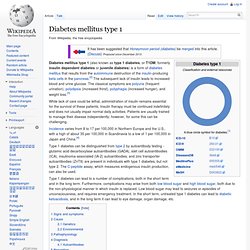
The classical symptoms are polyuria (frequent urination), polydipsia (increased thirst), polyphagia (increased hunger), and weight loss.[3] While lack of care could be lethal, administration of insulin remains essential for the survival of these patients. Insulin therapy must be continued indefinitely and does not usually impair normal daily activities. Patients are usually trained to manage their disease independently; however, for some this can be challenging. Type 1 diabetes can lead to a number of complications, both in the short term and in the long term. Signs and symptoms[edit] Overview of the most significant symptoms of diabetes Cause[edit] Genetics[edit]
Australian Diabetes Society. Diabetes - NSW Department of Health. 1301.0 - Year Book Australia, 2008. FEATURE ARTICLE 2: DIABETES MELLITUS Diabetes mellitus is a chronic condition in which the body is deficient in producing or using insulin.

Untreated, people with diabetes have high blood glucose levels while their tissues lack nourishment. Diabetes can cause diseases of the eyes, kidneys, nerves and cardiovascular system, which can lead to a reduced quality of life and premature death. Type 2 diabetes, the most common form, has increased in prevalence since the 1980s, and further increases in obesity and physically inactive lifestyles, and the ageing of the population, have the potential to continue this increase.
Diabetes has been among conditions of concern to Australian health ministers for some time and continues to be a focus of the Council of Australian Governments' broader commitment to reducing the prevalence of avoidable chronic diseases and their risk factors. Age standardising adjusts for differences in the age profiles of the populations being compared. Prevalence End note. Diabetes (Diabetes Type 1, Diabetes Type 2) Causes, Symptoms, and Diagnosis on MedicineNet.