
Brazzein boost could pave way for next super sweetener. The perfect low and no-calorie sweeteners continue to be a holy grail, even with an abundance of corn syrup and sugar alternatives like Splenda, stevia and the much-maligned aspartame already on the market.

Now scientists may have another, more sugar-like option called brazzein that comes from fruit. Brazzein isn't actually new on the sweetener scene. It comes from the fruit of the West African Pentadiplandra brazzeana Baillon plant and has been recognized for its potential as a sugar substitute for many years. It has been held back, however, because it is difficult to produce in large amounts from its natural source.
There have been attempts to work around this by engineering microorganisms or genetically modified plants including corn to produce the brazzein protein, but most have resulted in small amounts or a less sweet version. 7 photos that reveal what families eat in one week. How much food does your household go through in a week?
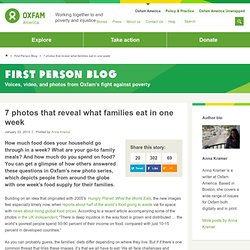
What are your go-to family meals? And how much do you spend on food? You can get a glimpse of how others answered these questions in Oxfam’s new photo series, which depicts people from around the globe with one week’s food supply for their families. Building on an idea that originated with 2005′s Hungry Planet: What the World Eats, the new images feel especially timely now, when reports about half of the world’s food going to waste vie for space with news about rising global food prices.
According to a recent article accompanying some of the photos in the UK Independent, “There is deep injustice in the way food is grown and distributed … the world’s poorest people spend 50-90 percent of their income on food, compared with just 10-15 percent in developed countries.” These guerrilla cartographers are mapping the edible world. Click to embiggen.
Do you ever wonder how many vendors at your local farmers market are really local? The Right to Sell Kids Junk. The First Amendment to the Constitution, which tops our Bill of Rights, guarantees — theoretically, at least — things we all care about.
So much is here: freedom of religion, of the press, of speech, the right to assemble and more. Yet it’s stealthily and incredibly being invoked to safeguard the nearly unimpeded “right” of a handful of powerful corporations to market junk food to children. Pig ears and donkey butts: 5 foods that could save the world. Feeding the Tiny Humans of the Future: Amsterdam's Disproportionate Restaurant - Lifestyle.
Blocking natural, marijuana-like chemical in the brain boosts fat burning. Stop exercising, eat as much as you want ... and still lose weight?
It sounds impossible, but UC Irvine and Italian researchers have found that by blocking a natural, marijuana-like chemical regulating energy metabolism, this can happen, at least in the lab. To create this hypermetabolic state, UCI pharmacology professor Daniele Piomelli and colleagues engineered neurons in the forebrains of mice to limit production of an endocannabinoid compound called 2-AG. All mammalian brains contain 2-AG, which the researchers believe helps control the activity of forebrain neural circuits involved in energy dissipation. As a result, these modified mice ate more and moved less than typical mice but did not gain any weight, even when they were fed a high-fat diet.
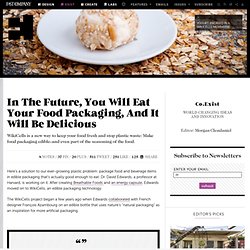
Additionally, they did not develop any signs of metabolic syndrome, a combination of health problems such as obesity and high blood pressure that increases the risk of cardiovascular disease and diabetes. The Lab Store. The Lab Store. In The Future, You Will Eat Your Food Packaging, And It Will Be Delicious. Here’s a solution to our ever-growing plastic problem: package food and beverage items in edible packaging that’s actually good enough to eat.
Dr. Had your sugar fix today? Treating sugar as an addiction, Bart Hoebel demonstrates withdrawal, binging and brain chemistry changes in rats.
PRINCETON (US)—Scientists now have proof why those sugar cravings are so hard to ignore. New evidence suggests sugar can be addictive, wielding its power over the brain in a manner similar to drugs like nicotine and cocaine. Slim Chips by Hafsteinn Juliusson. Milan 2010: designer Hafsteinn Juliusson of Iceland and Italy presented flavoured paper snacks in Milan last week.
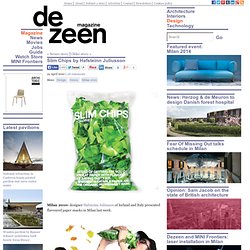
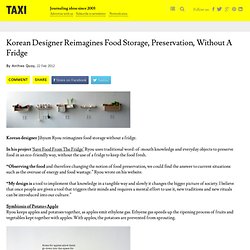
Called Slim Chips, the snacks are made of edible paper with organic colours and flavours in peppermint, blueberry and sweet potato. See all our stories about Milan 2010 in our special category. Korean Designer Reimagines Food Storage, Preservation, Without A Fridge. Korean designer Jihyum Ryou reimagines food storage without a fridge.
£200,000 test-tube burger marks milestone in future meat-eating. Growing Plants in the Dark. While sunlight contains all colors, the dominant type of chlorophyll in plants only needs purple light to function.
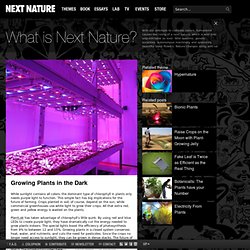
This simple fact has big implications for the future of farming. Crops planted in soil, of course, depend on the sun, while commercial greenhouses use white light to grow their crops. All that extra red, green and yellow energy is wasted on the plants. PlantLab has taken advantage of chlorophyll’s little quirk. By using red and blue LEDs to create purple light, they have dramatically cut the energy needed to grow plants indoors.