
Overpopulation. Overpopulation occurs when a population of a species exceeds the carrying capacity of its ecological niche.
Overpopulation is a function of the number of individuals compared to the relevant resources, such as the water and essential nutrients they need to survive. It can result from an increase in births, a decline in mortality rates, an increase in immigration, or an unsustainable biome and depletion of resources. Vision for a Sustainable World. Population. Key A population is a summation of all the organisms of the same group or species, who live in the same geographical area, and have the capability of interbreeding.[1][2] In ecology, the population of a certain species in a certain area is estimated using the Lincoln Index.
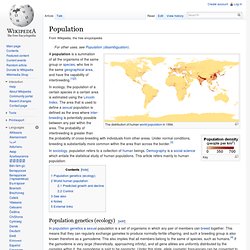
The area that is used to define a sexual population is defined as the area where inter-breeding is potentially possible between any pair within the area. The probability of interbreeding is greater than the probability of cross-breeding with individuals from other areas. WOA!! World Ovepopulation Awareness. Natural gas has been touted as a "bridge" from high-carbon sources of energy like coal and oil to a renewable energy future.
This assumes sufficient quantity of natural gas from previously inaccessible shale gas deposits to be accessed by horizontal drilling and hydraulic fracturing. Without shale gas, U.S. domestic gas production is projected to fall by 20% through 2035, according to a review of the latest outlook (2011) of the U.S. Energy Information Administration (EIA). Albert Bartlett.