
Owning Wild Animals: Stats on Exotic Pets (Infographic) The escape of 50 exotic animals near Zanesville, Ohio, last month brought into the spotlight the complex issues, as well as dangers, of keeping wild animals as domestic pets.
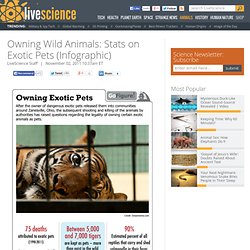
The incident happened Tuesday (Oct. 18) when resident Terry Thompson set loose his menagerie of lions, tigers, bears, monkeys and other animals from their cages before committing suicide. Authorities had little choice but to shoot and kill nearly 50 of the untamed animals before they injured people. And apparently Ohio is one state that doesn't regulate or restrict keeping wildlife captive. In addition to state-by-state variability in captive wildlife regulation in general, an exemption in the Captive-Bred Wildlife Registration Program currently allows people in the United States to own so-called generic tigers; these are tigers that can't be identified as being from one of the known subsecies (Bengal, Sumatran, Siberian/Amur or Indochinese).
The U.S. Rare Earth Elements Infographic Shows the Impact of Resource Depletion on Green Technology. Today people around the world depend on devices like smartphones, tvs, and laptops to learn, work, and communicate with those we love.

However the production of these devices has resulted in a major reduction of REEs (rare earth elements) – and we’re currently at risk of depleting the world’s entire supply. Electronics recycling rates must be improved and more efficient designs must be sought out in order to ensure the earth’s supply of rare earth elements for future generations. To highlight the problem, Voucher Cloud has created a great infographic about REEs, re-cycling and sustainable technology – check it out after the jump! Eeks! The anatomy of fear. Circos sample 25. International Networks Archive / Map of the Month.
Computing giants launch free science metrics: Nature News. Post Traumatic Stress Disorder (PTSD) Awareness Day (INFOGRAPHIC) Surprise Toxins In Your Home.