
background preloader

Wordpress

Facebook Twitter

The Beginner’s Guide to WordPress SEO by Yoast: Configuration | Wptuts+ - Waterfox. Everyone these days tries to rank their site's content higher in Google Search results. There are marketing firms earning a good deal of revenue in relation to the most notorious digital term these days, "SEO". In this post I will be explaining the different aspects of "On Page SEO", how to deal with it in WordPress using one of the best free plugins: WordPress SEO by Yoast.

This is a series of tutorials, in the first one we will be configuring and understanding different sections of the WordPress SEO Plugin. Future tutorials in this series will be about different aspects of SEO, how to utilize your site's Tags & Categories, the concept of rel='canonical', a practical example of an SEO optimized post, and finally some discussion about what else you need to do after having this plugin configured.

Our Goals This tutorial will help you in optimizing your WordPress sites with the most popular aspects of On Page SEO. Why the plugin WordPress SEO By Yoast? Dashboard Tracking Security Post Types. Create a YouTube Videos Page Template From an RSS Feed. There are plenty of YouTube plugins in the WordPress.org plugin repository, and even in the Envato marketplace, but sometimes a plugin is just overkill for a very simple implementation of recent videos fetched from an RSS feed. In this tutorial, we'll go over how to use data returned from fetch_feed() to output a YouTube video page template. Creating a Page Template The finished code could also very easily be made into a reusable function, but since we're dealing with the topic of theme development, we're going to wrap this into a page template.
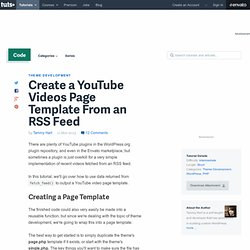
The best way to get started is to simply duplicate the theme's page.php template if it exists, or start with the theme's single.php. This will create a new option in the page attributes template field to select the custom page template which should look similar to the figure here. Turn an RSS Feed Into Usable Data With fetch_feed() Firstly, we need to set our RSS feed URL. Laying the Video Output Foundation Getting the Video ID Conclusion. GenerateWP. WP-config.php : optimisez-le. Chose promise, chose due, voici le second article visant à optimiser les temps de chargement de WordPress. Dans le 1er volet, nous avons vu comme améliorer grandement le thème que vous utilisez pour le rendre plus rapide : « Optimisez la vitesse d’un thème WordPress« . Mais cette optimisation seule est insuffisante puisque qu’il va falloir également optimiser le cache, la base de données ou encore vos plugins si vous voulez un réel gain de rapidité.
Dans ce second volet, nous allons voir comment paramétrer le fichier wp-config.php. Celui-ci est situé à la racine de votre installation, et voici les paramètres que vous devez configurer. Activer le cache par défaut Auparavant, WordPress avait un système de cache natif qui était activé avec la ligne suivante : define('ENABLE_CACHE', true); Malheureusement, celui-ci ne fonctionne plus depuis la version 2.5. Define('WP_CACHE', true); Réduire le nombre de révisions define('WP_POST_REVISIONS', 2); define('WP_POST_REVISIONS',false); Sécuriser WordPress. Optimisez la vitesse d'un thème WordPress. La semaine dernière, j’ai optimisé le thème WordPress utilisé par SeoMix. Et j’avais parfaitement raison : j’ai gagné une seconde de temps de chargement global tout en améliorant la fluidité globale. D’ailleurs, les résultats affichés par l’outil Google Pages Speed sont éloquents : une note comprise entre 98 et 99 (sur 100) en fonction des pages de mon site.
Voici donc un tutoriel destiné à expliquer la meilleure façon d’optimiser un thème pour le CMS WordPress, de A à Z. Avant toute chose, il est important de noter que la plupart des optimisations présentées ici peuvent s’appliquer à d’autres types de sites, que ce soit un autre CMS ou une solution maison. L’optimisation PHP Cette première étape de l’optimisation de votre thème WordPress va se décomposer en plusieurs parties : il s’agit ici d’améliorer le temps de calcul pour générer vos pages, et de supprimer tous les éléments inutiles ou freinants. Template Hierachy C’est ce qu’on appelle le « Template Hierarchy« . Un code plus simple. Afficher un compteur de vues dans vos articles WordPress. Comment afficher le nombre de fois qu’une page de votre site WordPress a été vue ? Cette question récurrente passe par le célèbre plugin WP Post View dont nous évoquerons la méthode d’utilisation dans un podcast vidéo exclusivement dédiée à sa configuration. La première étape consiste à télécharger le plugin WP-PostViews à partir du lien suivant : WP-PostViews Plugin WordPress permettant d'afficher un compte de vues sur un article ou une page.

Failles de sécurité détectées par BoiteAWeb, en attente de correction. Taille : 16, 6 KiB • Date : 14 novembre 2010 • Hits : 4 776 Les fichiers de la traduction française sont disponibles ici : Il suffit de copier ces derniers dans le répertoire du plugin – /wp-content/plugins/wp-postviews/, à l’aide d’un client FTP. Procédez à l’installation du plugin de façon manuelle ou automatique via le module Extensions puis Ajouter. Paramétrage des options de WP-PostViews Une fois activé, un nouvel item PostViews apparaît dans le menu Réglages. Sur le même thème. Personnaliser le logo de connexion de WordPress sans plugin. Envie de personnaliser le logo de connexion à votre administration WordPress ? C’est possible en insérant quelques lignes de code dans le fichier functions.php de votre thème.

Au final, un site plus professionnel et proche de votre image de marque.Le logo par défaut de WordPress est présent sur votre page de connexion lorsque vous y accédez par l’URL classique : Guère très professionnel, vous pouvez le remplacer par celui de votre choix en intervenant au niveau de votre thème. De fait, les mises à jour de WordPress n’auront aucun impact sur votre nouveau logo… vous auriez très bien pu, en effet, remplacer le fichier image par défaut. Connectez-vous dans un premier temps dans votre administration WordPress, déroulez le menu Apparence puis cliquez sur Éditeur. Dans la partie droite de votre écran, ouvrez le fichier functions.php. Étape n°1 – Édition du fichier functions.php En début ou fin de fichier, insérez les lignes de code suivantes : <?

Crédits photo : ToniVC. 6 modèles de pages indispensables pour WordPress. Formulaire de contact, page d’erreur 404, plan du site, galerie photo, page d’archives… sont autant de modèles de pages très utilisés sous WordPress. Voici donc une liste regroupant les modèles les plus classiques pour un site professionnel. #1 – Page d’erreur 404 Très utile, ce modèle de page fournit des moyens de navigation et de recherche supplémentaire à vos visiteurs qui ne peuvent atteindre la page souhaitée – d’où l’erreur 404. Un must qui vous apprendra comment donner plus de vie à cette page bien triste par défaut. Créer un modèle de page d’erreur 404 pour WordPress #2 – Page de liens Envie de mettre en avant vos partenaires ?

Un modèle entièrement automatisé ! Créer une page de liens dans WordPress #3 – Page sitemap ou plan du site Au lieu d’utiliser un plugin pour générer un plan de votre site – très apprécié des moteurs de recherche au passage, préférez un modèle de page plus léger. Créer un sitemap sans plugin avec WordPress #4 – Page d’archives par catégorie #6 – Page de contact. Créer un fil d'Ariane sans plugin avec WordPress. #3 – Optimiser WordPress | Augmenter la taille mémoire de WordPress. WordPress essaie d’augmenter la taille mémoire de PHP à 32 Mo pour bien fonctionner. Augmentons cette valeur pour bénéficier d’une capacité mémoire supérieure et éviter les surcharges en intervenant dans le wp-config.php. N.B : il se peut que cette technique ne fonctionne en raison de restrictions de votre hébergeur. Dans ce cas, contactez le service commercial pour connaitre la limite mémoire allouée à PHP. Si celle-ci est inférieure à 32 Mo, WordPress risque de rencontrer des problèmes de performances.

A l’aide d’un client FTP comme FileZilla, connectez-vous sur votre serveur hébergeant WordPress. A la racine de votre espace, modifiez le fichier wp-config.php et rajouter la ligne de code suivante : define('WP_MEMORY_LIMIT', '96M'); Attention à l’emplacement de cette dernière ! Modifiez la valeur 96 par celle de votre choix. Pour connaitre votre capacité mémoire, installez le plugin WP-Memory-Usage, par exemple : WP-Memory-Usage Taille : 14,6 KiB • Date : 6 février 2011 • Hits : 2 176. Google Analytics Website Dashboard for Wordpress. It’s also good to know as much as you can about your visitors. Where did they come from? What are they reading on your site or blog? What kind of changes do you need to make in order to get, keep, or grow that readership? If you want more reasons to analyze your traffic, check out 7 reasons why your website won’t last without analytics. Many people reach for one of the most powerful tools out there to do the work for them.
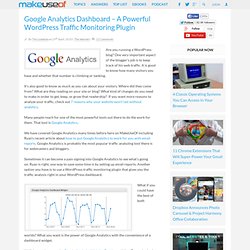
That tool is Google Analytics. We have covered Google Analytics many times before here on MakeUseOf including Ryan’s recent article about how to put Google Analytics to work for you with email reports. Sometimes it can become a pain signing into Google Analytics to see what’s going on. What if you could have the best of both worlds? Well, let me show you the Google Analytics Website Dashboard WordPress plugin. Setting Up Google Analytics Website Dashboard The plugin is hosted on the WordPress plugin site. That’s about all there is to installing it. 3 Wordpress Plug-Ins To Automate & Improve Your Blog SEO. Most bloggers know the value of SEO or Search Engine Optimization. By performing some tasks, tricks and jumping through some hoops you can make your website or blog appear more impressive to the bigger search engines like Google, Bing and Yahoo. Optimizing certain parts of your website, including article titles, image alternate text tags and having a up-to-date sitemap can really help your search engine standing.

Most people hear the tasks they need to do to optimize their site and they get scared off. I am here to tell you that any ordinary person can perform Search Engine Optimization like the big boys. First up is SEO Friendly Images – as you can imagine, it helps you automatically optimize your images so search engines can see them. First off go to your blog and right click on an image. WordPress uses the file’s name as the alternate text. After activating it, refresh your page and right click and check out the image’s properties again. Automate blog seo.

Make A Complete Community Site With Buddypress (& WordPress) We’ve talked before about various plugins that can dramatically change and enhance the underlying functionality of WordPress, as well as rolling your own custom plugins and widgets – it can become basically anything you want it to. Until now though, we haven’t really talked about making WordPress into a community site.

By default, users can register in WordPress and have their details remembered for commenting – that’s about it really. BuddyPress gives you complete user profiles, activity streams, and groups. If you’re considering a community site, this needs to be the first free project you check out. BuddyPress is completely free and open source, and after an acquisition in 2008 is owned by the creators of WordPress (Automattic), so you know you’re in good hands. Do you really to make a community site? The first thing you should consider is that the nature of a community driven site means you actually need users. So, what exactly does BuddyPress do for you? Extended User Profiles. 5 Things You Might Not Have Known You Could Do With Wordpress. Being the most versatile blogging system ever, it’s no surprise that developers have twisted and pulled WordPress into becoming so much more through the clever use of plugins. If you thought WordPress was only for blogging, think again. Here’s 5 others ways you can use the WordPress system, with free and premium choices where available.

E-Commerce – Your Own Online Shop You might be surprised to learn that you can run an entire online store from WordPress, and more importantly you can do it for free. WP eCommerce has been the standard for a long time and powers some really impressive sites like Icon Dock. In terms of out-of-the-box ease of setup for non-technical users though, my favourite is JigoShop, with which you can have an attractive and fully functional shop up in minutes, fully compatible with the default twenty-eleven WordPress theme. Classifieds & Job Listings For local sites especially, providing classified ads can be a great resource, as can a jobs site. A Reviews Site. Make A Product Review Database With Wordpress: Custom Post Types, Custom Fields, Featured Images & Widgets! You’ll be able to maintain a separate list of products using custom post types, each with an associated image, as well as some meta-info such as price, rating, specifications – and we’ll finish it all off with a way to display them in a sidebar widget and an index page.Sounds good?

Read on. Requirements: You’ll need a working WordPress 3.0+ self hosted install, and this will make use of extensive PHP coding. I’ll give you the code, but you’ll need to be relatively comfortable with PHP and XHTML to adjust variable names to your needs or change the style. If you need a quick beginners course on CSS and XHTML, may I suggest our wonderful free beginners guide to download. Create Post Types If you read last weeks tutorial, you should be somewhat familiar with creating a custom post type in WordPress. It’s also wise to decide now what kind of meta-info you want to associate with each product. Retail PriceResolutionHD VideoPurchase LinkRating Single Product Template Widget That’s it from me today.

Working With Custom Database Tables In WordPress. Advertisement I’ve shown you many ways in which WordPress is already the most flexible CMS. A quick scan of the Best of WordPress Plugins page will also reveal some of the many unique and niche ways you can make your blog work harder. I’ve even shown you how to make use of custom post types to create your own mini database; but I’ve left one thing out, I think. 5 Things You Might Not Have Known You Could Do With Wordpress 5 Things You Might Not Have Known You Could Do With Wordpress Being the most versatile blogging system ever, it’s no surprise that developers have twisted and pulled Wordpress into becoming so much more through the clever use of plugins. If you thought Wordpress was only for... What if you already have a database of say, customer information, but you want to be able to query that data and display it within a WordPress template? Requirements This tutorial is about as advanced as we are going to get at MakeUseOf, but it should open up a world of possibilities to you.

<? <? Vroom, Vroom: A Comprehensive Guide To Speeding Up A WordPress Blog. Advertisement MakeUseOf serves hundreds of thousands of visitors everyday, and we do it all on WordPress. WordPress can and does scale from tens to millions of pageviews, but you’re going to need some heavyweight plugins and strategies to increase performance at that level. Here’s a comprehensive list of things you can do to speed up your blog, and the plugins you can use to do it. Switch hosting provider I’ve explained before about the differences between types of hosting, but it boils down to this: shared hosting is very slow. Host external resources on a CDN We’ve talked about CDNs before too; they’re just high speed filestores that mirror files in local caches around the world, so while the core site is run on your server, images and Javascript resources are pulled from the CDN, resulting in near instant download times.

JsDelivr is a free Javascript CDN which will load all the various scripts WordPress uses from their CDN; you can pick and choose which to load. Minimize text files. 10 WordPress Tutorial Sites To Brush Up Your Blogging Skills. Adaptive Blog Theme: From Photoshop to WordPress.

Plugin

Theme. How to Create a "Sticky" Floating Footer Bar in WordPress. Books - Wordpress.