Day Pad Moonpads Organic Cloth Pads Fall Leaves by epicerma. Wiser.org: The Social Network for Sustainability. Welcome to Eye On Earth. Ecological building & self sufficient living in Croatia. Finnish research brings carbon material to solar cells. Kerttu Aitola, a researcher at Aalto University, is the first person to replace the most expensive parts of solar cells with carbon nanomaterials.

In her doctoral dissertation she compares the suitability of different carbon nanomaterials as counter electrodes for dye solar cells. The current, third-generation solar cells are manufactured from silicon. The future alternative to silicon solar cells is dye-sensitised solar cell technology, DSC, which has been described as artificial photosynthesis. The technology was the winner of the 2010 Millennium Technology Prize.
Aitola and her colleagues replaced the counter electrode of the solar cells with a new carbon composite, carbon nanotubes. Additionally, instead of glass substrate, the researchers used a flexible plastic substrate, which allows the use of a printing process in the production of solar cells. Kerttu Aitola defended her dissertation Carbon nanomaterials as Counter Electrodes for Dye Solar Cells on 25 May at Aalto University. How To Store Produce Without Plastic. We don’t use plastic to store any of our vegetables or fruits.
For example, we store carrots, whole or cut, immersed in containers of water. They will stay crisp in the refrigerator for weeks. (Make sure to change the water frequently.) Celery works the same way. The Berkeley Farmers Market has put together a huge list of ways to store produce without plastic. How to Store Vegetables Without Plastic Always remove any tight bands from your vegetables or at least loosen them to allow them to breath.
Artichokes‐ place in an airtight container sealed, with light moisture.Asparagus‐ place them loosely in a glass or bowl upright with water at room temperature. How to Store Fruit Without Plastic Apples‐ store on a cool counter or shelf for up to two weeks. One question I’m often asked is how to store loose salad greens without plastic. We also don’t freeze veggies and fruits or buy them frozen. I’d love to hear about your produce storage ideas/challenges. It's Official- Cell Phones are Killing Bees. Scientists may have found the cause of the world’s sudden dwindling population of bees – and cell phones may be to blame.
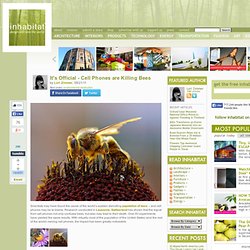
Research conducted in Lausanne, Switzerland has shown that the signal from cell phones not only confuses bees, but also may lead to their death. Over 83 experiments have yielded the same results. With virtually most of the population of the United States (and the rest of the world) owning cell phones, the impact has been greatly noticeable. Led by researcher Daniel Favre, the alarming study found that bees reacted significantly to cell phones that were placed near or in hives in call-making mode. The bees sensed the signals transmitted when the phones rang, and emitted heavy buzzing noise during the calls.
The signals cause the bees to become lost and disoriented. Jedan dan za čist okoliš!