Multiple Intelligences -- Assessment. Thinking Flexibly. If you never change your mind, why have one? -Edward deBono Successful people are good at flexible thinking. They are able to alter perspectives, consider alternative points of view and change their minds when the data is no longer supporting their ideas. However, being flexible in thinking doesn't necessarily mean you're always changing your mind. It means you're open to changing your mind, to considering alternatives, weighing up options and then choosing the best way forward. Often the effort to see alternatives will help to generate a better solution. Our brains are very good at recognising and using patterns. Our minds also form other, less obvious patterns. For example, you may have heard the phrase "If the only tool you have is a hammer, the whole world looks like a nail".
The ability to think flexibly, to see things from different points of view, to consider options, is a skill that can be learnt. Habits of Mind's blog. Managing Impulsivity. Road rage, anger management, impulse buying, credit card debt. These are all signs of poor impulse control. Planning, prioritising, calmness and orgaization. These are all signs of good management of impulsivity. What we find is that successful people are able to manage their impulses well.
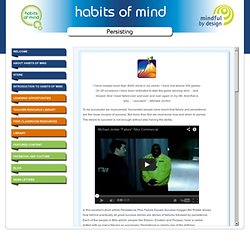
They are able to set goals, prioritise and keep their plans on track. It's interesting to note that this Habit was originally called "Reduce Impulsivity". Steven Covey refers to this disposition when he discusses what he calls the gap between stimulus and response. Reactive people tend to jump to conclusions and are the victims of their environment. Covey also sheds light on another aspect of this Habit of Mind when he discusses the types of tasks proactive people spend most of their time doing. Managing Impulsivity also relates to the ability to delay gratification, not to take the first reward that comes our way, but to hold out for our ultimate goal. Habits of Mind's blog. Persisting. “I have missed more than 9000 shots in my career. I have lost almost 300 games. On 26 occasions I have been entrusted to take the game winning shot… and missed. And I have failed over and over and over again in my life. And that is why… I succeed.” - Michale Jordon To be successful we must persist.
In this excellent short article Persistence Plus Failure Equals Success blogger Bill Riddle shows how behind practically all great success stories are stories of failures followed by persistence. If we know that persistence is so important, why do so many people give up easily? Firstly, for many people success has not always followed from persistence. Likewise, in schools we are often taught that to persist means you must be dumb. But we know that successful people tell us persisting is a key, possibly THE key, to their success.
Persisting is not simply doing the same thing over and over again and expecting a different result. Habits of Mind's blog. Our Questions.