
Strange Science: Mammals. Perhaps as long as 5,000 years ago, a group of sailors found skulls belonging to a race of hideous giants whom the ancient Greeks named cyclops.
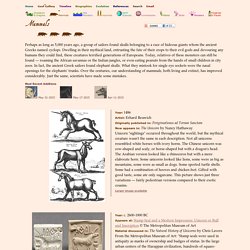
Dwelling in their mythical land, entrusting the fate of their crops to their evil gods and devouring any humans they could find, these creatures terrified generations of Europeans. Today, relatives of these monsters can still be found — roaming the African savannas or the Indian jungles, or even eating peanuts from the hands of small children in city zoos. In fact, the ancient Greek sailors found elephant skulls.
What they mistook for single eye sockets were the nasal openings for the elephants' trunks. Bronze Age history off by 100 years. Provided Trenchmaster Vronwy Hankey and foreman Antonis Zidianakis excavate storage jars from the Minoan settlement Myrtos-Pyrgos.
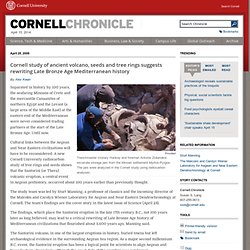
The jars were analyzed in the Cornell study using radiocarbon analyses. Separated in history by 100 years, the seafaring Minoans of Crete and the mercantile Canaanites of northern Egypt and the Levant (a large area of the Middle East) at the eastern end of the Mediterranean were never considered trading partners at the start of the Late Bronze Age. Until now. Cultural links between the Aegean and Near Eastern civilizations will have to be reconsidered: A new Cornell University radiocarbon study of tree rings and seeds shows that the Santorini (or Thera) volcanic eruption, a central event in Aegean prehistory, occurred about 100 years earlier than previously thought.
Human World. Human World The women of the Tiwi tribe in the South Pacific are married at birth.

When Albert Einstein died, his final words died with him. The nurse at his side didn't understand German. St Patrick, the patron saint of Ireland, was not Irish. Puzzling Ancient Artifacts.