
Weather in Japan - Lonely Planet Travel Information. The combination of Japan’s mountainous territory and the length of the archipelago (covering about 20° of latitude) makes for a complex climate.

Most of the country is located in the northern temperate zone, which yields four distinct seasons. In addition, there are significant climatic differences between Hokkaidō in the north, which has short summers and lengthy winters with heavy snowfalls, and the southern islands, such as Okinawa in Nansei-shotō (Southwest Archipelago), which enjoy a subtropical climate. Cherry blossom. A cherry blossom is the flower of any of several trees of genus Prunus, particularly the Japanese Cherry, Prunus serrulata, which is sometimes called sakura after the Japanese (桜 or 櫻; さくら).[1][2][3] Many of the varieties that have been cultivated for ornamental use do not produce fruit.
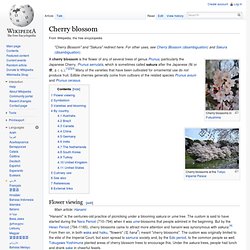
Edible cherries generally come from cultivars of the related species Prunus avium and Prunus cerasus. Flower viewing[edit] Every year the Japanese Meteorological Agency and the public track the sakura zensen (cherry blossom front) as it moves northward up the archipelago with the approach of warmer weather via nightly forecasts following the weather segment of news programs. The blossoming begins in Okinawa in January and typically reaches Kyoto and Tokyo at the end of March or the beginning of April. When to travel to Japan - Travel Weather. The tables list average daytime high and nighttime low temperatures and average percentages of sunny and rainy days for selected cities.
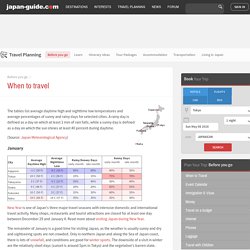
A rainy day is defined as a day on which at least 1 mm of rain falls, while a sunny day is defined as a day on which the sun shines at least 40 percent during daytime. (Source: Japan Meteorological Agency) January New Year is one of Japan's three major travel seasons with intensive domestic and international travel activity. Many shops, restaurants and tourist attractions are closed for at least one day between December 29 and January 4.