
Benjamin Disraeli. Upon Derby's retirement due to ill health in 1868, Disraeli became Prime Minister briefly before losing that year's election.

He returned to opposition, before leading the party to a majority in the 1874 election. He maintained a close friendship with Queen Victoria, who in 1876 created him Earl of Beaconsfield. Disraeli's second term was dominated by the Eastern Question—the slow decay of the Ottoman Empire and the desire of other countries, such as Russia, to gain at its expense. Disraeli arranged for the British to purchase a major interest in the Suez Canal Company (in Ottoman-controlled Egypt). In 1878, faced with Russian victories against the Ottomans, he led the British delegation at the Congress of Berlin and secured a settlement favourable to Britain. Sybil (novel) Sybil, or The Two Nations is an 1845 novel by Benjamin Disraeli.

Published in the same year as Friedrich Engels's The Condition of the Working Class in England in 1844, Sybil traces the plight of the working classes of England. Disraeli was interested in dealing with the horrific conditions in which the majority of England's working classes lived — or, what is generally called the Condition of England question. The book is a roman à thèse, or a novel with a thesis — which was meant to create a furor over the squalor that was plaguing England's working class cities.
Fridrick Engels. Robert Owen. Chartism. Chartism was a working-class movement for political reform in Britain which existed from 1838 to 1858.
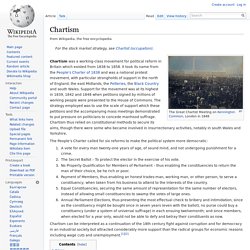
It took its name from the People's Charter of 1838 and was a national protest movement, with particular strongholds of support in the north of England, the east Midlands, the Potteries, the Black Country and south Wales. Support for the movement was at its highest in 1839, 1842 and 1848 when petitions signed by millions of working people were presented to the House of Commons. William Godwin. Thomas Carlyle.