
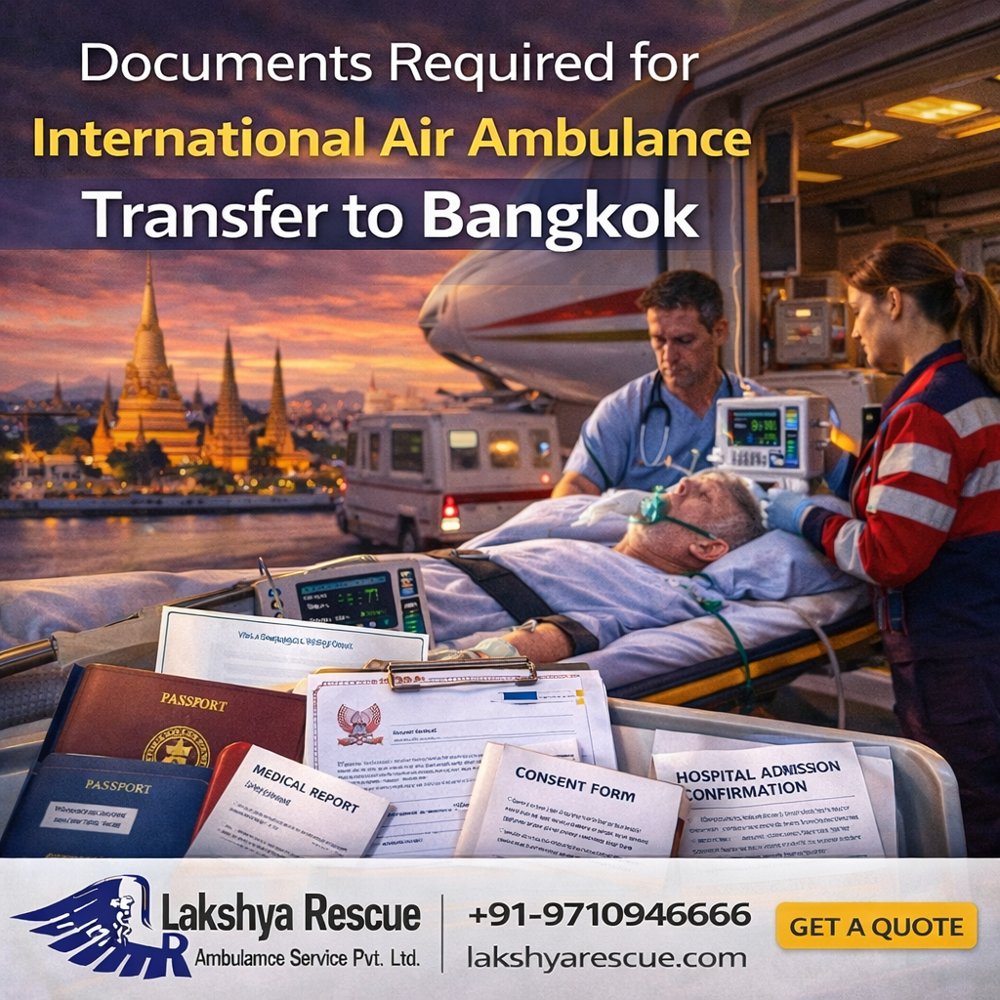
Medical emergencies can happen at any time, and sometimes a patient needs to travel to another country for treatment. Bangkok is one of the most popular medical destinations in Asia because it has many modern hospitals and experienced doctors.
However, when a patient is in critical condition, traveling on a regular commercial flight may not be possible. In such situations, an air ambulance service becomes the safest option. Air ambulances allow patients to travel internationally while receiving continuous medical care during the journey.
But before arranging an international air ambulance transfer, several important documents are required. These documents help ensure that the patient can travel safely and that all medical and legal requirements are completed.
In this blog, we will explain the important documents required for international air ambulance transfer to Bangkok and why each document is necessary.
International medical transfer is different from domestic patient transport. When a patient travels between countries, both aviation authorities and hospitals need proper documentation.
These documents help in:
Without proper documents, the patient transfer process may face delays or complications.
Below are the most important documents needed when arranging an international air ambulance service.
The first and most important documents are the patient’s medical reports.
Doctors need these reports to understand the patient’s current condition and decide whether the patient is stable for air travel.
Medical reports usually include:
These reports help the air ambulance medical team prepare the correct equipment and medicines for the flight.
A medical fitness certificate is issued by the treating doctor at the hospital where the patient is currently admitted.
This certificate confirms:
For example, the certificate may mention if the patient needs:
This document helps the air ambulance provider prepare the aircraft with proper medical equipment.
Since the transfer involves international travel, the patient must have a valid passport.
The passport is required for:
If the patient does not have a passport, the family may need to arrange an emergency passport through the appropriate authorities.
The patient must also have a valid visa for Thailand before traveling to Bangkok.
Hospitals or medical travel coordinators often help families obtain a medical visa.
A medical visa allows the patient to travel to Thailand specifically for medical treatment.
Sometimes the patient’s family members or attendants may also need visas to travel with the patient.
Before the air ambulance flight is arranged, the hospital in Bangkok must confirm that they will accept the patient.
This confirmation usually includes:
This document ensures that the patient will receive immediate treatment upon arrival in Bangkok.
A consent form is another important document.
The patient or family members must sign a consent form that allows the air ambulance team to transport the patient internationally.
This document confirms that:
Consent forms are standard in international medical transport.
If family members or attendants are traveling with the patient, their identification documents are also required.
These may include:
These documents help with airport and immigration procedures.
If the patient has international medical insurance or travel insurance, the insurance documents should also be shared.
Insurance may cover:
Although not always required, insurance documents can help reduce financial stress for families.
Depending on international travel regulations, some countries may require additional health clearances.
These may include:
These requirements may change depending on current international health regulations.
Many families feel stressed about arranging so many documents during a medical emergency. Professional air ambulance providers usually help coordinate the documentation process.
They assist with:
This support helps families focus on the patient’s health instead of paperwork.
Once the documentation process is complete, the air ambulance is prepared with advanced medical equipment.
Most air ambulances include:
The aircraft works like a flying ICU, allowing doctors to treat the patient during the journey.
Air ambulance services provide several advantages for critically ill patients.
Patients receive medical care throughout the journey.
Private aircraft reduce travel time compared to commercial flights.
Advanced medical equipment ensures patient safety.
The patient is transported safely from one hospital bed to another hospital bed.
Lakshya Rescue provides professional air ambulance services for international patient transfers.
Their team helps families with:
Their focus is to provide safe and reliable medical transport for critical patients.
If you need help arranging an international air ambulance transfer, you can contact Lakshya Rescue.
Lakshya Rescue – Air Ambulance Services
Phone: +91 9710946666
Website: www.LakshyaRescue.com
The team is available 24/7 to assist with emergency medical transportation.
International air ambulance transfer to Bangkok requires careful planning and proper documentation. Medical reports, passports, visas, hospital confirmations, and consent forms are some of the most important documents needed for a smooth transfer process.
With the help of experienced air ambulance providers, families can complete the documentation process quickly and focus on the patient’s treatment and recovery.
Air ambulance services ensure that critically ill patients receive continuous medical care and reach their destination safely.