
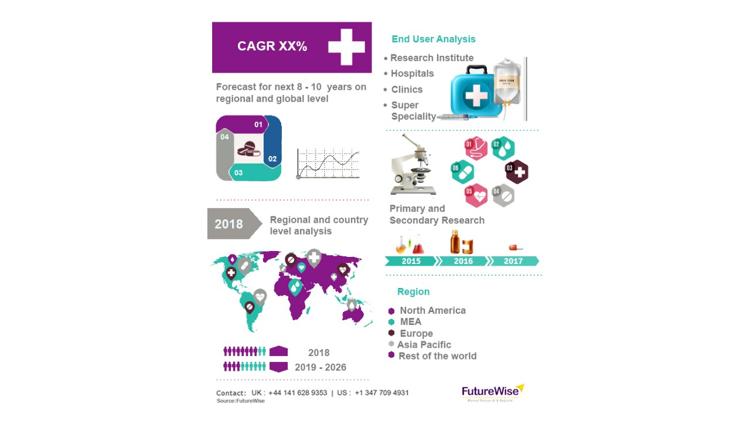
According to FutureWise analysis, the market for bioprocessing systems is expected to register a CAGR of 14.5% from 2023 to 2031.
The global Bioprocessing Systems Market was estimated at approximately USD 20 billion in 2023 and is projected to grow to around USD 42 billion by 2032, indicating a consistent compound annual growth rate (CAGR) of about 8.5% during this forecast period. FutureWise Research anticipates an even more robust growth trajectory, predicting a CAGR of 14.5% from 2023 to 2031. This rapid expansion is largely attributed to the increasing demand for biopharmaceuticals, cell therapies, vaccines, and biologics. Key market segments encompass upstream, downstream, single-use, and integrated systems, with diverse applications in fields such as vaccine development, tissue engineering, chromatography, and biosensors. Major industry players, including Thermo Fisher, Merck KGaA, PBS Biotech, and GE, are making significant investments in automation, single-use technologies, and integrated platforms. These advancements aim to enhance operational flexibility, minimize contamination risks, and improve scale-up efficiency, thereby meeting the dynamic requirements of the industry.
FutureWise Market Research has released a report that provides an intricate analysis of the Bioprocessing Systems Market trends that shall affect the overall market growth. Furthermore, it includes detailed information on the graph of profitability, SWOT analysis, market share and regional proliferation of this business. Moreover, the report offers insights on the current stature of prominent market players in the competitive landscape analysis of this market.
Request a Free Sample @
https://www.futurewiseresearch.com/contact.aspx?rpt=13583&type=requestsample
Bioprocessing Systems Market Segmentation:
By Type
By Application
By End User
By Region
Competitive Landscape in Bioprocessing Systems Market:
Buy now the latest version of this report: https://www.futurewiseresearch.com/checkout.aspx?ReportId=13583&license=multi.
**Objectives of this Study: **
Flexible Delivery Model: