

FRONTLINE: digital nation: watch the full program I wanted to wait a bit because it seemed like it'd be more interesting to listen to all of you. There used to be a name for what I was doing, "lurking" -- it dates back to a very different time in the net's history, when usenet and mailing lists were the main forms of communication. It was hard to talk about lurkers then, for the obvious reason that no one knew much about them; it hasn't gotten much easier since. The idea of lurkers has all but vanished now, buried by a succession of ways to try and slice and dice them: "eyeballs," pageviews, users, subscribers, friends, followers, etc, etc. That pessimistic view is closely related to perspective(s) of people who are trying to make money off of lurkers, because "monetizing" (a really ugly word) them and their actions sooner or later requires connecting whatever they're clicking on or reading or whatever to some kind of action -- preferably, some sort of expenditure. That's good and bad. But it definitely has downsides, too. Cheers, Ted
Transcendent Nebula Constructing Personal Learning Environments open online course: Level of Use Study | csessums.com [note: This is Wendy Drexler and my proposal for the American Educational Research Association (AERA) conference (New Orleans, Louisiana, April 2011). It was accepted with additional final results.] Abstract An open online course provided the platform for facilitation of student construction of personal learning environments (PLEs). Hall’s (2010) Level of Use instrument was used to evaluate how a PLE was used by participants, how effectively it was used, the factors that affected its use/nonuse, and the outcomes experienced by users/non-users. Course designers further compared the Level of Use of for-credit participants with those who were accessing the course free of charge. The overall increase in the Level of Use suggests that by engaging with others, participants who participated actively found benefit from constructing the PLE and sharing their experience. A MOOC is one example of a larger movement to create and share open educational resources (OER). Table 1. (Hall and Hord, 2011)
How To Create a ‘Personal Learning Environment’ to Stay Relevant in 2013 “Our understanding of learning has expanded at a rate that has far outpaced our conceptions of teaching. A growing appreciation for the porous boundaries between the classroom and life experience…has created not only promising changes but also disruptive moments in teaching.” EDUCAUSE Review, 2012 This quote from Disrupting Ourselves: The Problem of Learning in Higher Education (Bass, 2012), gives a good a reason as any for educators to develop a Personal learning Environment [PLE]; a space where we can keep up with the experimental modes of learning, instruction, changing pedagogy and instructional methods that surfaced in 2012. Three Reasons Why Educators Need a PLEEducation is in a phase of disruption (not news to anyone)—and it’s not just a blip or a bump, but is what Harvard professor and author Clayton Christenson describes as disruptive innovation. We need to disrupt ourselves: The model of higher education is at a turning point. Closing Thoughts Resources: Like this:
Where I'm From, a poem by George Ella Lyon, writer and teacher In response to the fear- and hate-mongering alive in our country today, I have joined Julie Landsman?a writer, teacher, and activist based in Minneapolis?to create the I Am From Project. Through our website (iamfromproject.com) and Facebook page, we?re collecting art from around the country prompted by that theme. You can listen to our interview on the National Writing Project radio here: We want to gather the diversity of our voices, and we plan to archive the results online and to present them, in some form, in D.C. The Kentucky Arts Council has wrapped up my Where I'm From? “Where I'm From” grew out of my response to a poem from Stories I Ain't Told Nobody Yet (Orchard Books, 1989; Theater Communications Group, 1991) by my friend, Tennessee writer Jo Carson. In the summer of 1993, I decided to see what would happen if I made my own where-I'm-from lists, which I did, in a black and white speckled composition book.
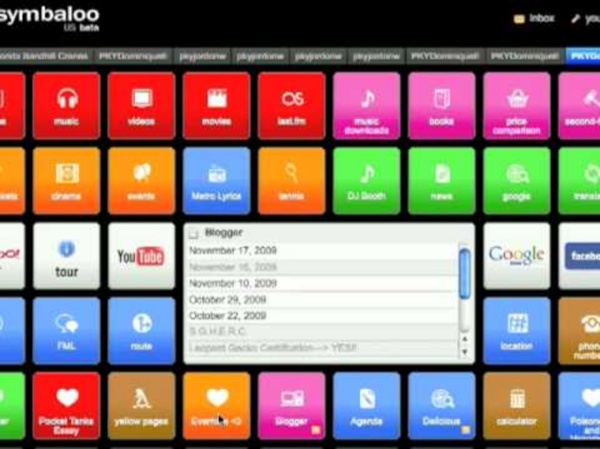
Create a personal learning environment with Symbaloo | Instructional Design Fusions Symbaloo is a visual, social bookmarking tool that makes it easy to access your personal knowledge management tools. The technology (or what are my powers) The Symbaloo interface When you register to use Symbaloo, you gain access to a slick user interface that allows you to create webmixes of your favorite Web sites. The Symbaloo interface looks a bit like a high-tech Scrabble board with movable “tiles” on it. The Symbaloo folks have kindly provided a number of tiles to get you started, giving you access to YouTube, Flickr, Google, Wikipedia, Craigslist, and even the Yellow Pages. When you view a webmix, you’ll see a centerbox in the middle of the page. The tour widget is specialized. Creating and editing tiles You can personalize tiles that link to your favorite Web sites to create visual cues that are meaningful to you. This video provides more information on creating and editing tiles. You’ll also be given the option to search existing webmixes when you add or create a new tile.
Personalized Learning - K-12 Education When learning is personalized, teachers help students find what they like and want to learn about and what their strengths and needs are. Then, the teacher sets up projects that are in line with the students’ interest and with academic standards. This growing movement is focused on changing the learning environment so students can take more ownership of their learning and teachers can work with them to discover their passions and interests. The breakthrough idea in personalized learning is the striking shift in the teacher-student team. In traditional learning, the teacher is the leader and the student is a mostly passive recipient. In personalized learning, the teacher-student bond doesn’t matter less; it matters more. In November 2014, the Foundation released an interim report from the RAND Corporation—the first in what will be a series of research reports based on an ongoing long-term study of foundation-funded schools that are using a variety of approaches to personalized learning.
A great example on how to use PLE. by kaipihla Sep 30