

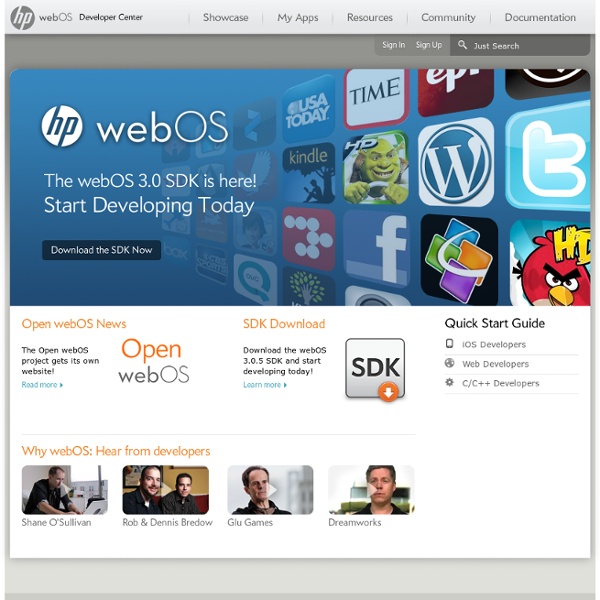
webOS webOS also known as LG webOS, Open webOS or HP webOS, is a Linux kernel-based operating system for smart TVs,[1] and formerly a mobile operating system.[2] Initially developed by Palm, which was acquired by Hewlett-Packard, the operating system was later sold to LG Electronics. Through all iterations of the operating system (Palm, HP and now LG) the official name has been consistently stylized as webOS (lowercase 'w').[3][note 1] Palm launched WebOS in January 2009, then called Palm WebOS. Various versions of WebOS have been featured on several devices, including Pre, Pixi, and Veer phones and the HP TouchPad tablet. Background[edit] Palm webOS logo HP WebOS logo Open webOS logo LG WebOS logo Palm launched WebOS in January 2009 as the successor to Palm OS. In April 2010, HP acquired Palm; WebOS was described as a key asset and motivation for the purchase. The HP Pre 3 was launched in select areas of Europe, and U.S. Smartphone and tablet features[edit] Screenshot of Palm WebOS Launcher (2009)
HP webOS Open WebOS ist ein Smartphone- und Tablet-Betriebssystem, das ursprünglich von der Firma Palm und später Hewlett-Packard entwickelt wurde. Es stellt den Nachfolger des Palm OS dar und ist auf die Bedienung per kapazitivem Touchscreen mit Multi-Touch-Gesten angepasst. Der Name steht stellvertretend für die tiefe Integration von Internetdiensten sowie die Einbindung von Webtechniken in das auf Basis von Linux entwickelte Betriebssystem und die Benutzeroberfläche. Am 18. Entwicklung[Bearbeiten] Die letzte öffentliche Version 5.4 von Palm OS unterstützte nur zwei Verbindungsprofile und somit bei Smartphones (mit GPRS und Bluetooth) kein zusätzliches UMTS oder integriertes GPS. Das Betriebssystem wurde zusammen mit dem ersten Smartphone auf der Consumer Electronics Show am 8. Merkmale[Bearbeiten] Synergy[Bearbeiten] Alle PIM-Daten werden auf dem Gerät gespeichert und ständig mit Internetdiensten wie z. Benachrichtigungen[Bearbeiten] App Catalog[Bearbeiten] Webbrowser[Bearbeiten] Am 18.
WebOS Apps : A Gallery of the best WebOS Apps QNX Operating Systems QNX® products are designed for embedded systems running on various platforms, including ARM and x86, and a host of boards implemented in virtually every type of embedded environment. The QNX Neutrino RTOS has been qualified to various safety and security standards for use in products with high criticality and low tolerance for failure. QNX Neutrino RTOS The QNX Neutrino RTOS is a full-featured and robust OS that scales down to meet the constrained resource requirements of realtime embedded systems. Its true microkernel design and its modular architecture enable customers to create highly optimized and reliable systems with low total cost of ownership. QNX OS for Medical QNX® OS for Medical complies with IEC 62304 and is designed to help reduce the effort of building safety-critical medical devices that require regulatory approval. QNX OS for Safety and Security QNX OS for Security QNX OS for Safety
Palm Devices and WebOS -- News, Opinions, and App Reviews QNX QNX ist ein proprietäres POSIX-fähiges unixoides Echtzeitbetriebssystem, das primär auf den Markt eingebetteter Systeme gerichtet ist. Geschichte[Bearbeiten] Historisches Logo Neutrino sollte zeitweilig auch als Basis eines neuen Amiga-Systems Verwendung finden. Diese Pläne wurden von Amiga Inc. jedoch zugunsten eines eigenen PowerPC-basierten Betriebssystem-Ansatzes mit Namen Amiga OS4 (AmigaOne) aufgegeben. QNX wurde am 27. Seit dem 12. Beschreibung[Bearbeiten] Als ein Mikrokernel-Betriebssystem basiert QNX auf der Idee, den Großteil des Systems in Form von Prozessen laufen zu lassen. Neutrino wurde auf viele weitere Architekturen portiert und läuft heute auf fast jeder modernen CPU, die im Markt eingebetteter Systeme Anwendung findet. Quellen[Bearbeiten] Weblinks[Bearbeiten]
The #1 HP / Palm webOS Community | PreCentral.net Apple iOS iOS (früher iPhone OS oder iPhone Software[1]) ist ein von Apple entwickeltes mobiles Betriebssystem für das iPhone, das iPad, den iPod touch und den Apple TV der 2. und 3. Generation. Geschichte und Entwicklung[Bearbeiten] Vorgeschichte[Bearbeiten] Vorstellung auf der MacWorld[Bearbeiten] Das ursprüngliche Betriebssystem wurde am 9. Steve Jobs war für ein geschlossenes Betriebs- und Anwendungssystem, und meinte, Webapps würden den Dienst von nativ installierten Anwendungen genauso zuverlässig und schnell erledigen.[5] Dennoch verkündete Apple am 17. Einführung des iOS SDK[Bearbeiten] Steve Jobs stellt iPhone OS 2.0 vor. Am 6. Umbenennung und Zusammenführung[Bearbeiten] Zunächst wurden das iOS des iPhones sowie des iPads unter verschiedenen Versionen betrieben (iPhone OS und „iPad OS“).[10] Technisch gesehen gab es jedoch nur einen geringen Unterschied, das iPad kann daher sämtliche für das iPhone entwickelte Apps ausführen. Im Juni 2010 benannte Apple dann sein iPhone OS in iOS um. Legende:
Android (Betriebssystem) Das T-Mobile G1 ist das erste Smartphone mit dem Android-Betriebssystem. Der Nutzer steuert Android mittels verschiedenen so genannten Navigationstasten. Diese bestehen aus „zurück“ (geht zur vorherigen Aktivität), „Home“ (öffnet den Startbildschirm) und „Letzte Applikationen“ (erlaubt das schnelle Hin- und Herschalten zwischen gleichzeitig laufenden Apps). Vor Android 4.0 und bei einzelnen Herstellern gibt es auch „Menü“ oder „Suche“. Man unterscheidet zwischen Soft- und Hardwaretasten. Der Standard-Startbildschirm von Android 4.4 Der Startbildschirm, auch Homescreen genannt, dient in erster Linie zum Starten von Apps. Ein großer Vorteil von Android, die Anpassbarkeit, spielt vor allem auch beim Homescreen eine Rolle. Die Symbole der Status- oder Benachrichtigungsleiste Benachrichtigungscenter von Android 4.4.2 Ein weiteres Merkmal des Betriebssystems ist die Benachrichtigungsleiste am oberen Bildschirmrand. Die Struktur von Android Das Framework setzt auf starke Modularität.
MeeGo MeeGo ist ein auf Linux basierendes, quelloffenes Betriebssystem, das in Smartphones, Handhelds, Tablets, Netbooks, an das Internet angeschlossenen TV-Geräten und PKW zum Einsatz kommen sollte.[2] Es ist eine Verschmelzung von Nokias Betriebssystem Maemo mit Intels Moblin-Projekt. Das Projekt ist bei der Linux Foundation angesiedelt. MeeGo ist ein Multiplattformprojekt und unterstützt die Architekturen x86/Intel-Atom und ARM. Bestandteile des Systems[Bearbeiten] Versionsverlauf[Bearbeiten] MeeGo wurde im Februar 2010 im Zuge des Mobile World Congress angekündigt.[5][6][7] Eine erste Entwickler-Version wurde im April 2010 vorgestellt, die offizielle Version 1.0 des Kernsystems und der Netbook User Experience folgte Ende Mai 2010.[5][8] Eine Vorabversion einer Handset-Version für Intel-Atom-basierte Geräte, die bereits einige der geplanten Bedienelemente und Anwendungen enthielt, erfolgte am 30. Kooperationen und geplante Verwendungen[Bearbeiten] Derivate[Bearbeiten] openSUSE[Bearbeiten]