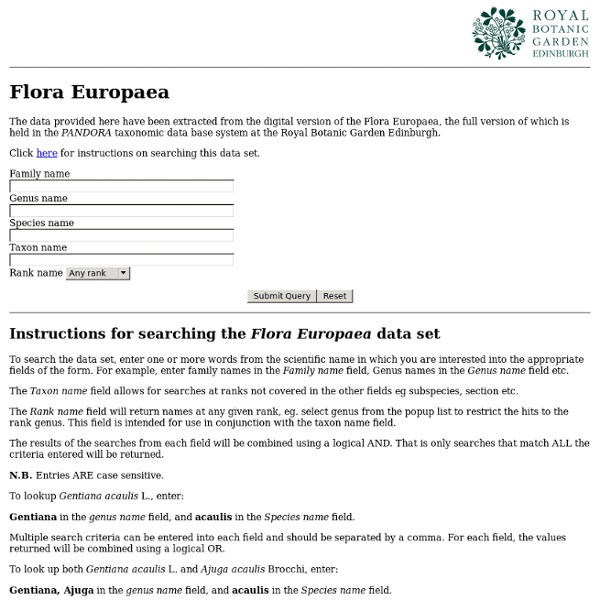
Search the Flora Europaea
The data provided here have been extracted from the digital version of the Flora Europaea, the full version of which is held in the PANDORA taxonomic data base system at the Royal Botanic Garden Edinburgh. Click here for instructions on searching this data set. To search the data set, enter one or more words from the scientific name in which you are interested into the appropriate fields of the form. For example, enter family names in the Family name field, Genus names in the Genus name field etc. The Taxon name field allows for searches at ranks not covered in the other fields eg subspecies, section etc. The Rank name field will return names at any given rank, eg. select genus from the popup list to restrict the hits to the rank genus. The results of the searches from each field will be combined using a logical AND. N.B. To lookup Gentiana acaulis L., enter: Gentiana in the genus name field, and acaulis in the Species name field.
Main Page - Palaeos.org
A Global Information System on Fishes
Wikispecies, free species directory
Encyclopedia Astronautica
Encyclopedia of Earth
ARKive - Discover the world's most endangered species
Wildscreen's Arkive project was launched in 2003 and grew to become the world's biggest encyclopaedia of life on Earth. With the help of over 7,000 of the world’s best wildlife filmmakers and photographers, conservationists and scientists, Arkive.org featured multi-media fact-files for more than 16,000 endangered species. Freely accessible to everyone, over half a million people every month, from over 200 countries, used Arkive to learn and discover the wonders of the natural world. Since 2013 Wildscreen was unable to raise sufficient funds from trusts, foundations, corporates and individual donors to support the year-round costs of keeping Arkive online. As a small conservation charity, Wildscreen eventually reached the point where it could no longer financially sustain the ongoing costs of keeping Arkive free and online or invest in its much needed development. Therefore, a very hard decision was made to take the www.arkive.org website offline in February 2019.
Related:
Related: