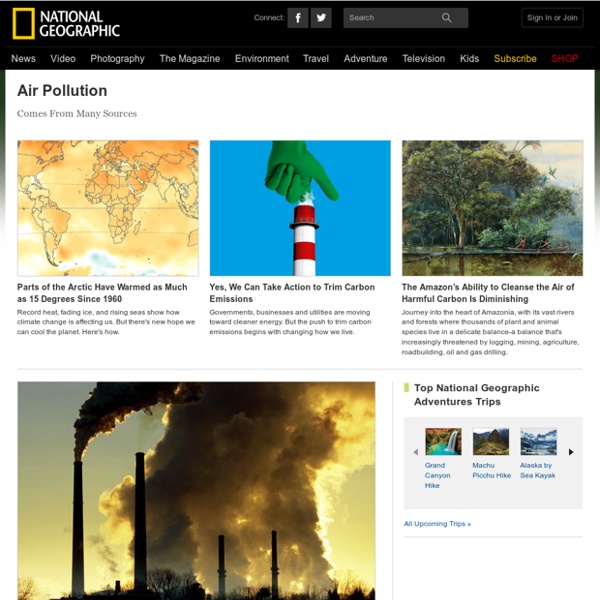
Pollution Prevention coal power: air pollution Burning coal is a leading cause of smog, acid rain, global warming, and air toxics. In an average year, a typical coal plant generates: 3,700,000 tons of carbon dioxide (CO2), the primary human cause of global warming--as much carbon dioxide as cutting down 161 million trees. 10,000 tons of sulfur dioxide (SO2), which causes acid rain that damages forests, lakes, and buildings, and forms small airborne particles that can penetrate deep into lungs. 500 tons of small airborne particles, which can cause chronic bronchitis, aggravated asthma, and premature death, as well as haze obstructing visibility. 10,200 tons of nitrogen oxide (NOx), as much as would be emitted by half a million late-model cars. 720 tons of carbon monoxide (CO), which causes headaches and place additional stress on people with heart disease. 220 tons of hydrocarbons, volatile organic compounds (VOC), which form ozone. 114 pounds of lead, 4 pounds of cadmium, other toxic heavy metals, and trace amounts of uranium.
Biodiversité de la Guyane Un article de Wikipédia, l'encyclopédie libre. La biodiversité de la Guyane est très importante tant au niveau floristique que faunistique. Aussi, des travaux scientifiques sont menés depuis de nombreuses années pour connaître et protéger cette diversité. Généralités[modifier | modifier le code] Richesse du vivant[modifier | modifier le code] La Mangrove La forêt humide de Guyane s'est paradoxalement épanouie sur un des sols les plus pauvres du monde, pauvre en azote, en potassium, en phosphore et en matières organiques. L'acidité des sols est également à l'origine de cette médiocrité des sols guyanais. La France d'outre-mer est responsable de la protection d'un très important patrimoine écologique[1], dont celui de la Guyane qui est exceptionnel au niveau mondial. Les micro-organismes seraient bien plus nombreux encore, notamment dans le nord qui rivalise avec l'amazonie brésilienne, Bornéo et Sumatra. Recherche scientifique[modifier | modifier le code] Tortue Luth Route de Guyane française
Kids 4 Clean Air | Pollution | Climate | Recycling You need to breathe to stay alive. But how clean is the air you breathe? If you breathe dirty air, you are more likely to develop health problems and become ill. Plants and animals need clean air too. A lot of the things that make our lives more comfortable such as cars, electricity and heating, create bad gases which make the air dirty. The problem of air pollution started with the burning of coal in homes and factories. 'Air pollution' is what we say to describe all bad gases in the air that we breathe and that are dangerous for us. 500 years ago in Britain, the burning of coal was increasing in cities like London. Coal, when burnt makes a lot of smoke, which makes the air very dirty. About 200 years ago, the Industrial Revolution began in Britain. Smoke and fog together create smog. Smog was a big problem in the winter. When smog was stuck over a city, it became really hard to breathe and see clearly. These laws were made so that air would become cleaner.
Environment & Pollution Hunt is on for new Planet Nine For a planet that hasn’t technically been discovered yet, Planet Nine is generating a lot of buzz. Astronomers have not yet found a new planet orbiting the sun. Yet some remote icy bodies are dropping clues that a giant orb may be lurking on the fringes of the solar system.Six hunks of ice in the debris field beyond Neptune travel on orbits that are aligned with one another. Planetary scientists... 16:40 PM, February 3, 2016 Planets, Mathematics Readability Score: 7.9 Bright night lights, big science In polar regions of the world, a dazzling light show often plays out in the night sky.
NASA instrument tracks pollution from Russian fires Drought and the worst heat wave Russia has seen in 130 years have sparked a devastating outbreak of wildfires across the nation this summer, primarily in the country's western and central regions. According to wire service reports and Russia's Emergency Situations Ministry, as of Aug. 6, 2010, some 558 fires were burning. The fires have killed at least 52 people, destroyed some 2,000 homes and charred more than 1,796 square kilometers (693 square miles). The Atmospheric Infrared Sounder (AIRS) instrument on NASA's Aqua spacecraft is tracking the concentration and transport of carbon monoxide from the Russian fires. As shown in a new image, acquired July 21, 2010, the concentration of carbon monoxide from the fires on that date was largely limited to the European part of Russia (western and central Russia). AIRS is managed by NASA's Jet Propulsion Laboratory, Pasadena, Calif., under contract to NASA.
La biodiversité végétale diminue en Guyane Des scientifiques des laboratoires Mécanismes adaptatifs: des organismes aux communautés... Les résultats d'une étude coordonnée par les laboratoires du CNRS et du Muséum national d'Histoire naturelle ont été publiés dans le journal Global Change Biology du mois d'octobre 2009. Ils ont fait ... Pour soutenir l'effort de nombreux pays en développement désireux de connaître, préserver et valoriser durablement leur biodiversité végétale, le ministère français des Affaires étrangères et européennes (MAEE) a lancé le programme Sud Expert Plantes (SEP) une initiative de co-développement Nord-Sud axée sur l'étude de la biodiversité végétale. Ce document à la fois stratégique et technique est destiné à : - informer sur l'étendue de la problématique en matière de biodiversité guyanaise ; - permettre une meilleure synergie des actions réalisées par les différents acteurs de la biodiversité ; - renforcer l'efficacité des actions existantes et en initier de nouvelles.
Water Bottle Pollution If your family is like many in the United States, unloading the week’s groceries includes hauling a case or two of bottled water into your home. On your way to a soccer game or activity, it’s easy to grab a cold one right out of the fridge, right? But all those plastic bottles use a lot of fossil fuels and pollute the environment. Imagine a water bottle filled a quarter of the way up with oil. So why don’t more people drink water straight from the kitchen faucet? People love the convenience of bottled water. Plastic bottle recycling can help—instead of going out with the trash, plastic bottles can be turned into items like carpeting or cozy fleece clothing. Unfortunately, for every six water bottles we use, only one makes it to the recycling bin. Water is good for you, so keep drinking it. And yes, you can make a difference. Text by Catherine Clarke Fox
Toxic China: Widespread lead pollution is poisoning children (NaturalNews) Though set to become the world leader in manufacturing within the next few years, China has one of the worst track records for rampant environmental pollution with industrial materials and chemicals. And a recent report out of the town of Dongtang, which is located in China's major manufacturing region of Guangdong, has revealed that at least 160 local children there have been poisoned by lead pollution released from local factories. Reuters reports that ongoing investigations in the region have revealed "elevated" levels of lead in the blood of many children who live near heavy manufacturing plants. According to the South China Morning Post, there are already more than 500 reported cases of lead poisoning in children living throughout China's major manufacturing regions, and that this is "only the tip of the iceberg." To address the problems themselves, some local Chinese residents have staged protests and boycotts of companies emitting the deadly pollution.
Acid pollution in rain decreased with emissions, long-term study shows Emissions regulations do have an environmental impact, according to a long-term study of acidic rainfall by researchers at the University of Illinois. The National Atmospheric Deposition Program collects rainfall samples weekly from more than 250 stations across the United States and analyzes them for pollutants. The program recently released a report detailing trends in acidic rainfall frequency and concentration over 25 years, from 1984 to 2009. "This is the longest-term, widest-scale precipitation pollution study in the U.S. The phenomenon commonly known as "acid rain" has widespread effects not only on the ecosystem, but also on infrastructure and the economy. According to the report, acidic precipitation -- rain or snowfall with a pH value of 5.0 or less -- decreased in both frequency and concentration over the 25-year span. "What goes up does come down," Lehmann said. The deposition program continues to monitor sulfur and nitrogen compounds in rain.