Yoga Poses for Beginners: How-to, Tips, Benefits, Images, Videos
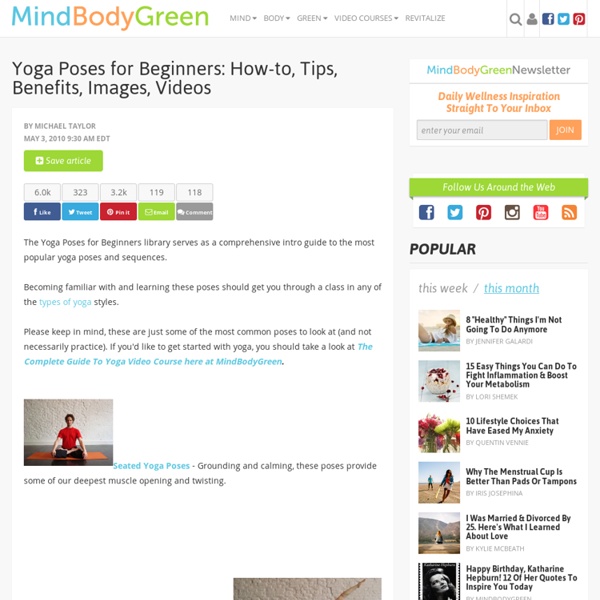
Yoga Basics & Background Information
Yoga is a 5000-year old practice which is done by a lot of people. It continues to evolve through the years to meet the needs of every individual. Nowadays, there are different forms of Yoga. Though most styles have common roots, each has its own unique features. In this section, get familiar with the different Styles of Yoga: What is Yoga? Have a basic understanding of Yoga. Yoga History It is believed that Yoga is already a 5000-year old practice. Why Practice Yoga? Some people believe that Yoga offers a lot of benefits. The Bhagavad Gita The Bhagavad Gita is said to be the Revelation given by Lord Krishna to Arjuna, in the battle field to help him resolve his mental conflict. Yoga Dictionary This is our compilation of words or terms about Yoga and its aspects. We hope that these sections have helped you in understanding what Yoga is and why people do it.
How Electricity Works"
Humans have an intimate relationship with electricity, to the point that it's virtually impossible to separate your life from it. Sure, you can flee from the world of crisscrossing power lines and live your life completely off the grid, but even at the loneliest corners of the world, electricity exists. If it's not lighting up the storm clouds overhead or crackling in a static spark at your fingertips, then it's moving through the human nervous system, animating the brain's will in every flourish, breath and unthinking heartbeat. When the same mysterious force energizes a loved one's touch, a stroke of lightning and a George Foreman Grill, a curious duality ensues: We take electricity for granted one second and gawk at its power the next. Electricity powers our world and our bodies. In this article, we'll try to provide a less slippery answer.
4 Powerful Reasons to Meditate and How To Get Started
Meditation is the art of silencing the mind. When the mind is silent, concentration is increased and we experience inner peace in the midst of worldly turmoil. This elusive inner peace is what attracts so many people to meditation and is a quality everyone can benefit from. What are the Benefits of Meditation? I’ve been meditating twice a day for the past 9 years because I enjoy it. It may seem strange, but I feel happiest when sitting in perfect silence. These are some of the benefits of meditation: Improved concentration – A clear mind makes you more productive, especially in creative disciplines like writing.Less bothered by little things – Do you sometimes allow yourself to get upset by little things? Is Meditation Religious? The great thing about meditation is that our philosophy/religious belief is not importanct. But I don’t have time To Meditate Many people like the idea of meditation, but feel they don’t have enough time. How To Meditate Sit with a straight back. Mantra Silent Mind
Speed Read & increase your reading comprehension
Simply start by clicking on the Play button on the left. Reading is that one activity that we do every day but we don't really practice. Most people learn the basics of reading in kindergarten and never graduate to the next levels. You are probably using the same basic rudimental tools and techniques that you learned when you were 6. The average American person reads at an average speed of 180 to 240 words per minute and has done so since he was 16 years old. Does it make sense that we hit our best performance at age 16 and that we don't improve much after that? Keep in mind less than 10% read at 400 words per minute and less than 1% faster than 600. Have you ever wished you could take one of those costly speed reading courses? The problem with those courses is that you have to keep practicing those techniques until they become second nature. That's the goal of this site. We are here to keep you focused and to help you improve your speed reading everyday. What is sub-vocalization?
Málaga
InfinityList – The Cinematic Action Sports Experience
Artesanía (Abalorios) | Educación en Amazonas
Related:
Related:

