Leeuwarder Courant verplicht reageerders tot Facebook – Dat zouden meer sites moeten doen?
Op een artikel reageren met je pseudoniem ‘Moeke1970′, ‘oproerkraaiii’ of ‘ropper123′? Op DNR kan het nog, maar op de website van de Leeuwarder Courant is dat vanaf 1 november verleden tijd. Wie zijn mening wil geven over het nieuws op de Friese krantensite, heeft voortaan een Facebookprofiel met de eigen voor- en achternaam nodig. Volgens de aankondiging is het inmiddels een beetje ouderwets om nog anonieme reacties toe te staan: “Met de komst van netwerksites als Facebook en Hyves is de vanzelfsprekendheid van anonimiteit op internet voorbij. Miljoenen mensen begeven zich tegenwoordig onder hun eigen naam op het wereldwijde web.” Maar dwingt de Leeuwarder Courant dan iedereen die wil reageren tot het aanmaken van een Facebook-account? En dus hebben ze een geniale list bedacht: het blijft mogelijk om anoniem te reageren op het nieuws! Is het nou eigenlijk een goed idee om het probleem van de anonieme ruziemakers op te lossen met een verplichte inlog via Facebook? Voordelen: Nadelen:
This article discusses privacy in social
How the New Facebook Drives Sharing, Traffic and Actions
Recently I bought a brand new SLR camera. It had all the right features,18 mega-pixels, interchangeable lenses and high definition video. I didn’t do much research but purchased it because a work colleague who is a expert and passionate photographer recommended it to me. After reading a compelling novel I am sitting around over a coffee and tell my friend that the book is so good that I couldn’t put it down! I hear a catchy tune on the radio or on Facebook and I have to tell my friends about it and also share it on my Facebook page. The power of social proof and word of mouth drives a lot of our actions. Facebook wants to take these personal recommendations from offline to online and take word of mouth to a whole new level. A social graph of world of mouth and actions! Facebook Wants to Own Your “Verbs” In September Facebook announced some changes to its technology called the “Open Graph“. This makes it easy to discover what your friends are listening to and enjoy the music as well! 1. 2. 4.
What Facebook's New Features Mean for Journalists
Most of the changes that Facebook announced at its f8 conference have gone into effect (even though we're still waiting for Timeline). In general, new Facebook tools create opportunities for journalists to evolve their personal brands and beats. At Friday's Mashable Media Summit, Facebook's journalist program manager, Vadim Lavrusik, explains how the social network's new features can help journalists. “Profiles and subscribe are going to be the most useful for journalists that are posting as themselves,” says Lavrusik. He suggests these users review their profile settings if they plan to start using Facebook publicly. Oftentimes, their privacy settings may be so restricted that their profiles won't appear in public search. Apart from individual journalists, larger-scale media organizations are reaping the benefits of the new Facebook. On the other hand, some of us at least want to try to use Timeline.
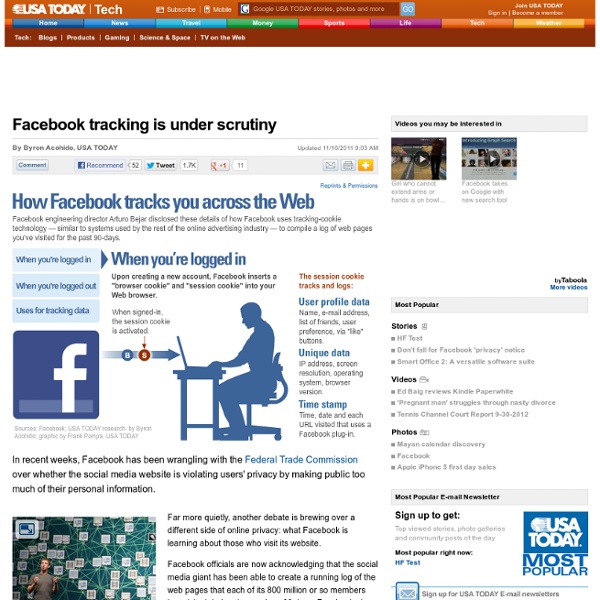
This is a news article on how Facebook uses
Journalists
This webpage covers vulnerability and risks of
Zoeken naar mensen en hun inhoud - Facebook Helpcentrum
This article discusses social network privacy
Ombudsman » Privacy: het gaat er niet alleen om dat je iets publiceert, maar waarom
Geen spektakel zonder duiding. Het gesprek van de zus op Facebook haalde te vroeg de ochtendkrant NRC Handelsblad laat zich erop voorstaan wars te zijn van sensatiezucht. In grote misdaadzaken waarvan elk schokkend detail wordt uitvergroot, zoekt de krant het in achtergrond en context. Dat gebeurde bijvoorbeeld bij de schietpartij in Alphen aan den Rijn, waarvan de dader in NRC Handelsblad consequent werd aangeduid als ‘Van der V.’, ook al rolde zijn naam over alle tv-kanalen en internet (en door de ochtendkrant nrc.next, die het afkorten potsierlijk vond). Ook de politiefoto’s van verdachten van de Feyenoordrellen die in Rotterdam op billboards werden geplaatst, haalden de krant niet. Hoe ging dat in de zaak van Jennefer van Oostende, het 10-jarige meisje dat dood werd aangetroffen bij de ex-vriend van haar zus? De ochtendkrant citeerde vorige week dinsdag een wanhopig gesprek op Facebook tussen de zus van het vermiste meisje en enkele kennissen. Er was ook iets misgegaan. Maar toch.
Internet Social Networking Risks
Internet-based social networking sites have created a revolution in social connectivity. However, con artists, criminals, and other dishonest actors are exploiting this capability for nefarious purposes. There are primarily two tactics used to exploit online social networks. In practice, they are often combined. 1. 2. Humans are a weak link in cyber security, and hackers and social manipulators know this. Falling for an online scam or computer hack could be damaging for an individual victim as well as the organization the victim works for. Vulnerability of Social Networking Sites Social networking sites are Internet-based services that allow people to communicate and share information with a group. Risks: Once information is posted to a social networking site, it is no longer private. Personal information you share could be used to conduct attacks against you or your associates. Tactics: Do not use any electronic storage device unless you know its origin is legitimate and safe.
This is the text of a bill introduced to
This is an article discussing security and