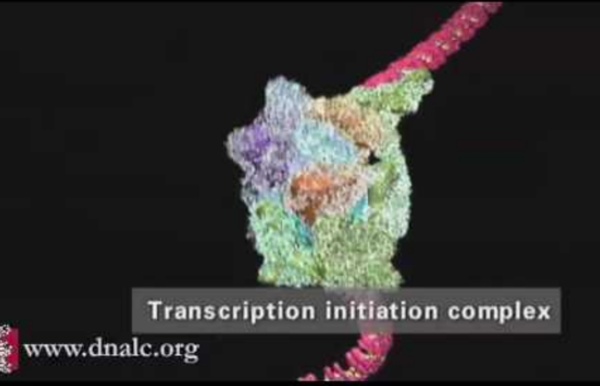
Protein Reinforcement and DNA Consequentialism Followup to: Evolutionary Psychology It takes hundreds of generations for a simple beneficial mutation to promote itself to universality in a gene pool. Thousands of generations, or even millions, to create complex interdependent machinery. That's some slow learning there. Protein computers and sensors can learn by looking, much faster than DNA can learn by mutation and selection. How the heck does a double-stranded molecule that fits inside a cell nucleus, come to embody truths that baffle a whole damn squirrel brain? Consider the high-falutin' abstract thinking that modern evolutionary theorists do in order to understand how adaptations increase inclusive genetic fitness. With the sole exception of humans, no protein brain can imagine chains of causality that long, that abstract, and crossing that many domains. Yet natural selection exploits links between local actions and distant reproductive benefits. Naturally, this also misses the efficiency of having a brain imagine consequences.
pearsonschool.com: Miller and Levine Biology ©2010: A Biology Curriculum by Pearson Miller & Levine Biology Curriculum - High School The respected author team of Ken Miller and Joe Levine are back with a new edition of biology books to inspire students to interact with trusted and up-to-date biology content. The authors' unique storytelling style engages students in biology, with a greater focus on written and visual analogies. With My Pearson Training, you can learn from hundreds of tutorials and videos at your fingertips. It's in-service on demand! Learn more about: myPearsonTraining Get an insiders' look at the new program with authors Ken Miller and Joe Levine, take a tour of the next generation of digital instruction. Features and Benefits Miller & Levine Biology has personalized options for every type of classroom. Teacher Support Untamed Science Videos Bringing a perfect blend of energy and scientific knowledge, the Untamed Science team bring concepts from the textbook into the wild!
Conway's Game of Life "Conway game" redirects here. For Conway's surreal number game theory, see surreal number. The Game of Life, also known simply as Life, is a cellular automaton devised by the British mathematician John Horton Conway in 1970.[1] The "game" is a zero-player game, meaning that its evolution is determined by its initial state, requiring no further input. One interacts with the Game of Life by creating an initial configuration and observing how it evolves or, for advanced players, by creating patterns with particular properties. Rules[edit] The universe of the Game of Life is an infinite two-dimensional orthogonal grid of square cells, each of which is in one of two possible states, alive or dead. The initial pattern constitutes the seed of the system. Origins[edit] The game made Conway instantly famous, but it also opened up a whole new field of mathematical research, the field of cellular automata ... Conway chose his rules carefully, after considerable experimentation, to meet these criteria: